
Kerala’s digital infrastructure journey does not end with fibre, cables and connectivity. Once the physical backbone is in place, value creation depends on how people, ideas and enterprises use that infrastructure to build services, platforms and economic activity. This is where the Kerala Startup Mission, widely known as KSUM, becomes central to Kerala’s vision for 2047. Established in 2006, KSUM functions as the state’s nodal agency for startup promotion, innovation and entrepreneurship, transforming raw connectivity into productive digital capacity.
KSUM was created at a time when India’s startup ecosystem was still nascent and largely concentrated in a few metropolitan cities. Nearly two decades later, Kerala has built one of the most structured state-led startup ecosystems in the country. As of the mid-2020s, more than 5,000 startups have been registered on KSUM’s platforms, spanning sectors such as software, health tech, agri-tech, fintech, edtech, deep tech and clean technology. These startups are not abstract ideas; they are firms that rely daily on reliable internet, cloud services, digital payments and data access, all of which are enabled by strong digital infrastructure.
A defining feature of KSUM is its emphasis on distributed innovation rather than city-centric concentration. Incubation centres supported by KSUM operate across multiple districts, including Thiruvananthapuram, Kochi, Kozhikode, Thrissur and smaller towns. This decentralisation aligns closely with Kerala’s demographic reality, where talent is spread across the state rather than clustered in a single mega-city. With digital infrastructure expanding through projects like K-FON, startups can now emerge from towns with populations of 50,000 to 2 lakh, not just urban cores.
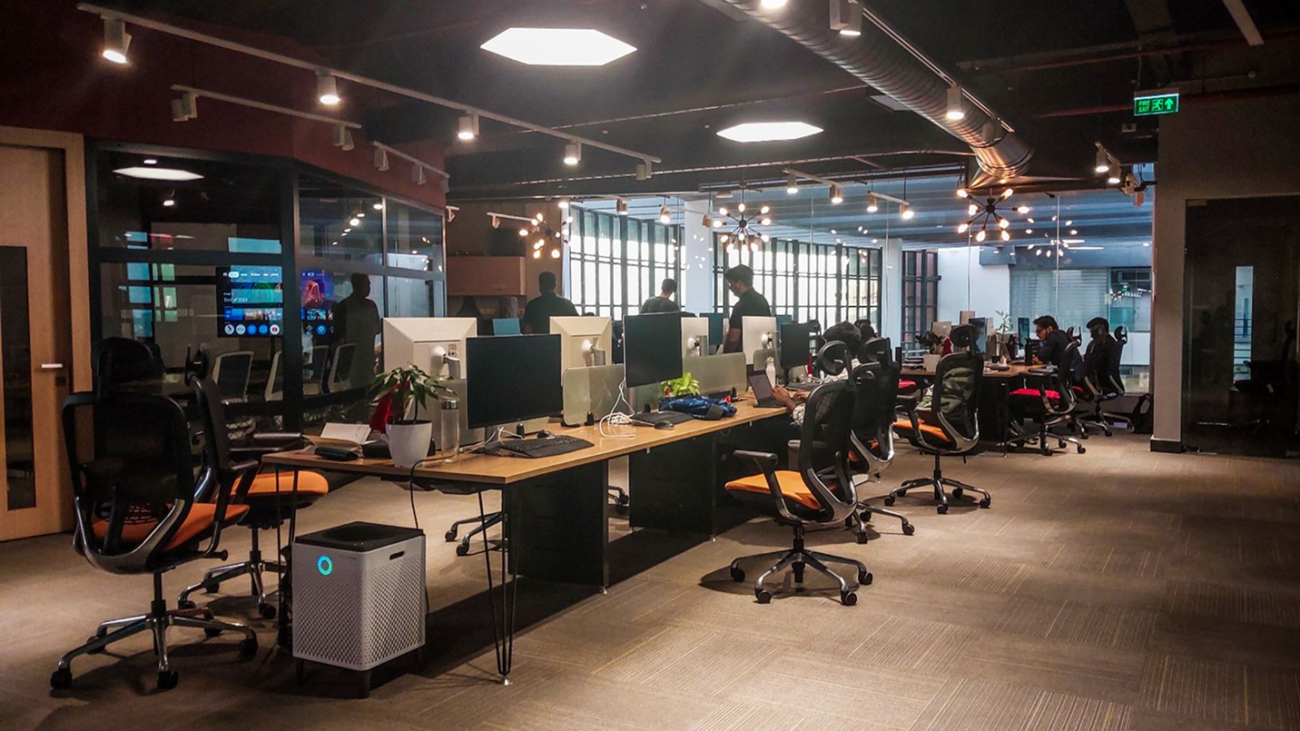
KSUM’s physical infrastructure footprint is substantial. The mission supports dozens of incubators, innovation centres and co-working spaces, many located within Technopark, Infopark and academic institutions. Collectively, these facilities offer thousands of seats for founders, developers and researchers. When combined with state-wide broadband availability, this creates an environment where a startup can be founded, scaled and operated entirely within Kerala, without immediate pressure to relocate to Bengaluru, Hyderabad or abroad.
Funding and financial enablement form another critical layer. Over the years, KSUM has facilitated seed funding, grants and equity support amounting to hundreds of crores of rupees. Early-stage startups can access prototype grants, innovation challenges and sector-specific funding programmes. While private venture capital still plays a role, state-backed early funding reduces the mortality rate of startups during the first 12 to 36 months, which is statistically the most vulnerable phase. This financial cushioning ensures that digital infrastructure investment translates into sustained entrepreneurial activity rather than short-lived experiments.
Human capital development is equally numbers-driven. KSUM works closely with colleges, engineering institutions and schools to identify talent early. Innovation programmes reach tens of thousands of students every year through hackathons, bootcamps and maker initiatives. By the time Kerala reaches 2047, several cohorts of students who entered the ecosystem in their late teens or early twenties will have 20 to 25 years of digital and entrepreneurial experience. This long-term accumulation of skill and mindset is as important as any hardware investment.
KSUM’s role becomes especially strategic when viewed through the lens of emerging technologies. Areas such as artificial intelligence, data analytics, cybersecurity, blockchain and Internet of Things require not just connectivity, but ecosystem support. Startups in these fields need access to datasets, testing environments, mentors and early government clients. KSUM acts as an interface between startups and government departments, enabling pilot projects and proof-of-concept deployments. This allows public digital services to evolve while giving startups real-world use cases.
Employment impact is another measurable outcome. Kerala’s startup ecosystem now directly employs tens of thousands of professionals, with indirect employment effects extending further through vendors, freelancers and service providers. If current growth trends continue and digital infrastructure remains robust, startup-led employment could account for a meaningful share of Kerala’s white-collar and knowledge-sector jobs by 2047. This is particularly important in a state with high educational attainment but limited traditional industrial employment.
Global exposure is a further dimension. Events such as Huddle Global, organised under KSUM, bring together thousands of participants, including founders, investors and policymakers from India and abroad. These interactions position Kerala as a credible digital innovation destination rather than a peripheral market. As global digital work becomes increasingly remote and decentralised, Kerala’s combination of quality of life, connectivity and ecosystem support becomes a competitive advantage.
Strategically, KSUM ensures that digital infrastructure investments do not remain underutilised. Fibre networks and data capacity are only as valuable as the applications built on top of them. By nurturing startups, encouraging risk-taking and lowering entry barriers, KSUM converts bandwidth into businesses, ideas into exports and local talent into global contributors. This symbiosis between infrastructure and innovation is essential for Kerala’s long-term economic resilience.
By 2047, Kerala’s digital economy will not be defined solely by government platforms or IT parks, but by thousands of small and medium digital enterprises operating across sectors. Kerala Startup Mission is the institutional mechanism that makes this transition possible. It ensures that digital infrastructure is not just consumed, but actively leveraged to create value, employment and global relevance over the next 25 years.
