
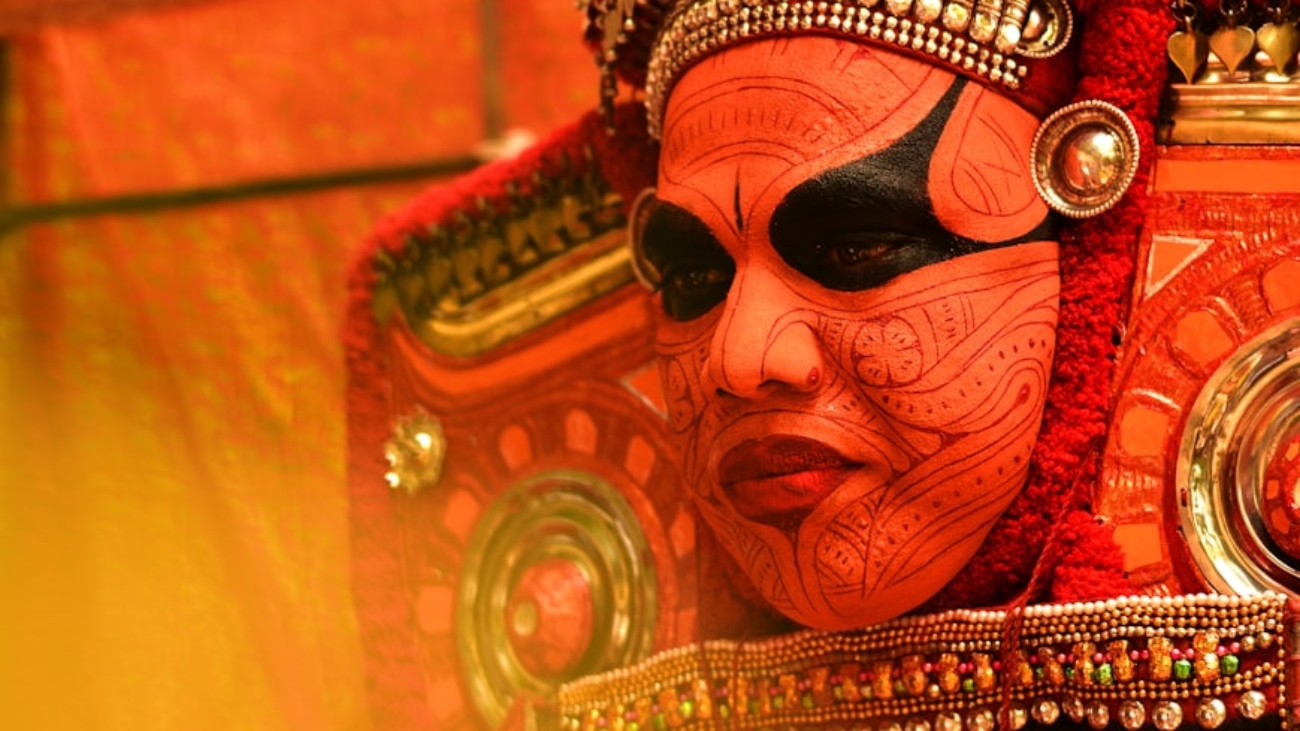
Theyyam, the ritual art of North Malabar, is not merely a performance—it is an embodiment of Kerala’s spiritual imagination, ancestral memory, social justice narratives, and deeply rooted community traditions. It is one of the world’s most powerful examples of a living ritual where myth, dance, theatre, music, costume, and collective devotion merge into an immersive experience. As Kerala envisions its future toward 2047, Theyyam holds enormous cultural, economic, and global potential. Yet it also faces challenges: commercialization, erosion of ritual purity, inadequate welfare systems for performers, lack of documentation, climate pressures, and diminishing youth interest in associated crafts. Kerala Vision 2047 imagines Theyyam as a protected, celebrated, globally recognized cultural ecosystem—sustainable, community-led, research-backed, and deeply rooted in its sacred authenticity.
The first pillar of transformation is cultural preservation. By 2047, Theyyam must be protected through a comprehensive “Theyyam Heritage Conservation Act” that safeguards rituals, performance ethics, community rights, and sacred spaces. Designated “Theyyam Protection Zones” across Kannur and Kasaragod can ensure that shrines, groves, kavus, and performance grounds remain untouched by encroachment or disruptive urbanization. A National Theyyam Archive housed in a heritage hub—perhaps in Payyannur or Kalliasseri—can digitally document every variant, ritual, song (thottam pattu), costume, and oral history in high fidelity. This digital legacy will serve scholars, future performers, and global enthusiasts.
The second pillar is the welfare and empowerment of Theyyam performers and supporting communities. Many Theyyam artists come from marginalized backgrounds and face seasonal incomes, inadequate healthcare, and lack of long-term security. By 2047, a Theyyam Performer Welfare Board can provide health insurance, pensions, accident protection, and livelihood support. Training academies—rooted in guru–shishya traditions but upgraded with modern pedagogy—can offer structured pathways for youth to enter Theyyam practice while preserving ritual authenticity. Women’s Theyyam traditions, which are gaining recognition, can be supported through research and curated performance spaces while respecting ritual norms.
Craft clusters associated with Theyyam—such as headgear artisans, costume makers, drummers, and ritual paraphernalia creators—must be sustained. By 2047, Theyyam Craft Villages established in regions like Karivellur, Nileswar, and Kanhangad can become hubs for skill development, cooperative marketing, museum-quality preservation, and global sales. These villages can serve as year-round creative economies, offering livelihood security for artisan communities.
Tourism must be re-envisioned carefully. Theyyam cannot become a mere entertainment product. By 2047, Kerala must adopt a Responsible Theyyam Tourism Framework distinguishing between sacred rituals (which must remain community-owned, non-commercial, and culturally pure) and interpretive experiences (documentaries, workshops, curated performances) designed for outsiders. Special visitor zones near select kavus can offer educational spaces without disturbing rituals. Off-season cultural festivals, Theyyam trails, heritage walks, and interactive learning centres can create sustainable tourism economies without violating the sanctity of the tradition. A Theyyam Museum & Interpretation Centre—immersive, multimedia, and academically curated—can deepen global understanding.
Research and academic expansion are essential. By 2047, Theyyam Studies can emerge as a formal academic discipline under universities in Kannur and Kasaragod with programmes on ritual anthropology, performance studies, indigenous knowledge systems, costume engineering, and Carnatic-music linkages. Global collaborations with institutions studying indigenous rituals in Mexico, Africa, Japan, and the Pacific can elevate Theyyam into comparative humanities research. A dedicated “Centre for Ritual Performance and Indigenous Knowledge” can house field researchers, ethnographers, musicologists, and digital archivists.
Ecological restoration must become an integral part of Theyyam’s future. Theyyam is tied to sacred groves (kaavus), which are disappearing due to urbanization and climate change. By 2047, a Sacred Grove Revival Mission can restore hundreds of groves, turning them into biodiversity sanctuaries. These groves can serve as climate buffers, carbon sinks, and living classrooms. Ritual environments must remain ecologically intact—clean water bodies, preserved flora, and pollution-free zones are essential for ritual purity and environmental sustainability.
Digital innovation can amplify Theyyam’s global appeal. Virtual reality (VR) experiences can allow global audiences to witness Theyyam respectfully without crowding sacred spaces. AI-generated subtitles for thottam songs can help non-Malayalis understand mythic narratives. Digital exhibitions, immersive sound recordings, online workshops, and blockchain-based heritage certification can protect authenticity while enabling global outreach. A Theyyam mobile app can provide schedules, histories, shrine information, and responsible tourism guidelines.
Socio-cultural inclusion must be preserved. Theyyam has historically been a medium of equality, where deities embodied by performers speak truth to power and bless all devotees regardless of caste. By 2047, Theyyam must continue to function as a cultural voice for justice, equality, and community solidarity. Community dialogues, youth forums, and ritual literacy programmes can deepen public understanding of Theyyam’s social significance.
Urban planning must respect Theyyam spaces. Municipalities in Kannur and Kasaragod must integrate Theyyam kavus into master plans—ensuring buffer zones, pedestrian access, and noise-control measures. Night-time safety, clean surroundings, and public facilities can support devotees while protecting the sanctity of the rituals.
By 2047, Theyyam can also serve as a pillar of Kerala’s cultural diplomacy. International festivals, collaborative performances with global ritual traditions, museum partnerships, and cultural residencies can position Theyyam as one of India’s most iconic cultural exports—respected not just for its visual grandeur but for its spiritual depth and socio-cultural narratives.
Kerala Vision 2047 thus imagines Theyyam as a living, breathing cultural ecosystem—protected, respected, empowered, researched, globally recognized, and deeply connected to community identity. It will not be frozen in time, nor commercialized beyond recognition. Instead, Theyyam in 2047 will stand as a proud symbol of Kerala’s heritage: ancient yet contemporary, sacred yet accessible, local yet global, rooted in community yet inspiring the world.
