
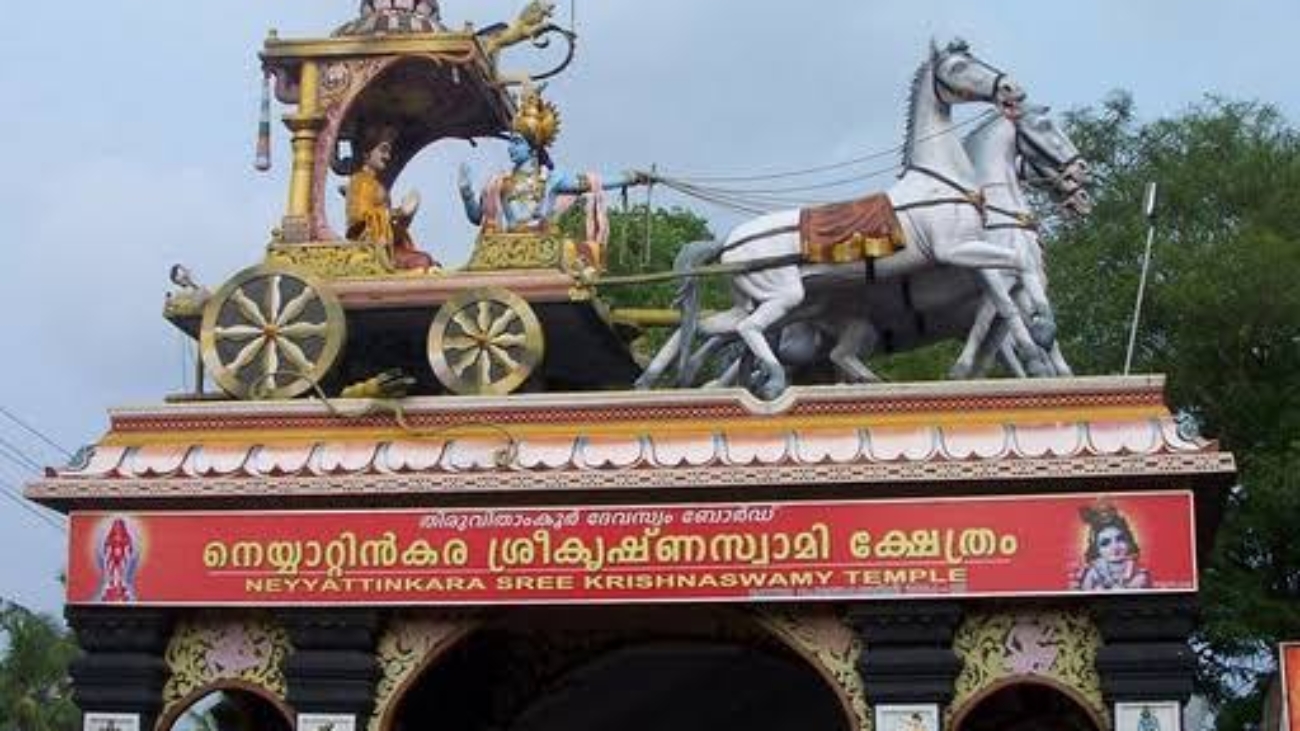
By 2047, Neyyattinkara taluk in South Kerala must emerge as a decentralised MSME employment hub that absorbs local talent, reduces outward migration, and anchors economic growth close to where people live. Located strategically between Thiruvananthapuram city, the Tamil Nadu border, and coastal–agrarian belts, Neyyattinkara has long functioned as a transit and residential zone rather than an employment centre. Kerala Vision 2047 reimagines the taluk as a place where small and medium enterprises generate stable, skilled, and dignified work at scale.
Neyyattinkara’s employment problem is typical of South Kerala. Literacy is high, aspirations are global, but local economic structures remain thin. Youth depend heavily on government jobs, Gulf migration, or city-centric service work. MSMEs exist, but mostly as informal units with limited growth, low productivity, and fragile survival. Vision 2047 treats MSMEs not as marginal players, but as the primary employment engine capable of scaling without large land acquisition or ecological stress.
The first shift is to reposition Neyyattinkara as a services-plus-production MSME taluk. Large factories are neither feasible nor desirable given land constraints and settlement density. Instead, employment growth must come from technically upgraded small units in food processing, building materials, electrical goods, repair services, healthcare support, logistics, digital services, and climate-adaptive products. MSMEs thrive when demand is local, supply chains are short, and skills are continuously upgraded.
Food and agro-based MSMEs form the first major employment pillar. Neyyattinkara’s hinterland connects to banana, coconut, rubber, vegetables, and fisheries from nearby coastal belts. Vision 2047 focuses on moving from raw produce to value-added processing. Small units for packaged foods, coconut-based products, rubber goods, ready-to-cook items, spice processing, and nutraceutical inputs can operate at neighbourhood scale. Each cluster of 20–30 MSMEs can employ 500–800 people directly. By 2047, Neyyattinkara can sustain at least 5 such clusters, creating 3,000 to 4,000 stable jobs.
Construction-linked MSMEs form the second pillar. South Kerala’s housing density creates continuous demand for building materials, fittings, electrical systems, plumbing components, modular furniture, aluminium fabrication, and prefabricated elements. Vision 2047 upgrades traditional workshops into compliant, semi-automated MSMEs that serve local construction markets. These enterprises employ diploma holders, ITI graduates, and skilled workers while reducing dependence on imports from other states. Over two decades, this sector alone can support 2,500 to 3,000 jobs in the taluk.
Healthcare and care-economy MSMEs become the third employment engine. Neyyattinkara has growing healthcare demand due to ageing population and proximity to urban hospitals. Vision 2047 enables MSMEs in medical equipment servicing, home-care services, diagnostic support, health IT back-office operations, rehabilitation products, and pharmacy logistics. These enterprises create employment for women, paramedical staff, IT graduates, and management professionals. By 2047, healthcare-linked MSMEs can employ 1,500 to 2,000 people locally.
Repair, maintenance, and circular-economy MSMEs form the fourth pillar. Modern economies increasingly value repair over replacement. Vision 2047 positions Neyyattinkara as a hub for electronics repair, appliance servicing, EV maintenance, inverter systems, solar installations, and refurbished goods. These MSMEs require moderate capital but high skill density, making them ideal for South Kerala. A strong repair ecosystem can generate 1,000 to 1,500 skilled jobs while reducing household costs and electronic waste.
Logistics and border-linked MSMEs become the fifth pillar. Neyyattinkara’s proximity to Tamil Nadu creates constant movement of goods and people. Vision 2047 leverages this by developing MSMEs in warehousing, cold storage, last-mile delivery, vehicle servicing, packaging, and cross-border trade facilitation. Small logistics firms employing technicians, drivers, coordinators, and IT support staff can flourish. By 2047, logistics MSMEs can generate 1,200 to 1,800 jobs in the taluk.
Digital and knowledge MSMEs form the sixth employment stream. Not all MSMEs are physical. Neyyattinkara can host digital enterprises in accounting services, compliance support, content creation, translation, customer support, data processing, and design services. These businesses operate from small offices or homes and employ graduates who might otherwise migrate. Vision 2047 aims to support at least 2,000 digital MSME jobs through shared workspaces, reliable connectivity, and state procurement linkage.
Women-led and home-based MSMEs are the seventh pillar. South Kerala has high female education but low workforce participation. Vision 2047 prioritises women-led enterprises in food, care services, digital work, tailoring, crafts, and wellness products. Cluster-based support, co-operative marketing, and digital platforms reduce risk and isolation. By 2047, Neyyattinkara can support 3,000 to 4,000 women in income-generating MSMEs, transforming household economics without social disruption.
Institutional demand anchors the eighth pillar. Schools, hospitals, panchayats, municipalities, and public utilities generate continuous demand for supplies and services. Vision 2047 deliberately links local MSMEs to government procurement through digital platforms, quality certification, and payment discipline. When the state becomes a predictable customer, MSME survival rates rise sharply. Even diverting 20–25 percent of local public procurement to taluk-based MSMEs can sustain thousands of jobs.
Skill and enterprise integration forms the ninth pillar. MSMEs fail when skills lag behind demand. Vision 2047 embeds skilling directly within enterprise clusters through apprenticeships, on-the-job training, and modular certification. Training is not abstract; it is production-linked. This ensures that youth transition smoothly into employment rather than circulating between courses and unemployment.
Employment outcomes define the final measure of success. By 2047, Neyyattinkara taluk can realistically support 12,000 to 15,000 direct MSME jobs and many more indirect livelihoods. These jobs are local, distributed, and resilient. They reduce migration pressure on Thiruvananthapuram city, stabilise families, and build a tax-paying economic base.
By 2047, Neyyattinkara’s success will not be announced through megaprojects. It will be visible in quieter ways. Workshops hum steadily. Small factories run year-round. Women earn incomes close to home. Youth find work without leaving the taluk. MSMEs become respected employers rather than survival units.
This is the Kerala Vision 2047 for Neyyattinkara taluk: a South Kerala future where MSMEs are not peripheral, but central to employment, dignity, and economic stability, proving that growth does not need scale to be transformative.
