
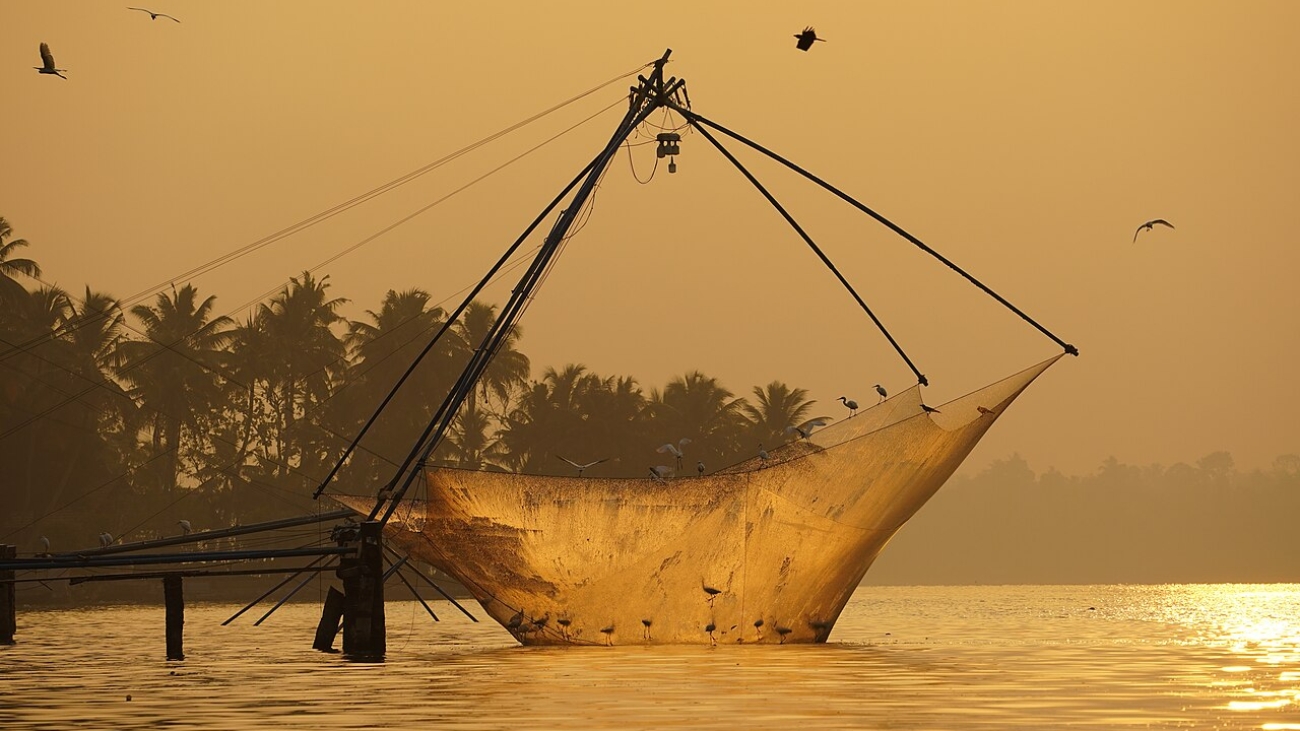
By 2047, the Mukkuva community, a low-population coastal OBC group traditionally dependent on marine fishing, must transition from vulnerable, labour-intensive livelihoods into an engineering-enabled fisheries and ocean-services economy. The Mukkuvas possess deep ecological knowledge of the sea, currents, seasons, and coastlines, but this knowledge has remained disconnected from modern engineering systems, value chains, and ownership structures. Kerala Vision 2047 reframes the future of the Mukkuva community not through welfare fishing or subsistence protection alone, but through technical capability, small enterprise ownership, and integration into the blue economy.
The crisis facing the Mukkuva community is structural. Traditional fishing incomes are volatile due to climate change, overfishing, fuel costs, regulatory pressure, and declining near-shore catch. Younger generations increasingly exit fishing without viable alternatives, leading to migration, informal labour, or long-term unemployment. Vision 2047 recognises that the solution is not abandoning fisheries, but engineering it—adding technology, systems, and services around fishing rather than replacing it.
The first transformation pillar is repositioning Mukkuva labour from fishing effort to fisheries engineering services. By 2047, Mukkuva youth must be systematically trained in marine engineering-adjacent skills such as boat engine maintenance, hull repair, electrical systems, navigation electronics, sonar calibration, refrigeration systems, ice plants, and harbour equipment servicing. These skills are in constant demand across Kerala’s coast. Even conservative estimates show that every 100 fishing vessels require 8 to 10 full-time technical service workers. Scaled statewide, this alone can generate 5,000 to 7,000 stable technical jobs anchored within the community.
The second pillar is ownership of small marine engineering enterprises. Vision 2047 deliberately shifts Mukkuva workers away from dependence on outside mechanics, contractors, and suppliers. Instead, community-owned MSMEs will provide engine servicing, electrical retrofitting, safety equipment installation, net handling machinery repair, and deck system upgrades. These are not large shipyards, but small, mobile, technically skilled firms employing five to fifteen people each. Ownership ensures income stability and social mobility, not just employment.
The third pillar is cold-chain and post-harvest engineering. The biggest loss in fisheries is not at sea, but after landing. Spoilage, poor icing, inadequate storage, and inefficient transport erode fisher incomes. Vision 2047 positions Mukkuva-owned engineering MSMEs as operators of ice plants, cold rooms, insulated transport, and smart storage units at harbour and village levels. Training in refrigeration engineering, power systems, and temperature monitoring enables the community to capture value that currently leaks to intermediaries.
The fourth pillar is harbour and coastal infrastructure servicing. Kerala has multiple fishing harbours, landing centres, jetties, and coastal facilities that suffer from poor maintenance and slow response. Vision 2047 creates a structured role for Mukkuva-owned engineering firms as long-term maintenance partners for harbour engineering, navigation lighting, fuel systems, drainage, power supply, and safety equipment. Annual service contracts replace sporadic repair work, stabilising employment and professionalising coastal infrastructure upkeep.
The fifth pillar is fishing vessel modernisation through engineering, not displacement. Vision 2047 rejects blanket mechanisation that pushes small fishers out. Instead, it promotes selective engineering upgrades—fuel-efficient engines, hybrid propulsion, better hull design, safety instrumentation, and navigation aids. Mukkuva-owned firms become installers and service providers for these upgrades. This improves safety, reduces fuel costs by 15 to 25 percent, and creates sustained technical employment within the community.
The sixth pillar is climate-resilient fisheries engineering. Climate change is reshaping marine patterns, increasing storm risk and uncertainty. Vision 2047 trains Mukkuva youth in ocean data interpretation, weather systems, sensor maintenance, and early-warning infrastructure. Community-based marine engineering teams maintain buoys, sensors, communication systems, and emergency equipment. This positions the community as protectors of coastal safety, not victims of climate volatility.
The seventh pillar is women’s participation through engineering support roles. Fisheries engineering is not limited to heavy mechanical work. Vision 2047 enables Mukkuva women to enter roles in quality control, cold-chain management, inventory systems, logistics coordination, billing, digital monitoring, and compliance documentation. Women-run MSMEs can manage storage facilities, processing units, and service coordination platforms. By 2047, at least 30 to 40 percent of engineering-linked fisheries employment can be held by women, transforming household economics.
The eighth pillar is integration with renewable energy. Coastal regions are ideal for decentralised solar, hybrid energy systems, and battery storage. Vision 2047 trains Mukkuva youth in solar installation for harbours, ice plants, cold storage, and boats. Engineering firms owned by the community can reduce energy costs for fisheries infrastructure while creating a future-proof business line aligned with Kerala’s clean-energy goals.
The ninth pillar is technical education rooted in lived context. Generic engineering education often fails coastal youth. Vision 2047 establishes fisheries-focused technical training streams—marine electrical systems, small engine technology, refrigeration, hydraulics, composites, and corrosion management. Training is hands-on, vessel-based, and harbour-based. This converts traditional sea familiarity into formal engineering competence without cultural alienation.
The tenth pillar is scale through realistic numbers. The Mukkuva community’s population may be limited, but impact does not require mass numbers. If even 6,000 Mukkuva youth become technically certified over two decades, and half of them transition into MSME ownership or long-term skilled employment, the community can anchor 1,000 to 1,200 marine engineering enterprises across Kerala’s coast. Each employing 6 to 10 people, this translates into 7,000 to 10,000 direct jobs and many more indirect livelihoods.
The eleventh pillar is dignity through technical indispensability. In modern economies, respect flows to those who keep systems running. When Mukkuva-owned firms keep boats operational, harbours functional, fish preserved, and safety ensured, social perception shifts. Engineering competence becomes a new source of status, replacing narratives of vulnerability with ones of capability.
By 2047, the success of this vision will be visible not in policy documents but on the coast itself. Fishing incomes stabilise. Youth stay back with skilled work. Boats are safer and more efficient. Cold storage is locally owned. Women earn predictable incomes. The community is no longer dependent on distant suppliers or uncertain catch alone.
This is the Kerala Vision 2047 for the Mukkuva community: a future where a low-population OBC fishing group secures its place in the blue economy through engineering, enterprise, and ownership—transforming traditional knowledge into technical power, and vulnerability into resilience along Kerala’s coast.
