
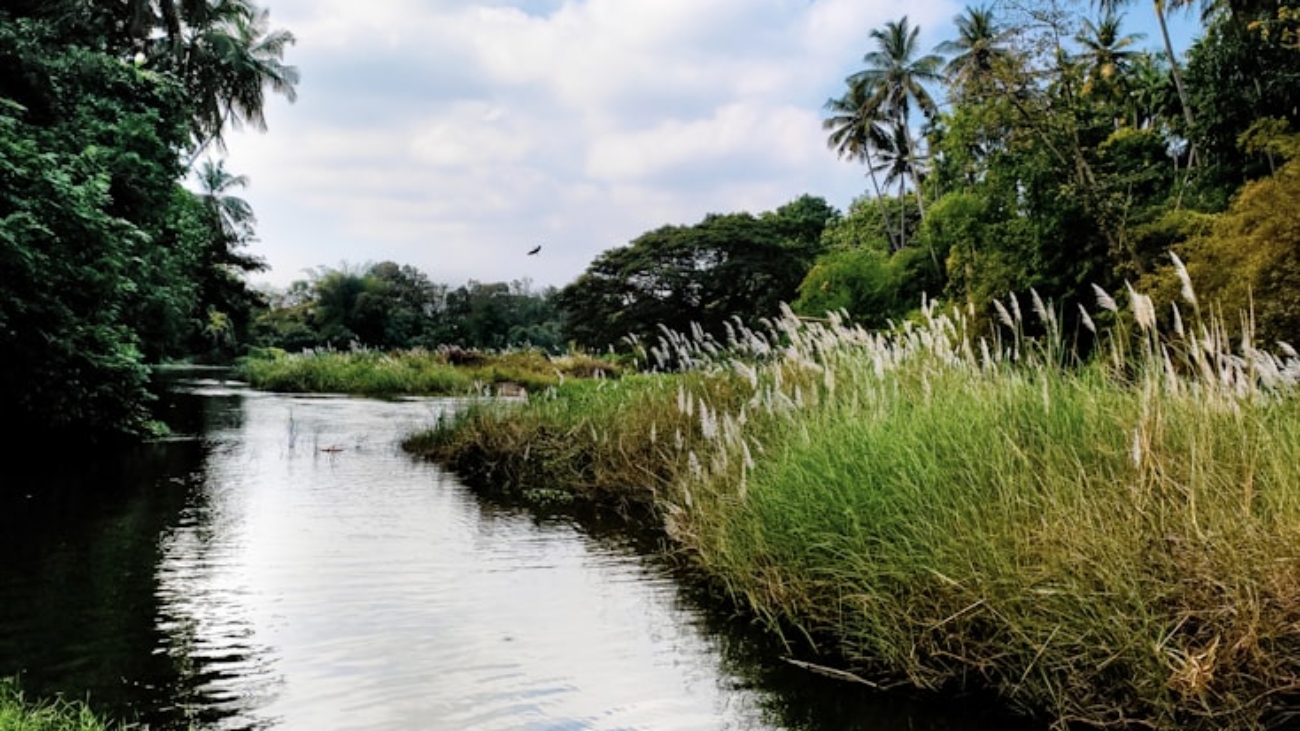
Kerala is one of the most densely populated regions in India, with settlements spread across hills, plains, coasts, and wetlands. While the state receives abundant rainfall, this natural advantage does not automatically translate into reliable drinking water security. Seasonal scarcity, urban overuse, groundwater depletion, contamination, leaking pipelines, and mismanaged local sources threaten the state’s long-term water stability. As Kerala approaches 2047, the challenge is clear: how to guarantee safe, affordable, and uninterrupted drinking water for millions living in both growing cities and dense semi-urban belts. Ensuring sustainable drinking water is no longer a matter of convenience; it is a matter of survival, economic resilience, and public health.
The first major obstacle is Kerala’s uneven water availability. Although the state receives heavy monsoons, the rainfall pattern has become increasingly unpredictable due to climate change. Long dry spells, intense short bursts of rain, and extreme weather disrupt water storage. Much of the rainwater flows rapidly into rivers and out to the sea before it can be harvested. By 2047, Kerala must shift from a mindset of rainfall abundance to a mindset of water storage and reuse. Every home, school, office, temple, mosque, church, and government building must incorporate rainwater harvesting. Large institutions must build underground reservoirs capable of supplying months of drinking water. Local governments must mandate harvesting systems in all new buildings and retrofit the existing ones through financial incentives. When millions of families store even moderate quantities, the overall pressure on state pipelines declines significantly.
The second challenge lies in groundwater depletion. With high population density, Kerala’s borewells have multiplied rapidly. In coastal regions, over-extraction leads to seawater intrusion, making groundwater saline. In midland and hilly regions, groundwater tables drop during summers, drying wells and increasing dependence on tanker lorries. To repair this, Kerala must create a statewide groundwater recharge programme: percolation pits, check dams, rejuvenated ponds, restored wetlands, and community recharge wells. Panchayats must identify recharge zones and protect them from construction. Industries, apartments, and institutions must be required to recharge groundwater equivalent to what they consume. By 2047, groundwater recharge must exceed extraction for the system to stabilise.
The third issue is contamination. High-density settlements often create pollution pressures: sewage flowing into canals, septic tanks leaking into wells, agricultural chemicals entering drinking sources, and waste dumped near water bodies. Many rural areas still rely on household wells, which become unsafe during the monsoon. Ensuring sustainable drinking water requires a strict water protection regime. Sewage systems must be upgraded, open drains closed, and water bodies guarded through local surveillance. Kerala must enforce “zero discharge into natural water bodies” policies. Water testing labs must be made accessible at the panchayat level, and water quality dashboards must be available to the public. Community-driven clean-water committees can monitor contamination sources. Ensuring clean water is not only a technical task but a civic responsibility.
Urbanisation has created new pressures. High-rise apartments require vast quantities of water, often relying on private tankers that extract groundwater illegally from rural belts. This accelerates depletion in neighbouring villages. By 2047, Kerala must adopt strict tanker regulation, pricing mechanisms that discourage overuse, and decentralised water treatment systems inside apartments. Greywater recycling must become standard practice—kitchen and bathroom water should be treated on-site and reused for toilets, gardening, or cleaning. Large buildings must be required to meet at least 30 percent of their water needs through recycling. Urban water resilience grows when dependency on external sources shrinks.
Kerala’s rivers, once the backbone of drinking water, are under strain. Sand mining, erosion, reduced base flow, and catchment damage affect their purity and quantity. Vision 2047 demands a river restoration mission: protecting riverbanks, reducing sand extraction, regenerating forests in catchments, and reviving natural springs. Drinking water schemes dependent on rivers must adopt advanced filtration technologies, safe intake points, and flood-resistant infrastructure. Rivers must be treated as living systems whose health determines the health of communities.
Technology can play an important role. Smart water meters, leak detection sensors, real-time consumption dashboards, and automated pressure systems can reduce wastage significantly. Many municipalities lose 30–40 percent of their water through leaks. Fixing this is cheaper than building new pipelines or treatment plants. Kerala can create district-level Water Management Command Centres that monitor supply, leakages, quality, and consumption. Digital transparency builds public trust and allows quicker intervention during shortages.
Another crucial frontier is desalination for coastal cities. As population grows and freshwater sources become limited, desalination—powered by renewable energy—can become a supplementary source. Small and medium-scale desalination plants using solar power can serve coastal villages and islands. While this should not replace natural sources, it can serve as a climate-proof backup.
Equity is central to the water debate. In many urban areas, wealthy households buy tanker water or dig deeper borewells, while poorer families suffer shortages. Kerala Vision 2047 must ensure equitable distribution: regulated pricing, rationing during scarcity, and prioritising slum areas and low-income neighbourhoods. Water must remain a public right, not a market commodity accessible only to those who can pay.
Cultural habits must evolve. In high-density populations, behaviour change is as crucial as technology. Public campaigns must encourage shorter showers, efficient dishwashing, low-flow fixtures, leak repair, and responsible usage. Schools can include water literacy as part of the curriculum. Festivals, local clubs, Kudumbashree groups, and residents’ associations can foster collective water-saving habits. A water-conscious culture reduces demand without reducing quality of life.
Finally, resilience must anchor Kerala’s future water strategy. Climate change will make both droughts and floods more severe. Drinking water systems must be able to withstand these extremes. Elevated pump houses, protected intake wells, backup storage tanks, solar-powered pumps, and multi-source supply networks will ensure continuity during disasters. Communities must be trained to manage emergency water supply through decentralised storage.
By 2047, Kerala can build a water-secure society where:
Rainwater is harvested in every building
Groundwater levels rise through systematic recharge
Rivers flow cleaner and stronger
Wells become reliable again
Cities recycle most of their water
Coastal regions use renewable-powered desalination
Villages protect ponds, canals, and springs
Technology prevents wastage
Every citizen becomes a water steward
Sustainable drinking water in a dense population is not achieved through one big solution but through thousands of small, coordinated, intelligent actions. Kerala has the social awareness, institutional capacity, and ecological wisdom to lead India in water resilience.
A water-secure Kerala in 2047 will be a healthier, more stable, and more prosperous Kerala—one prepared for the uncertainties of climate, urbanisation, and demographic change.
