
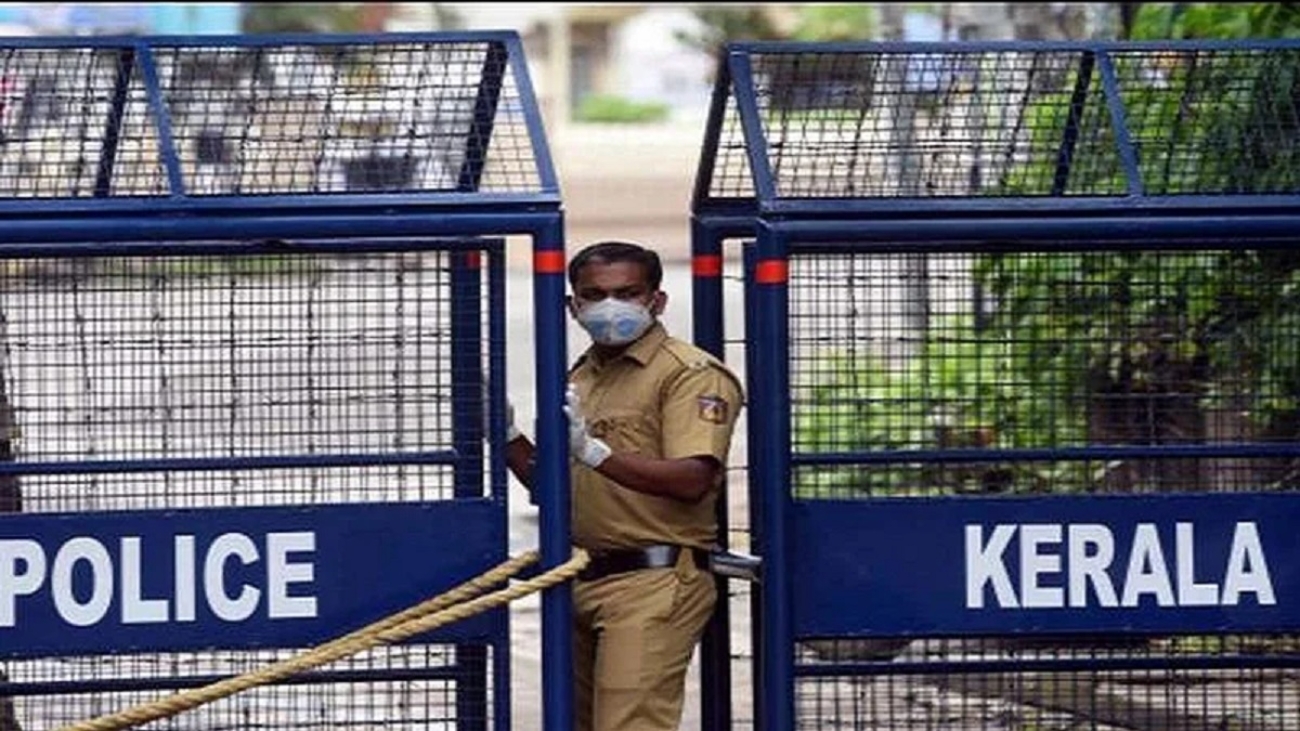
One of the least examined constraints on Kerala’s policing system is not budget or manpower, but cognitive bandwidth. Modern crime and public disorder are no longer purely physical or local. They are behavioral, digital, financial, and psychological. Yet the police organization remains almost entirely uniformed, hierarchical, and internally trained. This made sense in an era where authority, discipline, and presence were the primary tools. By the 2020s, this structure has begun to show strain, not because officers are incapable, but because the problem space has expanded beyond what a single professional culture can absorb.
Kerala is among India’s most cognitively dense societies. It has high literacy, high media exposure, high political participation, and high emotional expressiveness. Conflicts escalate fast, narratives spread rapidly, and public perception often matters as much as legal outcome. At the same time, crimes increasingly involve digital footprints, layered financial transactions, psychological manipulation, and group behavior dynamics. Cyber fraud cases require understanding scam psychology and digital flows. Drug networks require financial trail analysis as much as physical seizures. Crowd control requires behavioral insight more than baton strength. Mental health crises require empathy and clinical judgment rather than authority.
Despite this, the burden of interpretation still falls almost entirely on uniformed officers trained primarily in law, procedure, and command. Data from multiple policing reviews across India show that officers spend disproportionate time trying to understand technical or psychological dimensions of cases for which they were never formally trained. This leads to delays, misclassification, and in some cases, avoidable escalation.
Integrating civilian technologists, psychologists, and behavioral specialists directly into district policing is not about weakening the force. It is about extending its intelligence. A district headquarters that includes data scientists can analyze patterns in FIRs, accident logs, and emergency calls to identify hidden correlations. Psychologists can advise on interrogation ethics, suicide prevention protocols, domestic violence escalation, and crowd de-escalation strategies. Forensic accountants can trace financial crimes faster than generalist investigators juggling multiple roles.
Kerala already has precedents in fragments. Cyber cells often rely informally on technically skilled civilians. During disaster response, volunteers with logistical and analytical skills played crucial roles. Courts have repeatedly emphasized the importance of psychological sensitivity in custodial interactions and witness handling. However, these inputs remain ad hoc, personality-driven, and fragile. When individuals transfer or retire, knowledge evaporates.
Formal integration changes this. Civilian experts would not replace officers or command decisions. They would operate as embedded advisors with clearly defined roles, confidentiality obligations, and accountability. Their performance metrics would be outcome-based: reduction in repeat harm, faster case resolution, improved evidence quality, and reduced use of force incidents. This preserves the chain of command while enriching the decision-making environment.
There is also an economic logic. Kerala produces thousands of graduates in engineering, psychology, statistics, and social sciences every year, many of whom struggle to find meaningful local employment. Policing offers a high-impact, socially relevant workspace for such talent without requiring lifetime service or uniformed authority. Short-term fellowships, district contracts, and rotational postings allow fresh thinking without bureaucratic rigidity.
Public trust benefits as well. Citizens are more likely to cooperate with a system that demonstrates understanding rather than intimidation. When a mental health crisis is handled by a trained response team rather than default criminalization, outcomes improve. When cyber fraud victims see technically competent handling rather than procedural confusion, confidence rises. The police begin to look less like an isolated force and more like a coordinated public safety institution.
By 2047, the most dangerous failures in policing will not come from lack of force but from misinterpretation. Misreading intent, emotion, or system-level risk will cause more damage than absence of authority. A police force that integrates multiple forms of intelligence—technical, psychological, financial, and social—will be better equipped to serve a complex society.
The future of policing is not about asking officers to become experts in everything. It is about building teams where different kinds of expertise coexist, complement, and correct each other under a clear command structure.
