
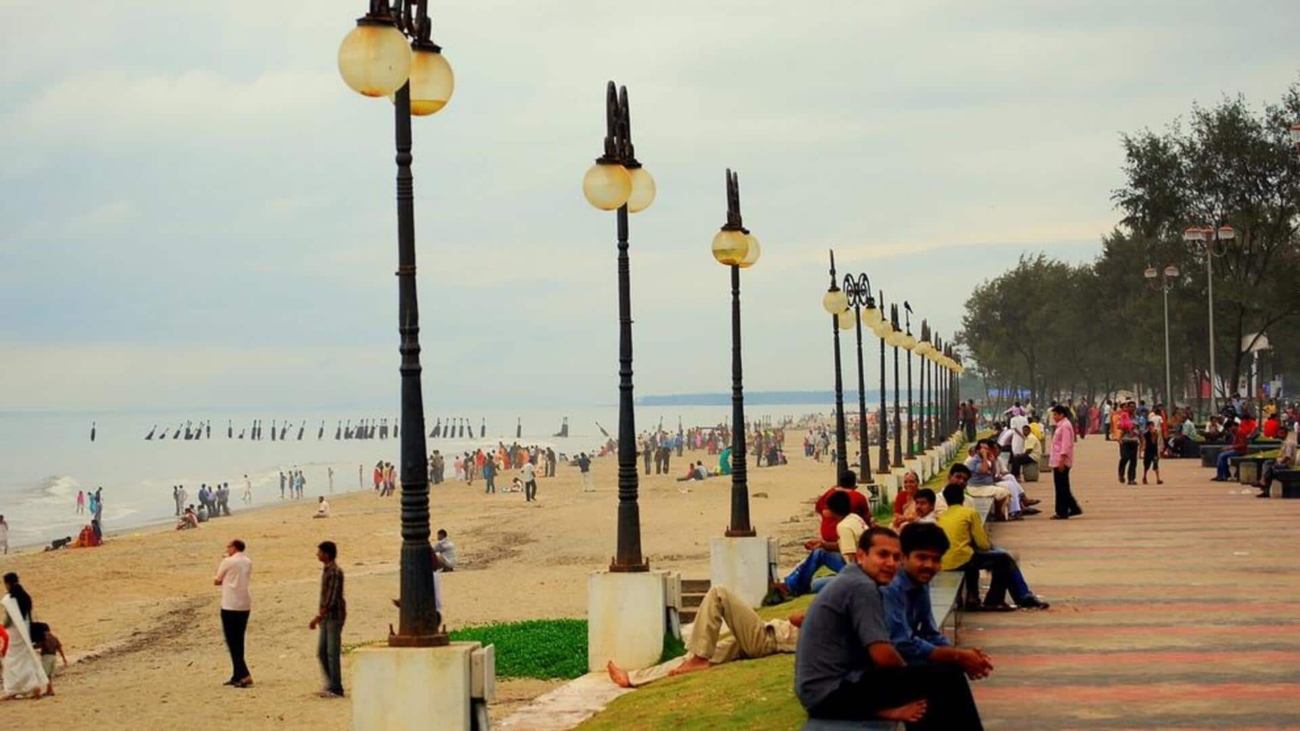
Kozhikode is Kerala’s historic commercial capital — a district shaped by centuries of global trade, strong urban culture, high literacy, entrepreneurial communities, world-class hospitals, and a rapidly growing services sector. Today, Kozhikode generates an estimated ₹35,000–40,000 crore in annual economic output, with major contributions from trade, healthcare, education, IT, tourism, food processing, logistics and services. By 2047, with disciplined planning and data-driven governance, Kozhikode can transform into a ₹85,000–90,000 crore metropolitan engine, anchoring North Kerala’s economic renewal and emerging as the region’s primary knowledge, medical, logistics and cultural hub.
Kozhikode’s biggest strategic strength is education and human capital. The district has one of Kerala’s densest concentrations of higher-education institutions, including IIM Kozhikode, NIT Calicut, Calicut University, Government Medical College, and numerous colleges in arts, science, commerce and engineering. These institutions produce over 50,000 graduates annually, yet most migrate to Bengaluru, Kochi or abroad. By 2047, Kozhikode must convert this talent into a knowledge-driven economic engine. Building an integrated North Kerala Knowledge Grid — linking IIM, NIT, research centres, startups, and industry — can raise the district’s knowledge economy output to ₹25,000–30,000 crore. Specialized clusters for AI research, fintech, climate analytics, public policy, behavioural sciences, maritime studies and medical informatics can dramatically increase Kozhikode’s intellectual footprint.
The second major pillar is healthcare and medical innovation. Kozhikode is already one of Kerala’s top medical hubs, with more than 40 major hospitals and a robust healthcare workforce. Today, the district’s healthcare economy contributes around ₹7,000–8,000 crore, including medical tourism, diagnostics and specialty care. By 2047, Kozhikode can expand this to ₹18,000–20,000 crore, anchored in three growth zones: a Medical Research & Innovation Park near Govindapuram–Medical College area, a chain of robotic-surgery and geriatric-care centres, and a strong network of telemedicine hubs serving North Kerala, Karnataka and Lakshadweep. Kozhikode can also develop India’s first Public Health Data Observatory, generating analytics for disease prediction, healthcare planning and medical research.
Kozhikode’s long-standing trading heritage — from its ancient spice routes to its modern wholesale markets — remains a powerful engine. The district handles large volumes of textiles, electronics, food products, building materials and consumer goods, supported by strong Gulf-return entrepreneurial networks. Today, Kozhikode’s trade and wholesale ecosystem produces around ₹12,000–14,000 crore in economic activity. With modern logistics parks, e-commerce supply nodes, real-time inventory systems and a “smart mandi” digital platform, Kozhikode can grow this sector to ₹30,000 crore by 2047. A Broadway 2.0 Redevelopment Project can turn the city’s iconic shopping streets into global-standard retail and cultural zones.
Tourism remains an underleveraged pillar. Kozhikode currently attracts 20–25 lakh visitors annually, generating ₹3,000–3,500 crore. Its beaches, food culture, heritage mosques, Beypore shipbuilding tradition, Kappad, Thusharagiri, Wayanad access and backwater edges give it natural strengths. By 2047, with structured branding, beach regeneration, heritage circuits, clean transport, and digital tourism systems, Kozhikode can achieve ₹10,000–12,000 crore in tourism value. Beypore can become India’s finest maritime heritage district, featuring shipbuilding museums, waterfront promenades, artisan workshops and sailing experiences. A curated “Kozhikode Food & Culture Festival” can become a global attraction.
The IT and digital services sector has been growing steadily, but remains far below potential compared to major Indian cities. Kozhikode today generates roughly ₹2,000–3,000 crore through IT-enabled activities. By developing a Kozhikode Tech City in the Ramanattukara–Kunnamangalam corridor, expanding Cyberpark, and nurturing startup ecosystems around NIT and IIM, the district can increase IT output to ₹10,000–12,000 crore by 2047. Targeted domains such as ed-tech, health-tech, fintech, logistics-tech, Arabic-language content, and cybersecurity can position Kozhikode as North Kerala’s digital capital.
Kozhikode’s food and agro-processing potential is another major engine. The district processes spices, coconut products, confectionery, seafood, bakery items and packaged foods. Total output today is estimated at ₹3,000–4,000 crore. By 2047, with food-tech clusters, cold chains, R&D labs, automated grading, and export-driven brands, this can grow to ₹10,000 crore. Kozhikode cuisine — especially Malabar biryani, banana chips, halwa, bakery items, seafood dishes and spice blends — can become a commercial brand with national and global reach.
Infrastructure modernisation must accompany this economic expansion. Kozhikode needs smart mobility corridors connecting Ramanattukara, Medical College, Mavoor Road, Kunnamangalam, Vellayil, Nadakkavu and Beypore. Reducing travel times by 25–30 percent will boost both trade and IT services. Kozhikode Airport, though limited by runway constraints, supports huge passenger volumes; a modernised air cargo terminal can increase freight throughput by 3–4 times by 2047, enabling perishables, electronics and e-commerce logistics. The suburban rail corridor connecting Kozhikode–Feroke–Koyilandy–Vadakara can become the backbone of a North Kerala urban cluster. The expansion of Kozhikode Port and Beypore Port can elevate district-level maritime trade.
Climate resilience and urban management must be prioritised. Drains and canals require sensor-based flow systems to prevent monsoon flooding. A “Kozhikode Blue-Green Network” linking ponds, canals, wetlands and parks can reduce urban heat and improve water security. Waste management needs decentralised biogas clusters, MATERIAL recovery centres and AI-enabled route optimisation to reduce operational inefficiencies by 40 percent.
Human capital development will drive Kozhikode’s long-term competitiveness. The district must train 1.5–2 lakh workers in healthcare technology, hospitality, cybersecurity, logistics, digital finance, food processing and urban services. A Kozhikode Skills Mission can integrate IIM-led leadership training, NIT-led engineering skills, and sectoral academies for retail, food, logistics and tourism. Gulf returnees bring global experience and risk appetite, and with the right support structures, can become a major entrepreneurial force in the district.
If implemented with discipline, Kozhikode can achieve these 2047 outcomes:
• GDP rising from ~₹40,000 crore to ₹90,000 crore.
• Knowledge economy output reaching ₹30,000 crore.
• Healthcare sector hitting ₹20,000 crore.
• Trade and logistics expanding to ₹30,000 crore.
• Tourism reaching ₹12,000 crore.
• IT and digital services contributing ₹12,000 crore.
• Creation of 3 lakh new jobs.
Kozhikode’s identity has always been rooted in learning, trade and culture. Kerala Vision 2047 demands that the district evolve into North Kerala’s metropolitan anchor — a global-facing city blending heritage with modernity, powered by knowledge flows, economic openness and technological sophistication.
