
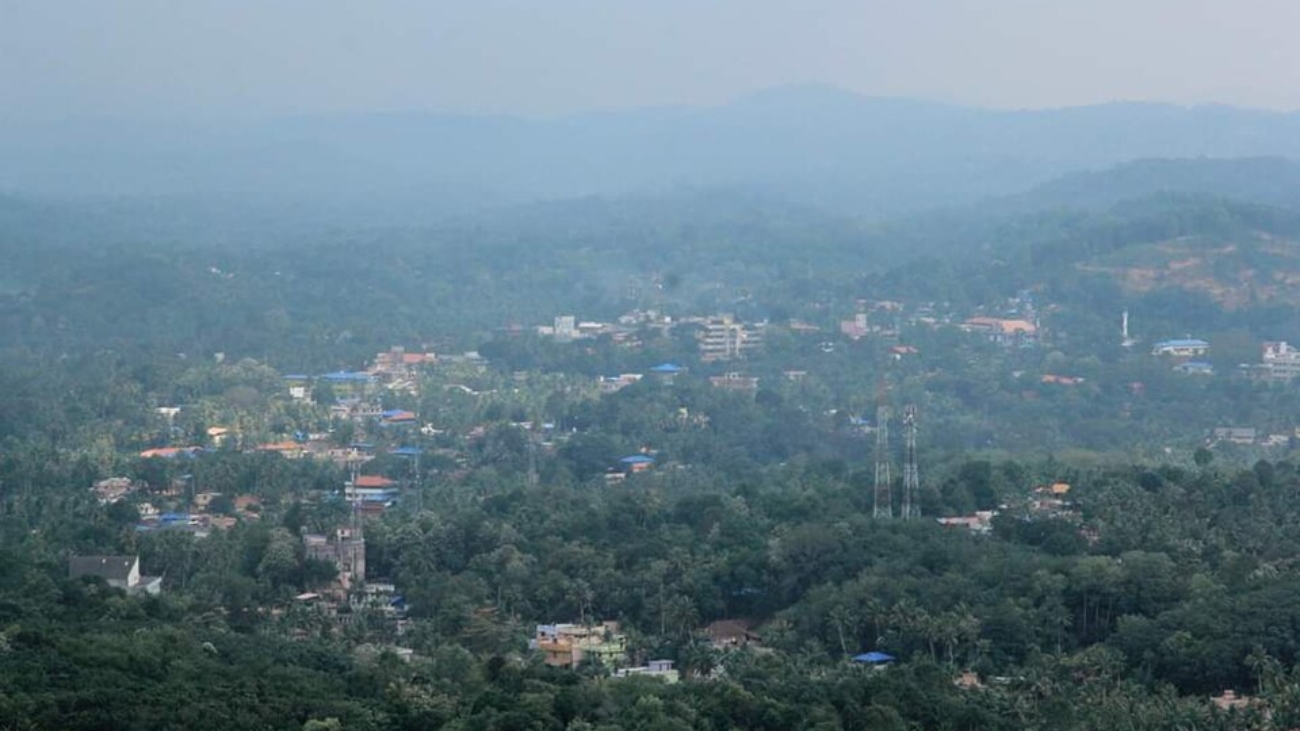
Nedumangad taluk—stretching from the agrarian hills of Aryanadu and Vithura to the peri-urban belt bordering Thiruvananthapuram city—is uniquely positioned to become Kerala’s inland innovation and manufacturing powerhouse by 2047. With abundant land in its highland panchayats, proximity to the capital’s research institutions, and strong agricultural linkages, Nedumangad can transform from a predominantly agrarian economy into a ₹11,000–₹12,000 crore annual manufacturing ecosystem. By 2047, the taluk’s projected population of 8–8.3 lakh, including a working-age base of nearly 4.5 lakh, can support high-skill and mid-skill industries across multiple clusters.
The transformation begins with harnessing Nedumangad’s agricultural strength. A Highland Agro & Spices Processing Mega Park, located between Nedumangad, Vithura, and Palode, can process cardamom, pepper, ginger, turmeric, vegetables, fruits, tubers, and medicinal plants. Modern packhouses, freeze-drying facilities, spice-oil extraction units, and dehydration plants can be installed to handle 2,00,000 tonnes of output annually. This cluster alone can generate ₹2,000–₹2,200 crore in turnover by 2047, supported by 18,000 direct jobs. Specialty spice blends, export-grade dried vegetables, herbal concentrates, and functional foods will strengthen Kerala’s brand in global markets.
The second pillar is the establishment of a Rubber & Advanced Polymer Innovation Zone in the Nedumangad–Kattakkada–Palode arc. Nedumangad has long served as a rubber-collection hub for the eastern highlands. By integrating research support from Thiruvananthapuram’s institutions and adopting high-precision moulding and compounding technologies, the taluk can produce EV components, medical gloves, engineering rubber goods, footwear, hoses, and high-performance gaskets. By 2047, this zone can achieve ₹2,200–₹2,500 crore in annual output with 20,000 skilled jobs. A central materials testing lab, design centre, and polymer prototype studio will support innovation-driven enterprises.
Nedumangad’s proximity to the capital city positions it well for an Electronics Assembly, IoT & Smart Devices Park. Located between Nedumangad town and Vazhayila–Peroorkada corridor, the park can host 60–80 MSMEs producing smart home devices, LED systems, sensors, microcontrollers, power electronics, solar inverters, and consumer gadgets. Even modest production—such as 50–60 lakh devices annually—can generate ₹1,500 crore. Automation-assisted lines will require 10,000–12,000 workers, making this cluster ideal for young technical graduates in the district. Integration with Kerala’s digital manufacturing policies will ensure global competitiveness.
Another strong potential sector is Wellness, Herbal & Ayurvedic Products Manufacturing, anchored in the biodiversity-rich belt from Vithura to Palode. With rising global interest in herbal medicines, nutraceuticals, balms, anti-inflammatory blends, aromatherapy products, and natural cosmetics, Nedumangad can build a ₹1,200–₹1,500 crore ecosystem. This sector can support 10,000–12,000 direct jobs, particularly for women. Establishing GMP-certified facilities, botanical extraction labs, and dried herb warehouses will strengthen export readiness. Linking with eco-tourism circuits such as Ponmudi can enhance global visibility.
A critical opportunity lies in establishing a Timber, Bamboo & Green Construction Materials Cluster across Aryanadu, Vellanad, and Kallara. The highlands possess strong bamboo and timber ecosystems, making the region ideal for engineered wood products, bamboo composites, furniture manufacturing, prefab housing components, and interior construction materials. By adopting modern kiln-drying systems, CNC cutting, and eco-friendly adhesives, the cluster can reach ₹1,000–₹1,200 crore annually. Approximately 12,000 jobs can be created, while promoting sustainable construction across Kerala.
Given Kerala’s ambitious renewable energy goals, Nedumangad can host a Solar & Renewable Components Manufacturing Hub. Even mid-sized production of 2.5 lakh solar mounting kits, 60,000 battery enclosures, and microgrid components can generate ₹900–₹1,100 crore. With good road linkages to both Vizhinjam and the capital city, the hub can integrate easily with installation networks across the state. The cluster will require engineers, technicians, and automation specialists—aligning with the district’s growing STEM skill base.
Logistics will determine the success of these clusters. Nedumangad currently faces a 12–15% logistics cost penalty, particularly in transporting goods to ports and markets. A 30-acre Integrated Logistics & Industrial Services Park near Nedumangad or Palode can eliminate this bottleneck. This park should host dry warehouses, cold-chain hubs, export packaging units, automated material-handling zones, and digital freight operations. Such a facility can support ₹6,000 crore worth of goods movement annually by 2047, reducing costs for MSMEs across the taluk.
Human capital development is the backbone of Nedumangad’s vision. By 2047, the taluk must train 15,000 technicians, 6,000 diploma graduates, and 20,000 skilled workers annually. Sector-specific academies for rubber processing, electronics assembly, timber engineering, herbal manufacturing, and supply chain automation must be established. Apprenticeship models linking ITIs and polytechnics to clusters will ensure steady job placement. Gulf-returnees, a significant demographic, can become supervisors, trainers, and unit owners in the emerging ecosystem.
Digital transformation must be embedded in the taluk’s industrial DNA. A Nedumangad Manufacturing Digital Network can interconnect 1,200+ enterprises across the taluk. Shared procurement, machine-booking systems, digital twins for factories, AI-driven predictive maintenance, and real-time market linkages can increase productivity by 20–25%. MSMEs will benefit from export documentation assistance, compliance templates, design libraries, and certification support.
Environmental sustainability will define Nedumangad’s identity. By 2047, the taluk should ensure that 70% of its industrial energy consumption comes from renewable sources. Zero-liquid discharge norms, bamboo and timber reforestation, green belt buffers, air-quality monitoring stations, and waste-to-resource models must be standard across manufacturing estates. Agro-waste from spice processing can feed biomass plants, rubber scrap can be repurposed as insulation or tiles, and bamboo waste can be processed into pellets or composites.
If implemented with discipline, Nedumangad can evolve into one of Kerala’s most balanced inland manufacturing taluks by 2047. With ₹11,000–₹12,000 crore annual output, 70,000–80,000 direct jobs, circular industry models, R&D-backed clusters, and a digitised production system, the taluk will become an economic anchor for central Thiruvananthapuram. Nedumangad’s transformation will exemplify how highland regions can lead Kerala’s next-generation manufacturing renaissance.
