
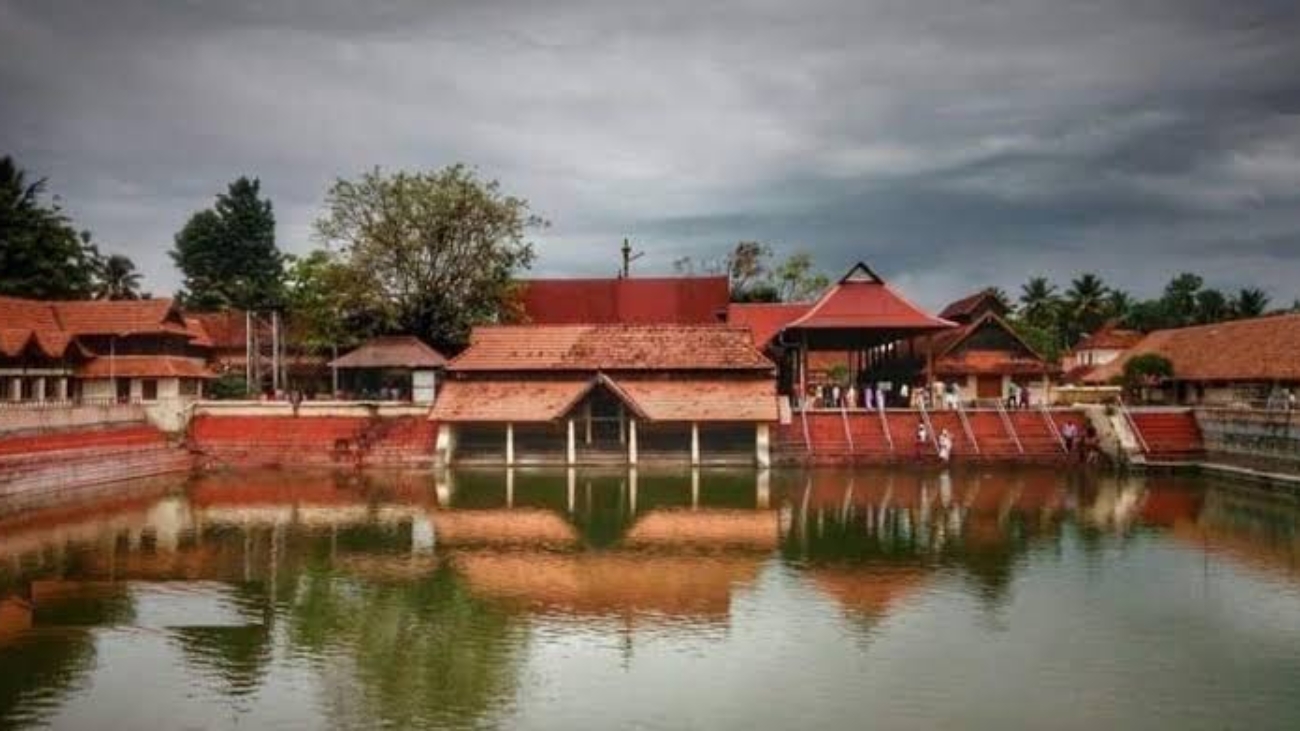
Ambalappuzha taluk—stretching across the central coastal belt of Alappuzha district—is uniquely positioned to become a diversified, climate-resilient manufacturing hub by 2047. With its blend of backwaters, coastal fisheries, midland agriculture, traditional industries, and dense tourism flows, Ambalappuzha sits at a powerful intersection of natural resources and human capital. The taluk’s projected population of 6–6.5 lakh, including nearly 3.7 lakh working-age residents, gives it a strong labour base. By 2047, Ambalappuzha can evolve into a ₹9,000–₹11,000 crore annual manufacturing economy, supported by marine processing, food-tech, green construction materials, renewable energy components, electronics assembly and tourism-linked craft clusters.
The first strong pillar for Ambalappuzha’s industrial future is a Coastal Marine Processing, Aquaculture & Marine Nutraceuticals Cluster, leveraging the taluk’s access to fish-landing centres, inland fisheries and backwater aquaculture. Today, most marine produce is sold with minimal value addition. A 35-acre integrated seafood park equipped with automated cleaning lines, IQF freezing, drying units, prawn-peeling systems, fish-oil extraction, collagen production, fermentation labs and ready-to-cook seafood plants can process 60,000–70,000 tonnes of marine produce annually by 2047. This cluster can generate ₹3,000–₹3,500 crore per year and support 18,000–22,000 direct jobs. Rising export demand for shrimp products, anchovy extracts, omega-rich supplements, nutraceutical powders and specialty seafood snacks places Ambalappuzha in a strong global supply position. Integration with Vizhinjam and Kochi ports will be essential.
A second major pillar is the establishment of a High-Value Agro-Processing, Rice Derivatives & Functional Foods Park, connecting the taluk’s agricultural hinterland with markets across Kerala. Paddy, vegetables, spices and fruits from Kuttanad and nearby regions flow into Ambalappuzha’s markets, but value addition is limited. A 30-acre food-tech park with rice-extrusion units, fortified rice lines, fruit pulpers, spice distillation labs, dehydration tunnels and ready-to-cook packaging systems can process 1,50,000 tonnes of agro-produce annually. By 2047, this sector can produce ₹1,800–₹2,200 crore in annual output and create 14,000–17,000 jobs, especially for women. The park can also support Ambalappuzha-branded rice snacks, herbal mixes and plant-based nutritional products for domestic and export markets.
Ambalappuzha’s rising tourism footprint—driven by Alappuzha’s houseboats, beaches, and heritage zones—offers a third major industrial opportunity: a Tourism Materials, Interiors & Green Construction Cluster. A 20-acre cluster can manufacture modular interiors for hotels and houseboats, eco-friendly furniture, bamboo composites, engineered timber, prefab resort components, jetty elements, signage, solar-powered lighting, and climate-adaptive construction materials. By 2047, this sector can generate ₹800–₹1,000 crore annually and create 7,000–9,000 direct jobs. As Kerala’s tourism sector grows into a multi-billion-rupee industry, demand for coastal- and water-resistant materials will rise sharply. Ambalappuzha’s artisanal carpentry traditions give it a competitive edge.
Given the region’s rising technical education footprint, Ambalappuzha is also well-suited for a Digital Electronics, LED Systems & IoT Assembly Hub. A 15–20 acre electronics cluster hosting 30–50 MSMEs can assemble LED lighting systems, smart switches, CCTV kits, micro-controllers, solar monitoring devices, marine sensors, inverters and small appliances. By 2047, this cluster can generate ₹900–₹1,100 crore in annual output and create 7,000–9,000 jobs. With Kerala’s rapid adoption of rooftop solar, home automation and digital security systems, Ambalappuzha can supply crucial components for statewide use.
A strong renewable-energy ecosystem is emerging around Alappuzha, especially with canal-top solar and micro-grid potential. This makes Ambalappuzha a strong candidate for a Solar Components & Electrical Equipment Manufacturing Cluster. Over 25 acres, MSMEs can produce solar mounting structures, wiring harnesses, power electronics, micro-inverters, distribution panels, charge controllers, LED streetlighting and battery casings. By 2047, this sector can contribute ₹1,500–₹1,800 crore annually and create 10,000–12,000 jobs. As Kerala moves toward 100 percent renewable electricity, local manufacturing of solar components will become essential.
Ambalappuzha’s coir heritage—rooted in the backwaters and coastal labour traditions—remains one of its greatest latent strengths. A revived Coir, Natural Fibres & Eco-Products Cluster can modernise this traditional industry. A 15-acre zone with automated spinning equipment, fibre-processing systems, geo-textile looms, matting units, biodegradable packaging units and coconut-husk–based composites can generate ₹600–₹800 crore annually and create 6,000–8,000 direct jobs. Coir geotextiles, eco-friendly mats, erosion-control blankets and biodegradable packaging have growing markets globally, especially with rising environmental regulation.
To connect these diverse manufacturing sectors, Ambalappuzha needs a Backwater Logistics, Cold-Chain & Industrial Services Park, optimally positioned near the NH66–Alappuzha corridor or close to a navigable waterway. A 25-acre logistics complex with 25,000 pallet spaces, 3,000 tonnes of cold storage, export packaging units, testing labs, e-commerce fulfilment and digital freight-management systems can reduce the current logistics penalty from 10–12 percent to 5 percent by 2047. This can save industries ₹150–₹200 crore annually. Integrating waterway cargo can reduce fuel consumption and transport costs for seafood and agro-products.
Human capital development must be the backbone of the taluk’s 2047 strategy. Ambalappuzha must train 12,000–15,000 technicians annually in marine processing, food technology, electronics assembly, renewable energy systems, CNC machining, quality control and industrial automation. A new Ambalappuzha Institute of Coastal & Digital Manufacturing (AICDM) can anchor this transition, offering diploma programmes, short-term technical courses and MSME training. Gulf-return workers—abundant in the coastal belt—should be guided into supervisory roles, machinery maintenance, fabrication entrepreneurship and solar-installation services. Women should represent at least 45 percent of the workforce in food-tech, marine processing and electronics sectors.
Digital transformation will unify Ambalappuzha’s industrial ecosystem. A Ambalappuzha Manufacturing Digital Grid, connecting 1,000–1,200 MSMEs, can provide AI-driven quality inspection, shared procurement networks, cluster-level ERP tools, cloud production scheduling, export documentation and predictive maintenance alerts. Productivity gains of 20–30 percent are achievable, especially in marine and food-processing sectors where wastage and timing are critical.
Sustainability must define the taluk’s industrial expansion. By 2047, Ambalappuzha should achieve 75 percent renewable energy penetration across clusters through canal-top solar, rooftop solar, biomass and battery storage. Industrial water reuse must reach 80 percent, especially in seafood and agro-processing zones. A circular materials recovery facility processing 12,000–15,000 tonnes annually of fish waste, agro-residue, packaging waste, coir scrap and timber offcuts can feed recycled raw materials back into industries. Coastal green belts and climate-mitigation infrastructure must be integrated into manufacturing zones to protect against sea-level rise and salinity intrusion.
If executed with strategic discipline, public–private coordination, and strong environmental planning, Ambalappuzha taluk can emerge as one of Kerala’s most balanced coastal manufacturing economies by 2047. With ₹9,000–₹11,000 crore in annual output, 70,000–80,000 direct jobs, strong marine–agro integration, a renewable-energy manufacturing ecosystem, digital electronics assembly, and a revitalised coir-based green cluster, the taluk can become an exemplar of climate-smart, innovation-led industrial development. Ambalappuzha’s transformation will strengthen the entire Alappuzha district and contribute substantially to Kerala’s shift toward a resilient, export-oriented manufacturing future.
