
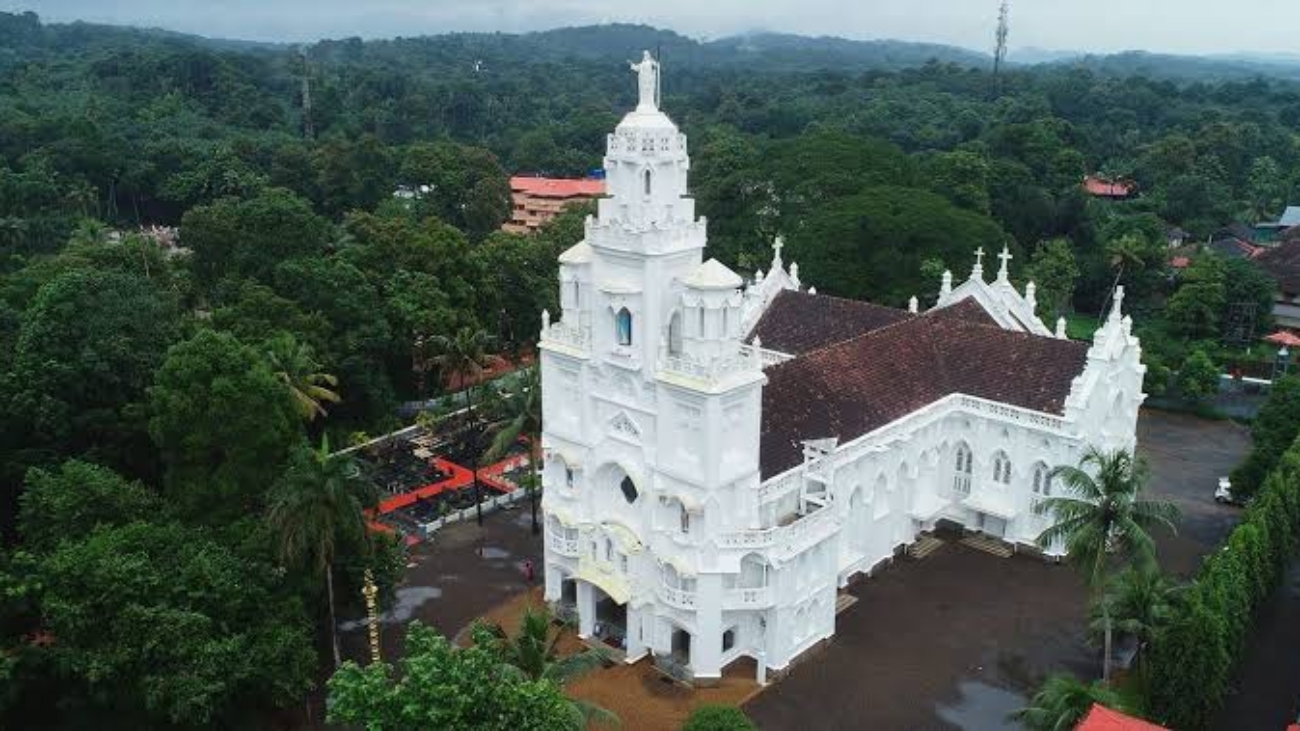
Kanjirappally taluk—sitting at the intersection of Kerala’s midland agricultural belt and the high-range economy of Idukki—is one of the state’s most strategically located regions for manufacturing linked to plantations, spices, forest resources, and highland logistics. With road access into Erumely, Mundakkayam, Kuttikkanam, and the eastern border of Pathanamthitta, Kanjirappally acts as a commercial gateway for pepper, cardamom, rubber, nutmeg, fruits, vegetables and timber flowing from the high ranges into Kerala’s central markets. By 2047, the taluk can evolve into a ₹10,000–₹12,000 crore annual manufacturing economy, supported by high-value agro-processing, rubber engineering, herbal manufacturing, rural machinery, wood-based industries and climate-adaptive construction materials. With a projected population of 5.5–6 lakh and nearly 3.4 lakh working-age residents, Kanjirappally has the labour strength to support future-ready manufacturing.
The taluk’s most powerful industrial anchor is the Rubber, Polymers & Advanced Engineering Materials Cluster, leveraging its central role in Kerala’s rubber belt that stretches from Ranni and Erumely to Kanjirappally and Koottickal. By 2047, a 40-acre rubber-industrial zone equipped with automated compounding lines, moulding systems, footwear-component units, glove lines, EV-grade gasket manufacturing, hose production and polymer testing labs can produce 30,000–35,000 tonnes of engineered rubber goods annually. This cluster alone can generate ₹2,800–₹3,200 crore in output and create 20,000–24,000 direct jobs. As India scales up its electric-vehicle ecosystem and industrial automation, demand for high-precision rubber components will rise, positioning Kanjirappally as a key supplier for automotive, renewable-energy and medical-industrial applications.
Kanjirappally’s second major pillar is a High-Range Spices, Agro-Processing & Functional Foods Park, drawing on the region’s rich production of pepper, cardamom, ginger, turmeric, banana, jackfruit and tropical fruits from Mundakkayam, Erumely, Chappath and Peruvanthanam. A 35-acre food-tech park with freeze dryers, dehydration tunnels, spice-oil distillation units, fruit pulpers, fermentation units, snack-extrusion lines, and nutraceutical blending can process 1,60,000 tonnes of produce annually. By 2047, this cluster can generate ₹2,200–₹2,600 crore per year and create 18,000–22,000 direct jobs, especially for women. With global demand rising for premium pepper extracts, aroma oils, functional spice blends, plant-based nutrition, and minimally processed foods, Kanjirappally can become a major exporter to GCC, ASEAN and European markets.
A distinctive opportunity in Kanjirappally—due to its forest-edge geography—is the creation of a Herbal, Ayurveda & Botanical Extracts Manufacturing Hub. A 20-acre zone with GMP-ready facilities can produce balms, essential oils, botanical concentrates, herbal cosmetics, ayurvedic powders, therapeutic blends and plant-based nutraceuticals. By 2047, this sector can generate ₹1,000–₹1,200 crore annually and support 9,000–12,000 jobs. The taluk’s unique biodiversity allows cultivation and wild harvesting of medicinal plants under scientific supervision, feeding into Kerala’s growing ayurvedic and wellness economy.
Kanjirappally also has a strong base of skilled mechanical workers, welders and Gulf-return technicians, making it ideal for a Rural Machinery, Plantation Equipment & Light Engineering Cluster. A 20–25 acre industrial hub can manufacture pepper threshers, nutmeg shellers, spice dryers, fruit processors, mini-oil extractors, micro-hydro components, modular construction frames and workshop machinery. By 2047, this cluster can produce ₹900–₹1,200 crore in output and create 8,000–10,000 direct jobs. Equipment designed in Kanjirappally can support both Kerala’s plantations and India’s highland agricultural sectors.
Given the region’s strong carpentry and woodcraft traditions, Kanjirappally is ideal for a Timber, Bamboo & Eco-Construction Materials Cluster. A 20-acre cluster can produce engineered wood, bamboo composites, modular interiors, prefab housing components, eco-friendly boards, CNC-carved furniture, and low-carbon construction materials. By 2047, this sector can generate ₹800–₹1,100 crore per year and employ 7,000–9,000 people. These climate-resilient materials can support Kerala’s housing and tourism sectors, especially in highland destinations like Vagamon and Thekkady.
A forward-looking opportunity is the development of a Climate-Resilient Construction & Landslide Management Technologies Cluster, inspired by the region’s vulnerability to floods and slope instability. A 10–15 acre innovation and manufacturing hub can produce geotextiles, slope stabilisation tools, modular flood barriers, drainage systems, erosion-control mats and early-warning sensors. By 2047, this emerging sector can generate ₹500–₹700 crore and create 4,000–6,000 jobs. Kanjirappally can become an innovation centre for Kerala’s climate-adaptive infrastructure.
To support these clusters, the taluk needs a Kanjirappally Highland Logistics & Storage Park, located along the Kanjirappally–Erumely or Mundakkayam–Kottayam corridor. A 20–25 acre logistics hub with 20,000–25,000 pallet spaces, 2,000 tonnes of cold storage, quality-testing labs, packaging services, e-commerce fulfilment and digital freight systems can reduce logistics costs from 12–15 percent to 6–7 percent. This will save ₹150–₹200 crore annually for manufacturers. Enhanced connectivity to Kochi and Vizhinjam ports will strengthen export competitiveness.
Human capital development will shape Kanjirappally’s future. By 2047, the taluk must train 12,000–15,000 technicians annually in rubber engineering, food-tech, herbal processing, CNC machining, plantation equipment maintenance, industrial automation, electronics, QA/QC and renewable-energy systems. A Kanjirappally Institute of Highland Manufacturing & Technology (KIHMT) should anchor training, research and industry partnerships. Gulf-return workers—abundant in the region—can be transitioned into supervisory roles, fabrication entrepreneurship and machinery servicing. At least 40 percent of industrial jobs should be targeted for women.
Digital transformation must unify the taluk’s MSMEs. A Kanjirappally Manufacturing Digital Grid, connecting 900–1,200 enterprises, can enable AI-based quality inspection, predictive maintenance, cloud scheduling, shared procurement networks, digital supply-chain visibility and export documentation support. Digitalisation can deliver 20–30 percent productivity gains, enabling small enterprises to compete globally.
Sustainability must guide all development. By 2047, 75 percent of industrial energy in Kanjirappally must come from renewables—rooftop solar, agro-waste biomass, micro-hydro and battery storage. Industrial water reuse should reach 80 percent, and strict zero-liquid-discharge norms must apply to food-tech, spice-oil and herbal units. A circular materials recovery facility capable of processing 12,000–15,000 tonnes of agro-waste, rubber scrap, bamboo, wood waste and packaging materials can support a regenerative industrial ecosystem.
If implemented with vision, institutional stability and ecological sensitivity, Kanjirappally can become Kerala’s premier high-range manufacturing hub by 2047. With ₹10,000–₹12,000 crore in annual output, 75,000–85,000 direct jobs, strong anchors in rubber engineering, spice processing, herbal manufacturing and rural machinery, and a digitally integrated industrial grid, the taluk can redefine highland industrialisation in the state. Its rise will strengthen the Kottayam–Idukki–Pathanamthitta growth triangle and contribute significantly to Kerala’s transition into a resilient, innovation-led manufacturing economy.
