
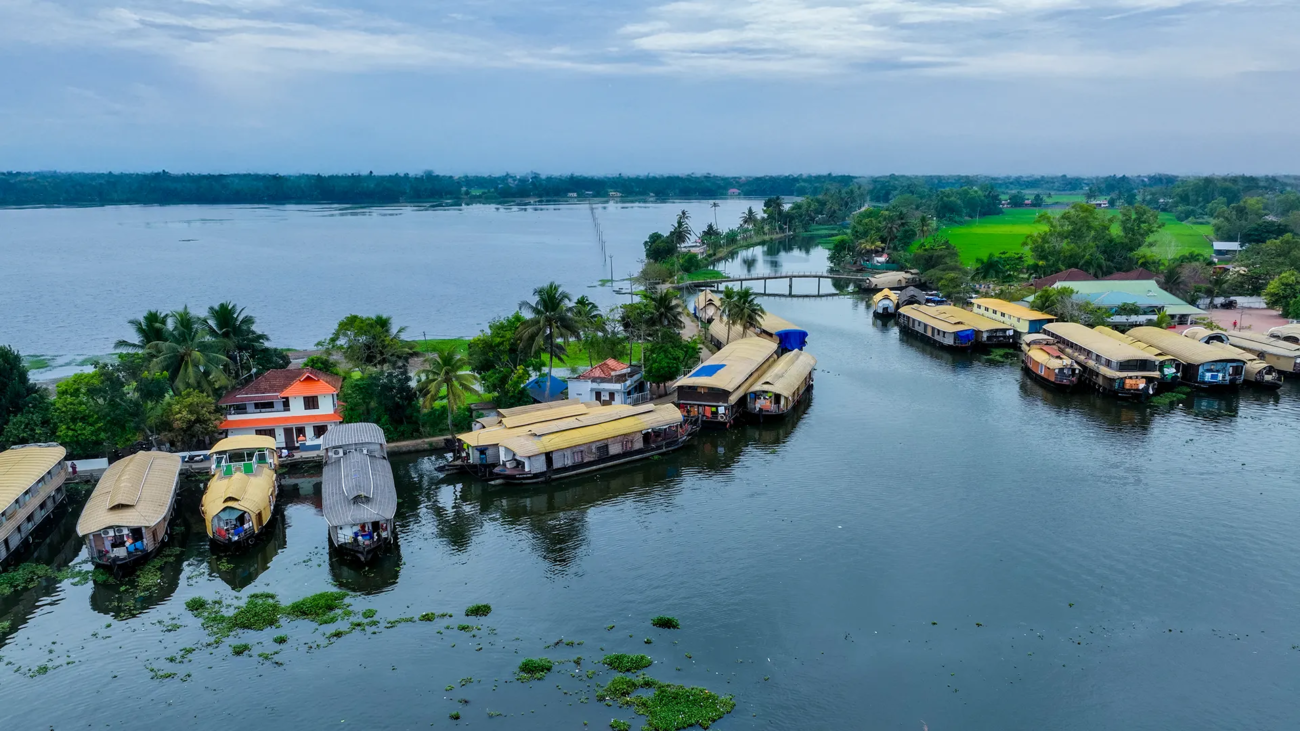
Kuttanad—the rice bowl of Kerala and one of the world’s few below-sea-level farming regions—is uniquely positioned for a new era of agro-industrial and water-based manufacturing by 2047. Its landscape of polders, backwaters, river basins and wetland ecosystems creates opportunities unlike any other taluk in the state. With a projected population of 5.5–6 lakh by 2047 and nearly 3.3 lakh working-age residents, Kuttanad can transition from a primary-production region into a ₹10,000–₹12,000 crore annual manufacturing ecosystem, built on high-value food processing, climate-adaptive materials, marine-linked industries, inland aquaculture, renewable energy and water-tech innovation. The region’s unique identity—agriculture, water, resilience—must become the foundation of its industrial rise.
The first and strongest pillar is the creation of a Kuttanad Rice, Food-Tech & Functional Nutrition Mega Park, which transforms the region’s vast rice production into high-value products. Today, Kuttanad exports mainly raw or semi-processed rice with limited value addition. A 40-acre integrated food park equipped with rice-extrusion systems, puffed rice lines, fortified rice blending units, ready-to-cook mix plants, plant-based protein facilities, fermentation labs and rice bran oil extraction units can process 3,00,000 tonnes of grain and associated by-products annually by 2047. This cluster alone can generate ₹3,500–₹4,000 crore in annual revenue and support 25,000 direct jobs. Kuttanad-branded rice snacks, health mixes, functional carbohydrates, baby food blends, and nutraceutical rice derivatives will find strong domestic and export demand, including in Gulf and ASEAN markets.
The second major pillar is a High-Moisture Agro-Processing & Spice-Consolidation Hub, leveraging the region’s vegetable cultivation, banana plantations, taro, tubers, flowers, inland fish and inflows from neighbouring districts. A 25-acre park equipped with dehydration tunnels, freeze dryers, spice distillation systems, fruit pulping lines, pickling plants and fermented food units can process 1,50,000 tonnes of produce annually. By 2047, this cluster can generate ₹1,800–₹2,200 crore in output and create 15,000 jobs, especially for women. The wetland environment enables year-round cultivation cycles, ensuring stable input flows.
Kuttanad’s linkage with backwaters and inland fishing offers another transformative opportunity: a Freshwater Aquaculture & Value-Added Protein Cluster. The region can expand inland fish cultivation, prawn farming, and integrated rice–fish systems. A 20-acre fish-processing and aquaculture-value-addition cluster with automated grading, filleting, drying units, feed-production plants and fish-oil extraction can process 25,000–30,000 tonnes of freshwater and brackish fish annually. By 2047, this sector can produce ₹1,200–₹1,500 crore in output and create 12,000 jobs. Functional protein powders, collagen, dried fish snacks, fish meal, and nutraceutical extracts can establish Kuttanad as a pioneer in plant–marine hybrid protein systems.
A high-potential area unique to Kuttanad is Water-Tech, Flood-Resilience & Canal Infrastructure Manufacturing. With climate change intensifying flooding, waterlogging and salinity intrusion, Kuttanad can evolve into Kerala’s centre for water-management products. A 20-acre industrial zone can manufacture canal gates, smart pumps, flood barriers, floating solar platforms, water sensors, drainage system components, small turbines, desalination units, and rural water-purification devices. By 2047, this cluster can generate ₹1,000–₹1,300 crore in annual output and provide 10,000 jobs. As Kerala upgrades its drainage, irrigation and flood-control infrastructure, Kuttanad can be the epicentre of innovation and production.
A complementary sector is a Green Construction Materials & Eco-Friendly Housing Cluster, responding to Kuttanad’s unique climatic challenges. Lightweight, moisture-resistant, anti-corrosive and elevated-housing materials will be in high demand across the region. A 20-acre eco-materials zone can produce bamboo–cement composites, lightweight panels, moisture-resistant boards, floating house components, modular interiors, waterproof coatings and recycled-plastic building elements. By 2047, this cluster can generate ₹800–₹1,000 crore annually and create 7,000–9,000 jobs. These materials can be used across Kerala, especially in flood-prone regions.
Kuttanad’s artisan traditions—especially in boat repair, fibre work and coir—enable the development of a Boating, Inland Navigation & Marine Accessories Hub. A 20-acre cluster can produce FRP boats, inland ferries, pontoons, houseboat components, marine engines, solar-electric boat systems, navigation lights and jetty components. By 2047, this industry can achieve ₹700–₹900 crore in output and create 6,000–8,000 jobs. Given Kerala’s growing water transport network (like the Water Metro concept), Kuttanad can become a major supplier of water mobility solutions.
To connect all these industries, the taluk needs a Kuttanad Agro-Logistics, Cold-Chain & Waterway Cargo Park, ideally linked to both road and inland water routes. A 25-acre multi-modal logistics centre with 30,000 pallet spaces, 3,000 tonnes of cold storage, packing units, bonded warehouses and digital freight-management systems can reduce logistics inefficiency from 12–15 percent to 6 percent. This can save ₹200–₹250 crore annually for Kuttanad’s industries. Waterway cargo handling will significantly reduce transportation costs for rice and aquaculture products.
Human capital development must become the taluk’s central pillar. By 2047, Kuttanad must train 12,000–15,000 technicians annually across food technology, aquaculture, water engineering, polymer science, eco-materials, CNC machining, industrial automation and quality systems. A dedicated Kuttanad Institute of Agro & Water Technologies (KIAWT) should anchor this skill ecosystem. Special programmes must convert Gulf-return workers into machinery supervisors, fabrication entrepreneurs, aquaculture managers and solar–water technicians. Women must form at least 50 percent of the workforce in food-tech and nutraceutical units.
Digital transformation will unify Kuttanad’s manufacturing ecosystem. A Kuttanad Manufacturing Digital Grid, connecting 1,000–1,200 MSMEs, can provide AI-based quality grading for rice and fish, cloud-based production scheduling, shared machinery booking, predictive maintenance, export documentation support and blockchain-based traceability systems. Digitalisation can boost productivity by 20–30 percent, especially in food-tech clusters.
Sustainability must define Kuttanad’s transformation. By 2047, 80 percent of industrial energy must come from solar (including floating solar), agro-waste biomass, micro-wind and district-level storage. Industrial water reuse must exceed 85 percent, especially in wetland-sensitive zones. A circular materials facility capable of processing 15,000 tonnes annually of rice husk, fish waste, packaging material and agricultural residue can feed recycled inputs into multiple clusters. Wetland conservation and climate-adaptive infrastructure must guide all construction.
If implemented with ecological discipline and strategic investment, Kuttanad can become India’s premier wetland-based manufacturing economy by 2047. With ₹10,000–₹12,000 crore in annual output, 70,000–85,000 direct jobs, deep agro–water industrial integration, global-standard rice processing, high-value aquaculture, water-tech leadership and sustainable manufacturing practices, the taluk can redefine what climate-resilient industrialisation looks like in Kerala. Kuttanad’s rise will strengthen the entire Alappuzha district and serve as a model for water-based economic transformation across India.
