
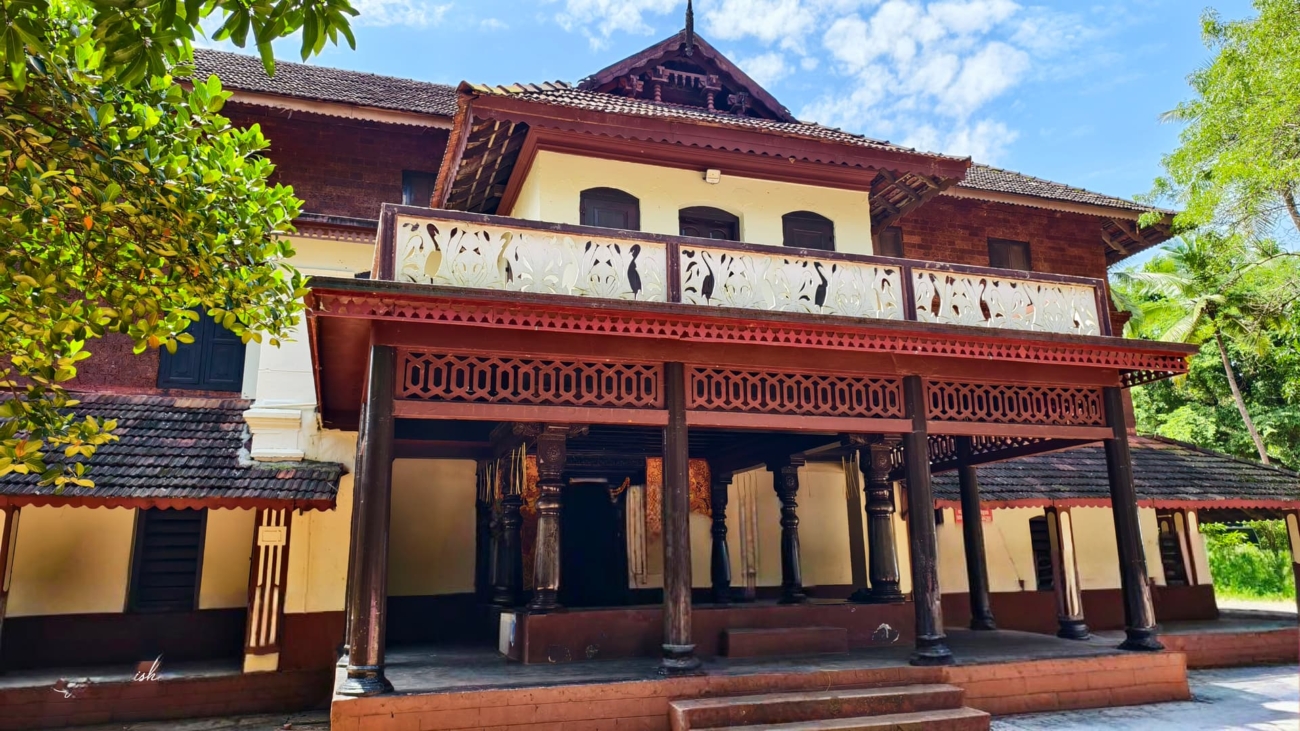
Ottappalam taluk—covering Ottappalam town, Vaniamkulam, Sreekrishnapuram, Ambalapara, Ananganadi, Shoranur, Thiruvegappura and surrounding belts—is one of central Kerala’s most culturally rich and commercially active regions. Historically a centre of education, skilled craftsmanship, performing arts, handloom, agriculture and transport connectivity, Ottappalam stands at a strategic location linking the Malabar markets with the Palakkad–Coimbatore industrial corridor. With a projected population of 4.5–4.8 lakh by 2047, including 3 lakh in the working-age bracket, the taluk can realistically evolve into a ₹10,000–₹12,000 crore annual manufacturing ecosystem, anchored in textiles, food-tech, agro-processing, wood products, herbal manufacturing, metal workshops, rural machinery and MSME-led innovation.
The strongest economic pillar for Ottappalam is a Textiles, Handloom–Powerloom & Apparel Manufacturing Cluster, drawing from the region’s deep clothing traditions in Vaniamkulam, Ambalapara and Sreekrishnapuram. A 35-acre textile innovation park with dyeing and finishing units, sari-weaving clusters, cotton processing, garment hubs, embroidery units, stitching lines and textile-printing systems can generate ₹2,000–₹2,500 crore per year and offer 20,000–25,000 jobs. This cluster can specialise in premium handloom, Kerala ethnic wear, school uniforms, home textiles and boutique fashion lines. Digital design studios and e-commerce-supported micro brands can expand the reach of Ottappalam’s textile identity.
A second major pillar is a Multi-Crop Agro-Processing, Coconut–Rice–Banana Value Chain Cluster, leveraging productive agriculture across Sreekrishnapuram, Ambalapara, Thiruvegappura and Vaniamkulam. A 40-acre food-tech industrial park with paddy processing, banana chips automation, coconut-oil extraction, flour mills, spice packaging, dried fruit processing, jackfruit value addition, ready-to-cook lines and nutraceutical blending can process 1,20,000–1,50,000 tonnes of raw material annually. This cluster can generate ₹1,600–₹2,000 crore and create 15,000–18,000 jobs, particularly for women.
Ottappalam’s historic pottery and woodcraft roots support a Wood Products, Furniture & Creative Materials Manufacturing Cluster. A 25-acre manufacturing estate with CNC woodworking units, carpentry hubs, interior panel production, engineered-wood boards, bamboo composites, furniture assembly, craft décor and modular interior systems can produce ₹1,000–₹1,300 crore annually and support 10,000–12,000 workers. This cluster can supply Kerala’s growing residential and tourism markets.
Its proximity to the highlands and herbal ecosystems supports a Herbal, Ayurveda & Natural Products Manufacturing Cluster. A 20-acre GMP-certified zone for herbal extraction, phytochemical processing, ayurvedic formulations, balms, supplements, essential oils, personal-care products and nutraceuticals can generate ₹700–₹900 crore and provide 6,000–8,000 jobs. Ottappalam can emerge as a natural-products manufacturing base aligned with Kerala’s wellness economy.
Ottappalam’s long-standing workshop culture enables a Light Engineering, Metal Fabrication & Rural Machinery Cluster suited for small-scale mechanisation needs. A 20-acre engineering hub with CNC machines, fabrication clusters, lathe workshops, irrigation pump assembly, coconut-processing equipment manufacturing, rice-mill machinery, banana slicers and agricultural tools can generate ₹700–₹1,000 crore and employ 7,000–9,000 technicians.
Complementing these clusters is a Processed Foods, Bakery-Tech & FMCG Manufacturing Hub, reflecting Ottappalam’s rapidly growing retail economy and NRI demand. A 20-acre FMCG estate with bakery lines, confectionery production, spice-blend units, beverage manufacturing, dosa-batter production, ready-to-eat meal systems and snack factories can generate ₹600–₹900 crore annually and support 6,000–8,000 workers.
Ottappalam’s artistic character provides the foundation for a Creative Manufacturing, Handicrafts & Cultural Products Cluster. A 10-acre hub producing handloom fusion apparel, murals, wooden décor, handmade stationery, pottery, festival items, classical arts accessories and boutique lifestyle products can generate ₹200–₹300 crore and support 3,000–4,000 artisans. This cluster can integrate with Kerala’s tourism markets and online boutique ecosystems.
To integrate all these sectors, Ottappalam requires a Rail-Linked Logistics, SME Warehousing & Cold-Chain Park, ideally situated near Shoranur—Kerala’s largest railway junction. A 30-acre logistics park with 20,000 pallet spaces, 1,500 tonnes of cold storage, packaging labs, SME fulfilment centres, bonded warehouses, e-commerce delivery sorting systems and a digital freight-management platform can reduce logistics inefficiency from 10–12 percent to 6 percent, saving ₹150–₹180 crore annually.
Human capital development must anchor Ottappalam’s 2047 strategy. The taluk must train 12,000–15,000 workers annually in textile design, stitching, dyeing, food safety, CNC machining, fabrication, quality control, herbal product formulation, packaging engineering, digital design and business management for MSMEs. A flagship centre—Ottappalam Institute of Textiles, Agro-Industries & Creative Technologies (OTACT)—should serve as the primary skill, incubation and R&D hub. Women must form at least 50 percent of employment in textiles, food processing, FMCG and creative sectors.
Digital transformation is essential for strengthening the taluk’s SME backbone. A Ottappalam MSME Digital Grid, connecting 1,500–1,800 micro and small industries, can offer AI-based quality testing, cloud production scheduling, machine diagnostics, digital invoicing, textile-design software, e-commerce integration and traceability systems for food and herbal products. This can increase productivity by 20–30 percent.
Sustainability must be embedded into Ottappalam’s industrial identity. By 2047, the taluk must achieve 75–85 percent renewable-energy adoption, powered by rooftop solar, biomass from agro waste, small-scale biogas systems and district-level battery storage. Industrial water reuse must exceed 85 percent, particularly in textiles, food-tech and herbal clusters. A circular materials recovery centre processing 10,000–12,000 tonnes of agro waste, textile scrap, packaging waste and wood residue annually can produce compost, eco-boards, recycled materials and biomass briquettes.
If implemented with coordinated district planning, strong MSME support, digital integration and sustainable infrastructure, Ottappalam can become central Kerala’s most balanced cultural–industrial taluk by 2047. With ₹10,000–₹12,000 crore in annual output, 1.0–1.2 lakh direct jobs, and leadership in textiles, agro-processing, furniture, herbal products, light engineering, FMCG and creative manufacturing, Ottappalam will anchor Palakkad’s cultural and commercial industrial expansion.
