
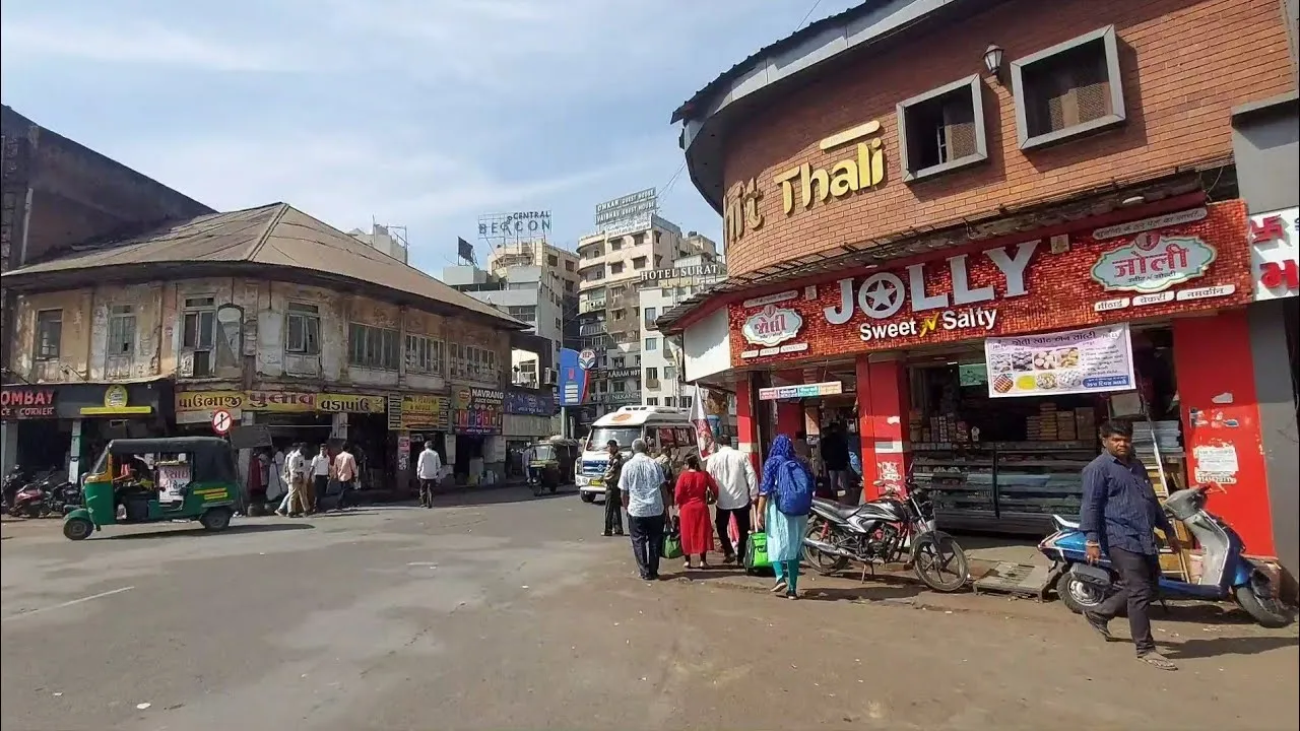
Thalassery taluk—stretching across Thalassery town, Kuthuparamba, Mattannur, Koothuparamba, Pinarayi, Dharmadam, Chokli, Panoor, Peringathur and the semi-urban–coastal belt leading toward Mahe and Kannur airport—is one of Kerala’s most commercially dynamic regions. With a long coastline, strong artisan traditions, a deep food culture, proximity to Kannur International Airport, and a rapidly urbanising interior, Thalassery is uniquely positioned to become North Kerala’s integrated manufacturing–export hub by 2047. The taluk can realistically evolve into a ₹18,000–₹20,000 crore annual manufacturing economy, driven by food-tech, textiles, engineering MSMEs, marine products, furniture, electronics assembly and creative industries.
The most powerful industrial pillar for Thalassery’s future is a Food-Tech, Processed Foods & FMCG Mega Cluster, rooted in the region’s strong culinary identity. A 60-acre FMCG estate with automated bakery lines, biscuit factories, snack units, ready-to-eat production, cake-mix plants, spice-blend units, beverage production, flour mills and frozen/instant food systems can generate ₹3,000–₹3,500 crore annually and create 25,000–30,000 jobs, especially for women. Thalassery’s culinary brand can also drive premium product exports.
A second major pillar is a Garments, Textiles & Tailoring-Tech Manufacturing Cluster, leveraging the workforce strength of Panoor, Peringathur, Koothuparamba and Dharmadam. A 50-acre garment-tech park with garment stitching lines, embroidery units, digital textile printing, uniform manufacturing, sportswear, women’s ethnic wear and export finishing can generate ₹2,800–₹3,200 crore and create 30,000–35,000 jobs, positioning Thalassery as a textile engine of North Kerala.
Thalassery’s coastline—from Chokli to Dharmadam—supports a Marine Processing, Aqua Products & Coastal Food Cluster. A 30-acre marine industrial zone with freezing tunnels, fish filleting lines, shrimp and cuttlefish processing, value-added seafood products, dried fish systems, fish-oil extraction and chitin–chitosan units can handle 1,20,000–1,50,000 tonnes annually. This cluster can generate ₹1,600–₹1,900 crore and support 14,000–17,000 workers.
Given the region’s booming real estate development and interior-design culture, Thalassery can become a strong centre for a Furniture, Wood-Tech & Modular Interiors Cluster. A 25-acre industrial estate producing modular furniture, plywood boards, interior panels, carpentry-tech products, bamboo–wood fusion materials and designer furniture can generate ₹1,000–₹1,300 crore and support 8,000–10,000 workers.
Thalassery’s proximity to Kannur International Airport creates significant potential for a Small Electronics Assembly & Export Accessories Cluster. A 20-acre tech-industrial zone producing LED systems, small appliances, CCTV kits, inverters, PCBA assemblies, EV chargers, solar accessories and IoT devices can generate ₹700–₹900 crore and support 6,000–8,000 skilled workers, especially youth from Mattannur and Koothuparamba.
Thalassery’s midland agricultural pockets—from Kuthuparamba to Mattannur—can support a Multi-Crop Agro-Processing & Spices Cluster. A 20-acre agro-industrial estate producing coconut products, banana-based foods, spice mixes, vegetable powdering, fruit pulping, dehydrated foods and ready-to-cook mixes can generate ₹700–₹900 crore and employ 6,000–8,000 people.
The workshop-rich belts around Koothuparamba, Mattannur and Panoor support a Light Engineering, Fabrication & Machinery Components Hub. A 25-acre engineering estate featuring CNC machining, welding units, agricultural tools, pump assembly, bakery-equipment production, marine hardware and auto-body building can generate ₹900–₹1,200 crore and employ 7,000–9,000 technicians.
A unique opportunity lies in a Thalassery Creative Manufacturing & Cultural Products Cluster, anchored in the taluk’s artistic and historical legacy. A 10-acre craft-industrial zone producing Thalassery-style crafts, heritage souvenirs, murals, pottery, handmade décor, digital-art merchandise, small wooden artefacts and festival-oriented items can generate ₹200–₹300 crore and support 3,000–4,000 artisans.
An essential infrastructure requirement is a Central Kannur Coastal Logistics, Packaging & Export Hub, positioned between Thalassery and Kannur airport. A 40-acre logistics estate with 30,000 pallet spaces, 1,500 tonnes of cold storage, FMCG fulfilment centres, textile export consolidation, seafood aggregation, bonded warehouses, packaging laboratories and AI-based logistics routing can reduce overall logistics costs from 10–12 percent to 6 percent, saving ₹200–₹240 crore annually for exporters and MSMEs.
Given Thalassery’s culinary brand and tourism potential, a Premium Gourmet Exports Cluster can specialise in bakery items, snacks, masalas, pickles, chocolates and packaged delicacies. This can generate ₹300–₹500 crore through niche exports, especially through Kannur Airport.
Human capital development must anchor the taluk’s transformation. Thalassery must train 30,000–35,000 workers annually in FMCG production, food safety, garment production, textile technology, CNC machining, electronics assembly, digital design, packaging science, logistics, furniture design and creative skills. A flagship institution—Thalassery Institute of Food-Tech, Textiles & Coastal Manufacturing (TIFTCM)—should anchor skill-building, R&D, incubation and industry collaboration.
Digital transformation must connect all enterprises under a Thalassery MSME Digital Grid, linking 3,000–3,500 units. This digital backbone can enable cloud-based production planning, AI-driven quality testing, digital invoicing, small-device traceability, cold-chain monitoring, e-commerce integration, predictive maintenance and real-time routing. This can boost productivity by 25–35 percent across clusters.
Sustainability must define Thalassery’s industrial identity. By 2047, the taluk should achieve 80–90 percent renewable energy, driven by rooftop solar, biomass from coconut and agro waste, district battery storage and coastal wind potential. Industrial water reuse should exceed 80 percent, especially in marine, FMCG and textile clusters. A circular materials recovery centre processing 12,000–15,000 tonnes of fish waste, textile scraps, packaging waste and wood residue can produce eco-boards, compost, biochar and biodegradable composites.
If implemented with coastal-centric planning, export-focused infrastructure, SME empowerment, skill development and sustainable manufacturing, Thalassery will become North Kerala’s premier coastal manufacturing–export engine by 2047. With ₹18,000–₹20,000 crore in annual industrial output, 1.7–1.9 lakh direct jobs, and leadership in FMCG, textiles, marine products, engineering MSMEs, furniture, electronics and creative industries, Thalassery will anchor Kannur district’s 2047 industrial leap.
