
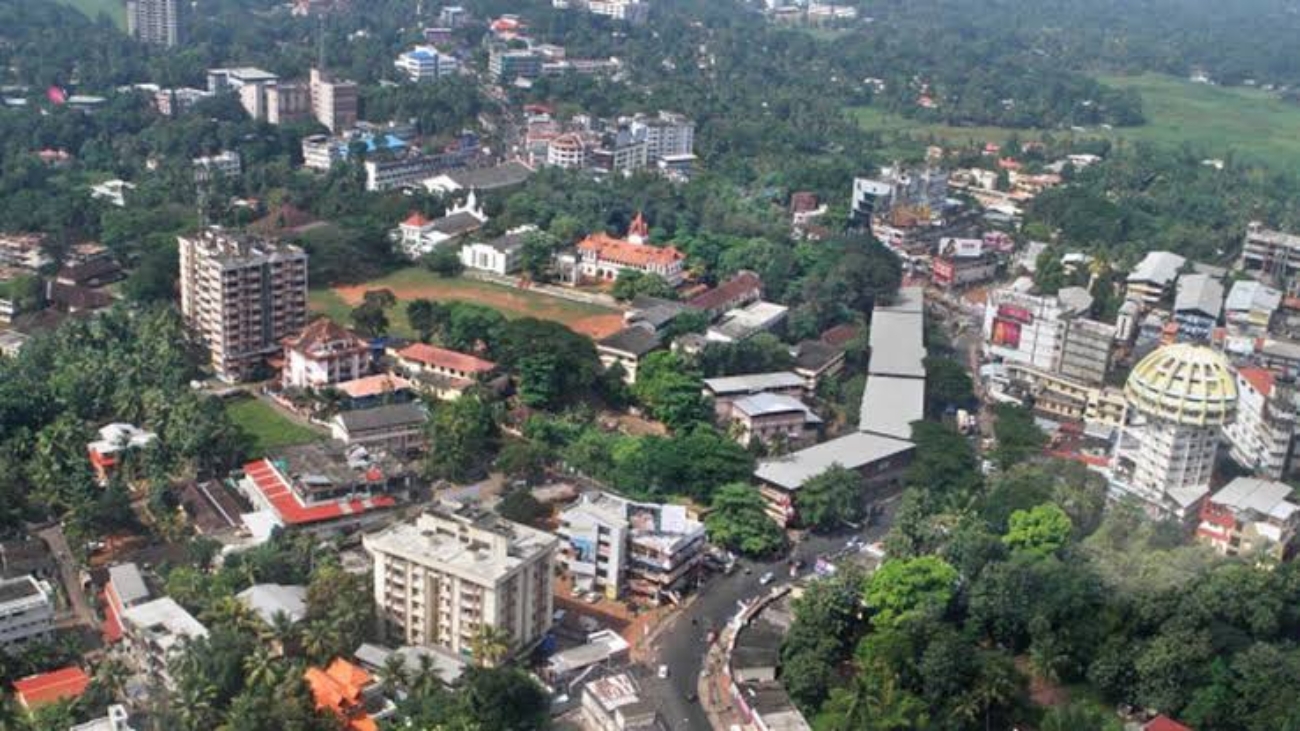
Thiruvalla taluk sits at one of Kerala’s most powerful economic intersections—linking Pathanamthitta’s highland agriculture with the commercial corridors of Kottayam, Chengannur and Changanassery. With exceptional educational institutions, a strong healthcare system, a globally connected migrant population, and high purchasing power, Thiruvalla is uniquely positioned to evolve into a premium, innovation-driven manufacturing hub by 2047. Its projected population of 6.5–7 lakh, including nearly 4 lakh working-age residents, provides a deep talent pool. The taluk can realistically grow into a ₹12,000–₹14,000 crore annual manufacturing economy by 2047, up from today’s modest micro-industrial base. The vision for Thiruvalla builds on four pillars: medical manufacturing, high-value agro-processing, green materials, and digital electronics.
The first and most powerful anchor of Thiruvalla’s industrial future is the creation of a Medical Devices, Diagnostic Supplies & Wellness Manufacturing Corridor. The taluk already hosts some of Kerala’s most respected hospitals and healthcare institutions, giving it a natural advantage in life-sciences-related manufacturing. A 40-acre medical manufacturing zone equipped with cleanrooms, sterilisation units, moulding systems, precision tubing lines, and quality-testing laboratories can produce syringes, IV sets, diagnostic strips, blood-collection tubes, respiratory support devices, physiotherapy tools, sanitary products, and rehabilitation aids. By 2047, this cluster can achieve ₹4,000–₹5,000 crore in annual output while generating 25,000–30,000 direct jobs. With India emerging as a major exporter of affordable medical consumables, Thiruvalla can become one of Kerala’s most reliable hubs for global healthcare supply chains. The presence of a strong NRI medical workforce will further accelerate technology absorption and standardisation.
Agro-processing forms the second pillar. Thiruvalla sits at a powerful supply-chain crossroad linking Mallappally, Ranni and Konni to the north with Kuttanad and Changanassery to the south. This gives the taluk steady access to spices, bananas, yams, tapioca, vegetables, fruits, flowers, milk and poultry. A High-Value Agro & Functional Foods Park, spread over 35 acres, can house freeze-drying lines, dehydration units, spice distillation labs, fruit pulping systems, nutraceutical blending units and ready-to-cook food facilities. By 2047, this cluster can process 1,60,000 tonnes of agricultural output annually and generate ₹2,500–₹3,000 crore in turnover. The sector can create 20,000 direct jobs, mostly for women, SHGs and local entrepreneurs. Furthermore, Thiruvalla’s strong retail and financial ecosystem can support premium food brands that scale beyond Kerala into national and Gulf markets.
The third major opportunity is the creation of a Digital Electronics, Smart Devices & Consumer-Tech Assembly Hub. The taluk has a large technically educated youth population and is strategically placed between the electronics belts of Kottayam and Kollam. A 20–25 acre electronics park can host 60–80 MSMEs assembling LED lighting systems, home-automation devices, CCTV units, water-quality sensors, micro-inverters, PCB boards, IoT modules and small appliances. By 2047, this cluster can produce 40–50 lakh devices annually, contributing ₹1,500–₹2,000 crore in output and generating 12,000 direct jobs. With automation and shared production lines, the park can operate at globally competitive efficiency. The presence of financial institutions in Thiruvalla also makes the taluk an ideal place for MSMEs to access working capital and scale quickly.
Thiruvalla’s engineering and craft heritage can anchor a Green Materials, Timber Engineering & Interior Manufacturing Cluster. With strong carpentry traditions and proximity to timber flows from highland belts, the taluk can produce engineered wood, bamboo composites, modular furniture, prefab interior panels, CNC-carved products, eco-friendly construction materials and sustainable design elements. By 2047, the cluster can achieve ₹1,200–₹1,500 crore in annual output and create 10,000 direct jobs. Demand for modular homes, boutique furniture, green interiors and eco-construction solutions is rising sharply across Kerala, and Thiruvalla—with its strong diaspora wealth and architectural preferences—can be both a producer and a major consumer.
A notable additional frontier for Thiruvalla is the development of a FinTech-Integrated MSME Manufacturing Ecosystem, something no other Kerala taluk naturally possesses. With a high density of banks, NBFCs and NRI-driven capital flows, Thiruvalla can become the first taluk where manufacturing growth is directly powered by local finance. A unified financing platform for MSMEs—supported by digital invoicing, cluster credit-rating models and interest-subsidy schemes—can add ₹300–₹400 crore in working-capital liquidity annually. This financial–industrial synergy can drastically reduce failure rates of small manufacturers and accelerate scale.
To support all these clusters, Thiruvalla needs a Midland Logistics, Cold-Chain & Industrial Services Park, ideally located between Thiruvalla and Pullad. This 25-acre multimodal facility should include 30,000 pallet spaces, 3,000 tonnes of cold storage, export-compliant packaging units, e-commerce fulfilment centres and a digital freight-management platform. By cutting the logistics penalty from the current 10–12 percent to 5 percent, the park can save ₹200–₹250 crore annually for local industries. Faster flows to Kochi and Vizhinjam ports will allow food products, electronics and medical supplies to reach global markets with consistency.
Human capital development is the backbone of Thiruvalla’s 2047 strategy. The taluk must train 18,000–20,000 technicians annually, across medical device assembly, HACCP food processing, electronics manufacturing, mechatronics, industrial automation, quality control, and renewable energy. A Thiruvalla Institute of Manufacturing & Life Sciences (TIMLS) should anchor this effort, offering diploma-to-degree programmes aligned with cluster demands. Additionally, Thiruvalla’s large community of Gulf-return professionals can be systematically integrated as trainers, supervisors and manufacturing entrepreneurs. Women should form at least 45 percent of the manufacturing workforce by 2047, given the strong presence of educated female workers in the region.
Digital transformation must unify all enterprises in the taluk. A Thiruvalla Manufacturing Digital Grid, connecting 1,500+ MSMEs, can offer cloud-based production scheduling, AI-enabled quality inspection, shared prototyping labs, joint procurement networks and export documentation tools. Digital traceability for medical devices, food products and electronics will enhance regulatory compliance and enable entry into high-value markets in Europe, GCC and Southeast Asia. Productivity gains of 20–30 percent are achievable through these systems, especially for small and medium units.
Sustainability must be a non-negotiable principle. By 2047, 75 percent of industrial energy in Thiruvalla should come from renewable sources through rooftop solar, canal-top solar, agro-waste biomass and grid-interactive storage. Water reuse in food-tech and medical manufacturing clusters must reach 85 percent, and strict zero-liquid-discharge norms must be enforced. A circular materials facility capable of processing 15,000 tonnes annually of agro-waste, rubber scrap, packaging waste and timber dust can feed recycled raw materials back into local clusters. Urban green belts, flood-resilient designs and heat-mitigation systems must be integrated into industrial planning.
If executed with discipline and vision, Thiruvalla taluk can become the premium inland manufacturing capital of central Kerala by 2047. With ₹12,000–₹14,000 crore in annual industrial output, 80,000–90,000 direct jobs, a globally linked medical manufacturing ecosystem, resilient food-tech clusters, strong digital integration, and deep sustainability practices, the taluk can emerge as a benchmark for Kerala’s transition into a high-value, export-ready, innovation-led manufacturing economy. Thiruvalla’s transformation will uplift not only Pathanamthitta but also the wider central Kerala economic region.
