
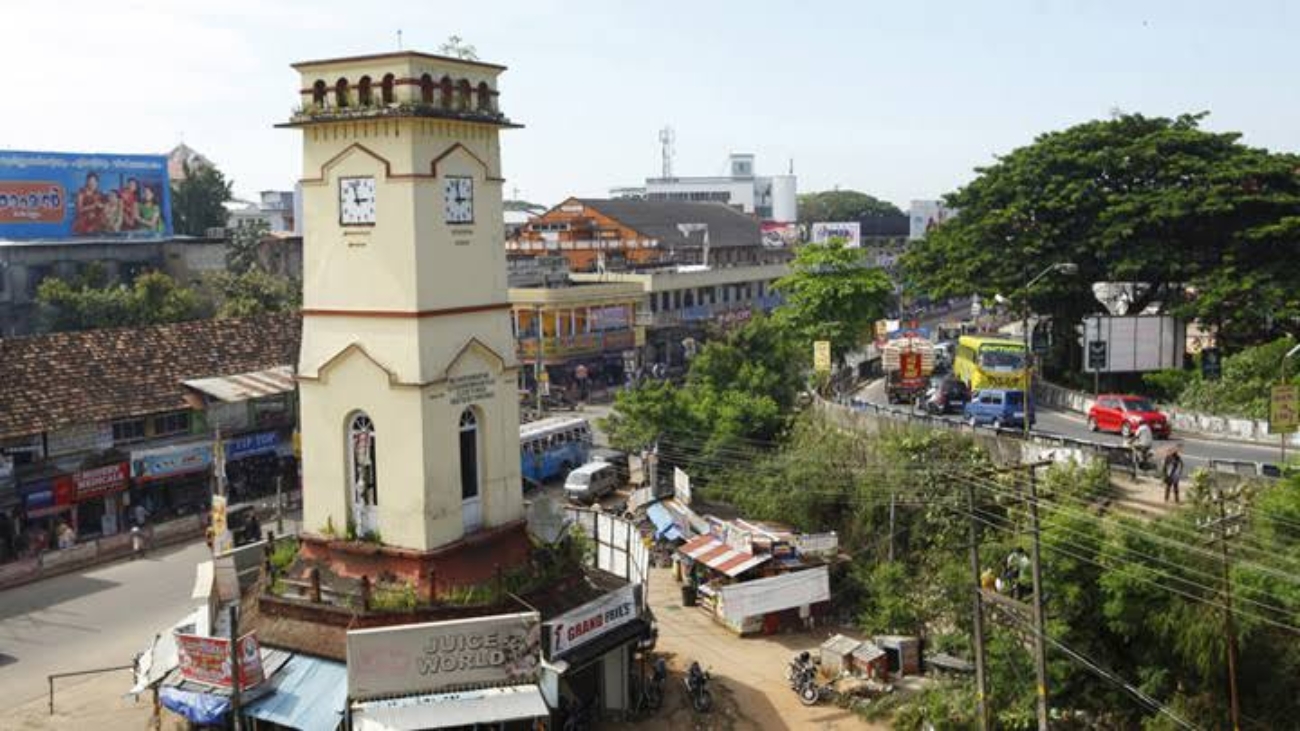
Kollam taluk—anchored by the historic port city, an active industrial coastline, a dense urban workforce and a strong legacy in cashew, coir, metals and marine trades—is uniquely positioned to become one of Kerala’s most advanced manufacturing zones by 2047. As Kollam transitions from traditional industries to future-ready sectors, the taluk must leverage its urban density, logistics accessibility, skilled labour pool, and long-standing industrial culture to build a modern, diversified manufacturing ecosystem. By 2047, Kollam taluk can grow into a ₹20,000–₹22,000 crore annual manufacturing economy, up from an estimated ₹4,000–₹5,000 crore today, while generating 1–1.2 lakh direct jobs and supporting nearly 3 lakh indirect livelihoods across supply chains, logistics and allied services. Its evolution will redefine the industrial landscape of southern Kerala.
The foundation of Kollam’s manufacturing future is the creation of an Advanced Marine, Aquaculture & Seafood Value Addition Corridor linked to the port and processing centres in the coastal belt. Kollam has one of Kerala’s richest fishing harbours and a long history of seafood trade, but much of it remains low-value and raw-export driven. By 2047, with the development of a 40-acre marine processing cluster featuring automated IQF tunnels, solar-powered cold rooms, shellfish processing lines, ready-to-cook facilities and nutraceutical extraction units, the taluk can process 80,000–90,000 tonnes of seafood annually. This cluster alone can generate ₹5,000–₹6,000 crore in turnover and support 25,000 direct jobs. Advanced by-product utilisation (collagen, fish oil, protein powders) will enhance profitability and integrate Kollam into high-end global supply chains.
The second major pillar is the comprehensive modernisation of the Cashew, Food-Tech & Plant-Based Processing Ecosystem, long associated with Kollam’s identity. Instead of competing in low-margin raw cashew processing, the taluk can shift to value-added, packaged, flavoured and nutritionally enhanced nut-based products. Alongside this, it can expand into dried fruits, millet-based snacks, premium ready-to-eat products and functional foods. A 30-acre food innovation park in the urban-peripheral zone can produce 50,000 tonnes of premium packaged food products annually, generating ₹2,500–₹3,000 crore in value and creating 15,000–18,000 jobs, especially for women. With automation upgrades, HACCP and global certification support, Kollam’s food-processing sector can regain global competitiveness.
Kollam’s long coastline and proximity to Vizhinjam create a natural advantage for a Coastal Electronics, Marine Equipment & Smart Device Assembly Hub. The taluk can host 80–100 MSMEs assembling LED systems, marine-grade sensors, small appliances, CCTV units, IoT modules, PCB assemblies, micro-inverters and control systems. By 2047, this cluster can produce 70–80 lakh electronic units annually and generate ₹3,000–₹3,500 crore in output with 20,000 direct jobs. Marine equipment manufacturing—such as GPS trackers, depth sensors, navigation lights, battery modules and solar-based fishing equipment—can become a signature competency of Kollam, reflecting its maritime heritage while embracing modern technology.
A transformational opportunity lies in developing a Port-Connected Green Materials & Circular Manufacturing Zone, taking advantage of the construction boom and global demand for low-carbon materials. This zone can manufacture fly-ash blocks, recycled aggregates, hollow-core panels, eco-friendly cement substitutes, marine-grade coatings, treated timber–bamboo composites and modular construction components. With an annual capacity of 3–4 lakh tonnes, this sector can generate ₹2,000–₹2,500 crore and create 15,000 jobs. A circular materials recovery facility capable of processing 40,000 tonnes of industrial and construction waste per year can feed recyclable materials back into production, making Kollam a leader in sustainable manufacturing.
Kollam taluk also has deep industrial roots in metals and fabrication, which can be upgraded into a Light Engineering, Fabrication & Industrial Machinery Cluster. With CNC machining centres, welding robotics, powder-coating lines and digital design studios, this cluster can produce machinery for marine industries, food processing, urban infrastructure, solar installations, and small workshops. By 2047, it can generate ₹2,000 crore in output with 12,000–15,000 jobs. This cluster can also supply components for Kerala’s renewable-energy transition, such as solar mounting structures, micro-wind components and energy-storage casings.
To integrate these industrial clusters, Kollam taluk must build a Port-Linked Logistics & Export Services Hub spanning 40 acres near the port–NH66 corridor. This hub should include 70,000 pallet storage capacity, 7,000 tonnes of cold storage, export packaging lines, marine container services, bonded warehousing, and a digital freight-control centre. By reducing the logistics penalty from the current 12–15 percent to 5 percent, this hub can save manufacturers ₹600–₹800 crore annually by 2047. It will also support seamless export flows through Vizhinjam port and enable Kollam to position itself as one of Kerala’s top manufacturing–export gateways.
Human capital is central to Kollam’s 2047 vision. The taluk must train 20,000 technicians annually, including 8,000 in electronics and electrical systems, 5,000 in food processing and HACCP protocols, 4,000 in marine technologies, and 3,000 in automation, mechatronics and industrial maintenance. A dedicated Kollam Institute of Marine & Industrial Technology (KIMIT) should be established to serve as the talent engine for the taluk’s manufacturing clusters. Gulf-return workers, who form a strong demographic here, can be retrained into supervisory, quality-control and entrepreneurial roles, accelerating industrial modernisation.
Digital transformation must unify the entire ecosystem. A Kollam Manufacturing Digital Grid, connecting over 1,800 enterprises, can offer shared procurement, machine-booking systems, cloud-based production management, AI-driven quality inspection, digital traceability and export-compliance support. This digital spine can increase productivity by 20–30 percent, reduce wastage and enable even small MSMEs to participate in global value chains.
Sustainability must guide every cluster. By 2047, at least 80 percent of industrial energy in Kollam taluk must come from renewable sources—rooftop solar, solar-wind hybrids and district-level energy storage solutions. Water reuse in industrial parks must reach 85 percent, and strict zero-liquid-discharge norms must be enforced in coastal and food-processing zones. With coastal vulnerability rising, green belts, flood-resilient industrial layouts and heat-mitigation architecture must be integrated into cluster planning.
If implemented with discipline and long-term planning, Kollam taluk can become one of Kerala’s flagship manufacturing centres by 2047. With ₹20,000–₹22,000 crore in annual output, 1–1.2 lakh direct jobs, a strong export economy, global-standard food and marine processing systems, and a deeply digitised industrial ecosystem, Kollam can transform from a legacy port city into a modern industrial engine. The manufacturing renaissance in Kollam will not only uplift the taluk but reshape the economic trajectory of the entire south Kerala coast.
