
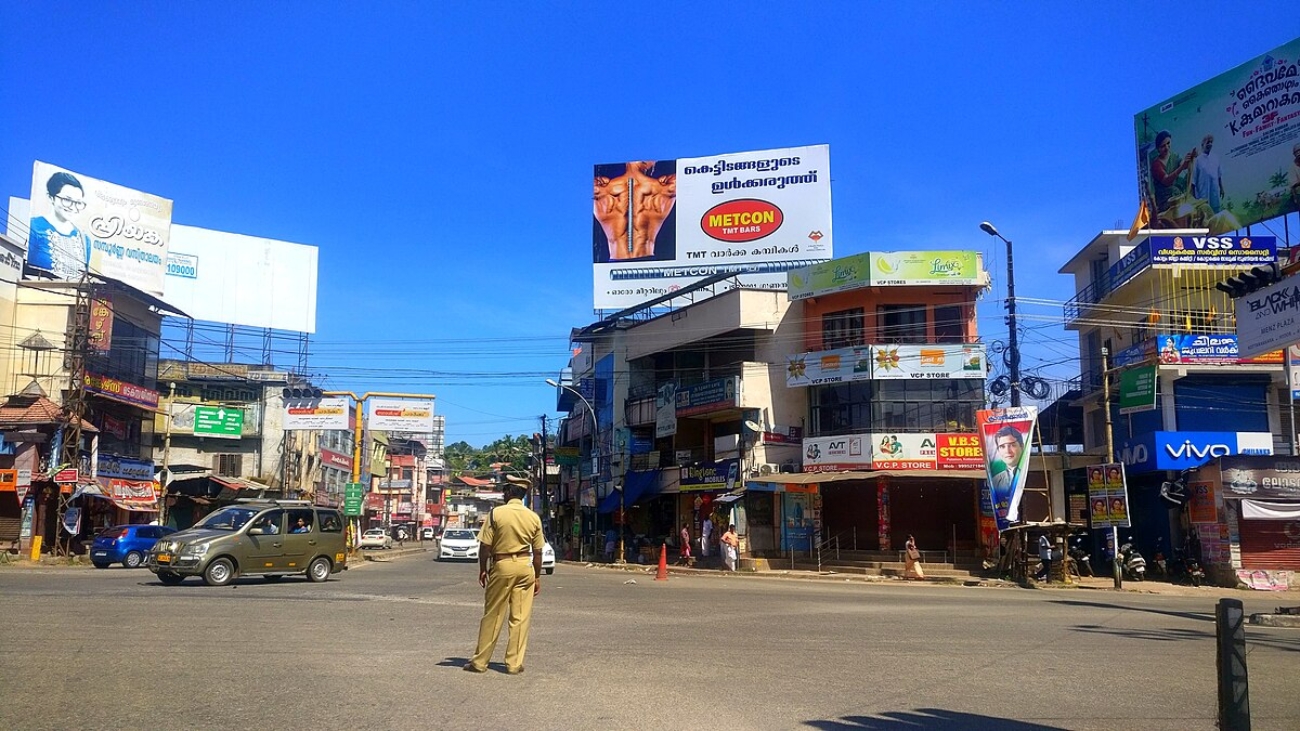
By 2047, Kottarakara taluk in South Kerala must emerge as a model of MSME-led employment built not on isolated entrepreneurship, but on aggregation, coordination, and collective market power. Located in Kollam district, Kottarakara has long functioned as a regional service town with strong trade traditions, skilled workers, and connectivity to both coastal and highland economies. Yet its MSMEs remain scattered, informal, and individually weak. Kerala Vision 2047 introduces a fresh angle for Kottarakara: treating MSMEs not as standalone units, but as parts of organised economic systems that negotiate, produce, and grow together.
The central weakness of MSMEs in Kottarakara is not lack of skill or effort, but fragmentation. Hundreds of workshops, shops, service providers, food processors, and traders operate independently, each too small to influence prices, access finance cheaply, or invest in technology. Vision 2047 reframes employment creation as a problem of scale without centralisation. The aim is not to build large factories, but to allow small enterprises to function as if they were large through structured cooperation.
The first transformation lies in MSME aggregation by function rather than by sector. Traditional policy groups MSMEs by product type, but Vision 2047 groups them by economic function. Production units aggregate together, service units aggregate together, logistics units aggregate together, and back-office units aggregate together. In Kottarakara, this means carpenters, metal fabricators, electricians, and mechanics forming shared production networks, while accountants, designers, marketers, and transport operators form shared service networks. Employment grows not because each unit expands individually, but because the system becomes denser and more efficient.
The second pillar is shared infrastructure as an employment multiplier. Individual MSMEs cannot afford advanced machinery, testing equipment, cold storage, or digital tools. Vision 2047 creates taluk-level shared infrastructure facilities owned or governed collectively. Kottarakara can host shared food-processing kitchens, material testing labs, fabrication sheds, packaging units, and digital studios. Each shared facility employs technicians, supervisors, quality controllers, and administrators while enabling dozens of MSMEs to scale output without capital strain. Employment multiplies horizontally rather than vertically.
The third fresh angle is shifting MSMEs from retail dependence to institutional and bulk markets. Kottarakara’s MSMEs largely depend on walk-in customers and small traders, making incomes volatile. Vision 2047 reorients them toward supplying schools, hospitals, hotels, housing projects, government departments, and large distributors. Aggregated MSMEs can meet volume, quality, and compliance requirements that individual units cannot. This stabilises demand and allows enterprises to hire workers on permanent terms rather than daily wages.
The fourth transformation is MSMEs as employment platforms rather than family businesses. Many enterprises in Kottarakara are owner-operated with limited hiring. Vision 2047 incentivises MSMEs that deliberately hire and train non-family workers. Employment-linked incentives, digital payroll support, and shared HR services reduce the fear of formal hiring. When MSMEs become employment platforms, job creation accelerates without changing ownership patterns.
The fifth pillar is converting informal skills into certified economic value. Kottarakara has generations of skilled workers in metalwork, carpentry, tailoring, food preparation, vehicle repair, and trading. Vision 2047 introduces skill certification linked directly to MSME networks. Workers earn recognised credentials while working, improving mobility and wages. MSMEs benefit from measurable skill depth, allowing them to bid for higher-value contracts. This formalisation-through-work approach creates dignity without dislocation.
The sixth angle is MSME-led local import substitution. Kottarakara consumes large volumes of construction materials, furniture, food products, packaging, electrical fittings, and services sourced from outside the taluk or even outside Kerala. Vision 2047 identifies these leakage points and deliberately builds MSME capacity to replace them locally. Every percentage point of import substitution creates local employment without expanding consumption. Over two decades, even modest substitution can sustain thousands of jobs.
The seventh transformation is women’s employment through aggregation, not isolation. Women-led enterprises often fail because they are individually exposed to market risk. Vision 2047 builds women-centric MSME clusters in food processing, care services, digital work, tailoring, wellness products, and micro-logistics, but crucially links them to aggregated procurement, branding, and distribution. Women are employed as professionals within systems rather than isolated micro-entrepreneurs. This significantly increases survival rates and income stability.
The eighth fresh angle is using MSMEs to absorb educated but underemployed youth. Kottarakara has many graduates working below their qualification level. Vision 2047 embeds graduates into MSME ecosystems as supervisors, quality managers, digital coordinators, finance assistants, and operations planners. These roles upgrade MSMEs while providing professional employment. Over time, a new layer of MSME middle management emerges, improving productivity and career prospects without requiring large corporations.
The ninth pillar is digital market intelligence at the taluk level. MSMEs often fail because they operate blindly, unaware of demand trends, price movements, or competition. Vision 2047 creates a taluk-level market intelligence cell that tracks consumption patterns, procurement opportunities, and supply gaps. MSMEs receive actionable information rather than generic training. This data-driven coordination increases success rates and reduces wasteful duplication.
The tenth and most radical shift is redefining success metrics. Vision 2047 measures MSME success in Kottarakara not by the number of units registered, but by employment density, worker retention, wage stability, and enterprise longevity. Policies reward MSMEs that survive beyond five, ten, and fifteen years while employing local people continuously. Longevity becomes more valuable than rapid churn.
Employment outcomes are the final test. By 2047, Kottarakara taluk can realistically support 14,000 to 18,000 direct MSME jobs if aggregation and market linkage are done right. These jobs span production, services, logistics, administration, and digital functions. They are not glamorous, but they are stable, local, and scalable. Migration reduces, household incomes stabilise, and local demand strengthens further.
By 2047, Kottarakara’s transformation will not be announced through industrial parks or startup summits. It will be visible in quieter signs. Workshops that hire ten workers instead of two. Food units that supply institutions year-round. Women-led clusters with predictable incomes. Graduates who choose to stay because work exists. MSMEs that negotiate prices instead of accepting them.
This is the Kerala Vision 2047 for Kottarakara taluk: a fresh MSME model where employment grows through aggregation rather than scale, resilience replaces fragility, and small enterprises together become an economic force large enough to matter.
