
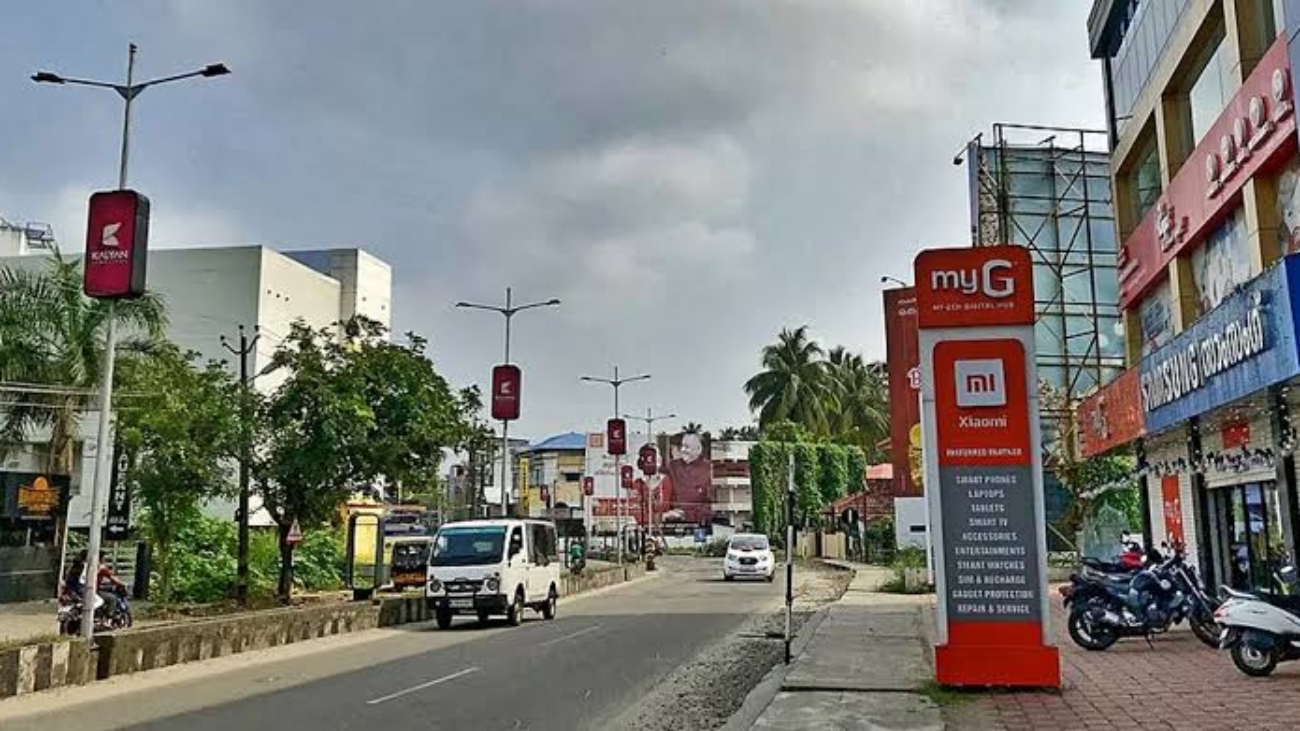
Palakkad is one of Kerala’s most strategically located districts: a gateway to Tamil Nadu, a natural industrial corridor, a major agricultural zone, and a district with India’s widest natural pass—the Palghat Gap—shaping climate, trade and mobility. Today, Palakkad’s economy is valued at roughly ₹22,000–25,000 crore, powered by heavy engineering, electrical equipment, agriculture, food processing, and manufacturing belts such as Kanjikode. By 2047, using data-driven planning and cluster-based development, Palakkad can transform into a ₹70,000–75,000 crore economic powerhouse, generating over 3 lakh new jobs, and evolving into Kerala’s most competitive manufacturing and logistics district.
The strongest pillar of Palakkad’s growth is its manufacturing spine. The Kanjikode–Walayar belt already hosts major units such as BEML, Instrumentation Ltd., Saint-Gobain, transformer manufacturers, cable industries and precision engineering firms. Yet average machine utilisation in the district remains only 60–65 percent, compared to global benchmarks of 85 percent. If even half the major units adopt IoT-based machine analytics, predictive maintenance, automated quality control and real-time production dashboards, Palakkad can increase output by 25–30 percent without expanding land. By 2047, the district’s engineering and electrical manufacturing economy alone can grow from roughly ₹6,000 crore to ₹18,000–20,000 crore, creating thousands of high-skilled jobs and enabling strong MSME linkages through local machining, fabrication and component suppliers.
A second pillar is agro-industrial growth. Palakkad is one of Kerala’s largest rice producers, with Kuttanad and Kole lands elsewhere being the only comparable zones. The district produces around 3–3.5 lakh tonnes of paddy annually, yet less than 12 percent undergoes value-added processing. By establishing integrated rice-tech clusters for fortified rice, ready-to-cook products, rice bran oil, and food-grade starch, Palakkad can increase agro-processing output from approximately ₹2,000 crore today to ₹8,000–10,000 crore by 2047. Automated mills, GPS-linked procurement systems, storage silos, moisture sensors and blockchain traceability can reduce post-harvest losses from 10 percent to under 3 percent. In addition, Palakkad’s vegetable and coconut belts can support dehydration units, cold chains and spice-processing parks that add another ₹4,000–5,000 crore to the district economy.
The third major pillar is Palakkad’s position as Kerala’s logistics gateway. Nearly 30 percent of Kerala’s inbound freight enters through Walayar. With a fully modernised logistics corridor—dedicated freight terminals, automated weighbridges, real-time freight dashboards, bonded warehouses, and multimodal hubs—Palakkad can reduce logistics costs for Kerala by 12–15 percent. A logistics economy valued at ₹8,000–10,000 crore is achievable by 2047. Inland container depots, fast-tracked loading zones, and integrated truck terminuses can turn Palakkad into Kerala’s preferred industrial landing point, with supply chains feeding Coimbatore, Tiruppur, Kochi, and Kozhikode industries. A future freight rail corridor linking Walayar, Kanjikode and Ottapalam can further double cargo-handling capacity.
Palakkad’s energy infrastructure offers another pivotal opportunity. The district is home to major hydropower reservoirs, wind corridors near Attappady, and strong potential for solar parks in the Chittur and Kanjikode regions. Today, Palakkad consumes around 1,800–2,000 million units (MU) of electricity annually. This may rise to 4,500 MU by 2047. With smart grid deployment, automated substations and industrial power-quality monitoring, Palakkad can reduce outages by 50–60 percent, saving industries nearly ₹300 crore annually. The district can additionally develop 400–600 MW of renewable-generation capacity, linking solar–wind farms with industrial feeders, thus establishing Palakkad as Kerala’s most energy-secure manufacturing zone.
Tourism, though small today, has substantial potential. Malampuzha, Nelliyampathy, Silent Valley, and heritage towns attract roughly 5–6 lakh visitors annually, contributing ₹400–500 crore. By developing eco-stays, plantation tourism, agro-tourism loops, and digital visitor-management systems, Palakkad can lift this to ₹4,000–5,000 crore by 2047. A unified high-range biodiversity circuit connecting Attappady, Silent Valley fringe areas, and Nelliyampathy can position Palakkad as Kerala’s inland eco-tourism capital. With carefully regulated visitor limits and environmental sensors, this growth can proceed without ecological strain.
Human capital is a central determinant of Palakkad’s future. The district will require 1.5 lakh skilled workers in engineering, electrical technology, agro-processing, logistics management, robotics and machine maintenance. Skill hubs in Kanjikode, Chittur and Mannarkkad—linked to cluster industries—can offer training with 75–85 percent placement conversion. Apprenticeships supported by local manufacturers can ensure a steady talent supply for expanding industrial belts. Palakkad’s educational institutions, including polytechnics, ITIs and engineering colleges, can evolve into a “High-Tech Skill Grid” feeding Kerala’s largest manufacturing workforce.
Cooperatives and MSMEs also remain fundamental. Palakkad hosts nearly 15,000 small and micro enterprises, collectively generating around ₹4,000 crore. Many operate with manual planning, minimal ERP adoption, and limited quality control. Introducing shared digital manufacturing platforms, common machining centres, tool rooms, and MSME digital financing can raise output to ₹10,000–12,000 crore by 2047. Machine utilisation improvements from 55 percent to 80 percent can yield at least ₹500–700 crore in annual productivity gains across the sector.
Infrastructure development will determine whether these growth pillars can scale. Palakkad needs 200–250 km of industrial-grade corridors, especially Walayar–Kanjikode–Palakkad town–Mannarkkad and Chittur–Nenmara–Kollengode lines. Reducing freight movement time by 30 percent will dramatically improve manufacturing competitiveness. Increased rail connectivity, including container-handling facilities and automated loading yards, can elevate Palakkad to a national logistics hub.
Environmental resilience is equally essential. Palakkad’s rivers—Bharathapuzha, Gayathripuzha, and Malampuzha—must be managed with real-time water-level sensors, watershed restoration, flood early-warning systems and silt-control interventions. Agriculture and industry both depend on predictable water cycles; thus, climate-adaptive river monitoring systems can reduce agricultural losses by 20–25 percent over the next two decades.
If executed with measurable KPIs, Palakkad can achieve the following outcomes by 2047:
• District GDP rising from ~₹25,000 crore to ₹70,000–75,000 crore.
• Engineering and electrical manufacturing growing to ₹18,000–20,000 crore.
• Agro-processing reaching ₹12,000–15,000 crore.
• Logistics and warehousing adding ₹10,000 crore.
• Tourism expanding to ₹4,000–5,000 crore.
• MSME output rising to ₹10,000–12,000 crore.
• Creation of 3 lakh new jobs.
Palakkad’s transformation into Kerala’s industrial and logistics capital is both achievable and strategically necessary. Kerala Vision 2047 demands that Palakkad become the state’s manufacturing backbone, agricultural processing hub, and primary freight gateway — a district that uses data, infrastructure, clean energy and human capital to drive Kerala’s next era of economic growth.
