
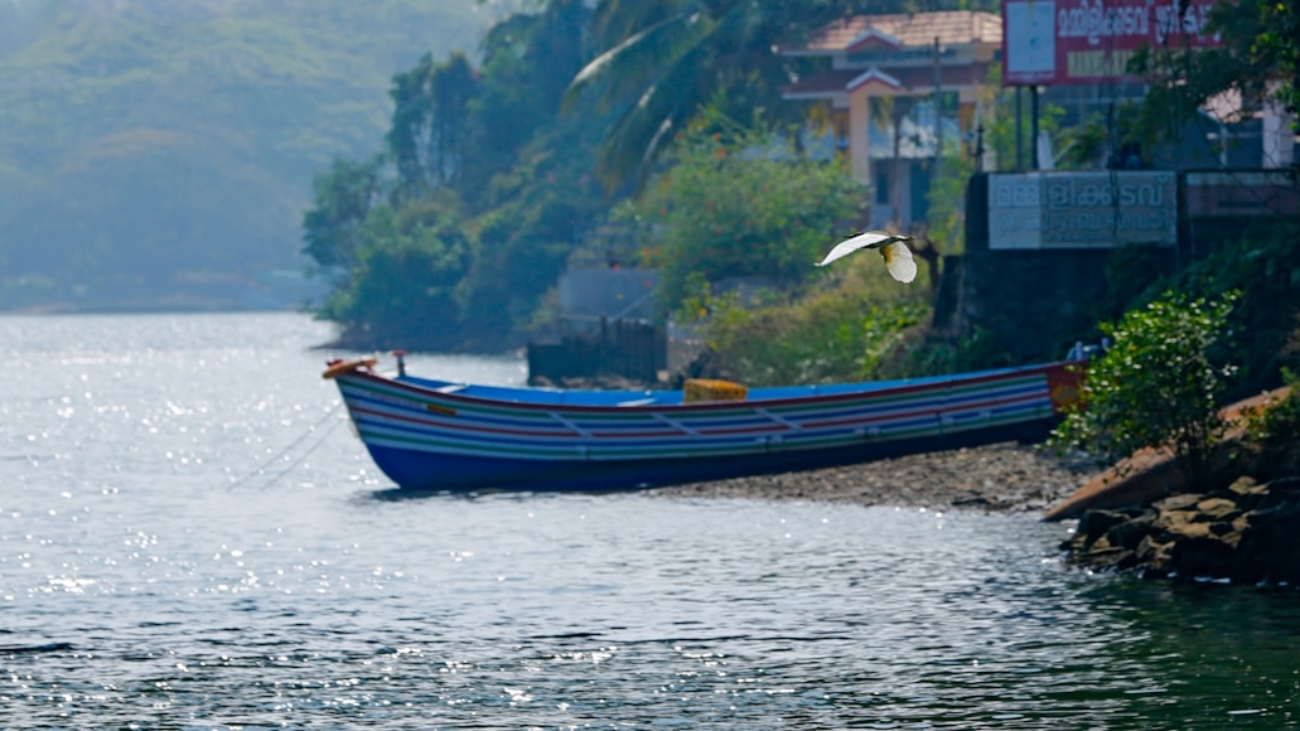
Kerala has always been more than a geographical region; it has been a meeting point of worlds. For millennia, its coastlines connected India to Europe, Arabia, Africa, and Southeast Asia. Ships anchored in Muziris long before most modern capitals were even imagined. Arab merchants lived in Kerala’s towns as trusted partners. Roman coins reached our shores in massive quantities. Jewish, Syrian Christian, and Chinese communities built lasting cultural bridges. Kerala’s identity is inseparable from trade, negotiation, diplomacy, and cross-cultural commerce. Yet, despite this extraordinary heritage, modern Kerala never transformed its ancient trade wisdom into a structured economic strategy. The state stepped away from its maritime DNA, forgetting the instincts and knowledge that sustained global trade flows for centuries. Kerala Vision 2047 must correct this by rediscovering and modernising the trade wisdom preserved across generations and weaving it into the core of the state’s trade policy.
The first step is recognising what Kerala once had. Ancient Kerala was not merely a participant in global trade; it was a decisive influencer of it. Pepper shaped European exploration. Cardamom, cinnamon, ivory, timber, and pearls made Kerala a prized destination. Arab sailors navigated monsoon winds based on knowledge Kerala’s fishermen also understood. Trade networks were built on trust, reputation, and relational diplomacy rather than brute force. Cultural openness allowed Kerala to absorb foreign ideas while retaining its identity. Market towns evolved around coastal and riverine ports. Negotiation, multilingualism, and the ability to interface with unfamiliar cultures were natural skills. These were not accidents; they were long-term civilisational habits.
After independence, however, Kerala lost its maritime orientation. The state did not build large-scale trade institutions, export councils, or global commercial ecosystems that could inherit this historical advantage. Instead of drawing lessons from centuries of cross-border exchange, trade policy became bureaucratic, small in ambition, and internally focused. The wisdom that once guided traders across oceans was never converted into export strategy, market intelligence, or economic statecraft. Kerala forgot that it once mastered soft diplomacy, supply-demand forecasting, international networks, and reputation-driven commerce.
By 2047, Kerala must build a new trade strategy that reclaims this lost wisdom. The first area of rediscovery lies in understanding how ancient Kerala navigated the world. Trade was never transactional; it was relational. Arab traders built multi-generational ties with Kerala families because trust mattered more than margins. European traders valued Kerala’s consistency in quality. This heritage can inspire Kerala to build long-term government-to-government and business-to-business relationships with markets in the Middle East, Europe, and East Africa. Kerala should nurture strategic economic partnerships, diaspora-powered trade channels, and sector-specific networks rooted in relationship-building rather than opportunistic transactions. This relational model maps perfectly to modern global trade realities where trust, sustainability, and reliability define market access.
The second area of rediscovery involves maritime intelligence. Kerala’s coastal communities understood winds, currents, tides, and seasonal variations better than most ancient civilisations. They knew how goods moved, how ships behaved, and how markets fluctuated with climatic cycles. These insights can inform modern trade planning by integrating monsoon-linked logistics, coastal shipping optimisation, and seasonal export strategies. Kerala can build a trade policy that uses maritime rhythms rather than fighting them. Shipping windows, warehousing cycles, export schedules, and supply chain coordination can all benefit from this ancient ecological understanding.
The third area is Kerala’s cultural ability to interface with multiple civilisations. For centuries, traders in Kerala communicated in multiple languages, adapted to foreign tastes, negotiated with diverse cultures, and learned to read the psychology of buyers and sellers. Today, global commerce demands exactly this type of cultural intelligence. Kerala’s trade strategy can draw from this ability by investing heavily in multilingual training, cross-cultural business education, and global market research anchored in Kerala’s historic intercultural strengths. When exporters understand the cultural logic of European buyers, Gulf wholesalers, and African distributors, Kerala’s products can penetrate markets more effectively.
The fourth area of rediscovery is Kerala’s instinct for premium positioning. Ancient Kerala did not sell pepper cheaply; it sold it as a luxury product valued globally. The mistake in the modern era was commoditisation. Spices, seafood, coir, cashew, and handlooms lost premium identity due to lack of branding and storytelling. Ancient Kerala used narrative—rarity, purity, origin, ritual significance—to elevate products. By 2047, Kerala must adapt this strategy by building narratives around its exports: origin-certified spices, monsoon-grown commodities, artisanal products with heritage backstories, forest-based honey, premium Ayurvedic blends, and coastal seafood with traceable sustainability.
Kerala must also recover its ancient instinct for technological openness. Historically, Kerala welcomed Chinese fishing nets, Arab ships, Roman weights, and Southeast Asian maritime tools. This willingness to absorb foreign innovations made Kerala efficient. Modern Kerala must replicate this openness by adopting global logistics technologies, blockchain traceability, AI-based demand prediction, and digital trade facilitation systems. The ancient mindset of learning from the world can help Kerala avoid the rigidity that slows down trade ecosystems today.
The next area of rediscovery lies in decentralised trading hubs. Ancient Kerala had not one but many ports, each specialising in certain commodities and connected through rivers. Modern Kerala centralised trade into bureaucratic structures. Vision 2047 must return to a decentralised model by developing district-level export hubs, coastal special economic zones, and inland trade centres linked through waterways. This aligns with Kerala’s historical pattern of distributed prosperity.
Another dimension is ethical trade. Kerala’s maritime trade history was built on fairness, quality, and trust. Even when Europeans attempted coercive trade methods, Kerala’s merchants maintained moral standards. Modern global consumers value ethical sourcing, fair trade principles, and sustainability. Kerala can build a strong export identity rooted in ethical trade—fair prices for farmers, environmentally friendly harvesting, transparent supply chains, and humane working conditions.
By 2047, Kerala must turn its forgotten trade heritage into a strategic advantage by setting up a Kerala Institute of Maritime Trade Wisdom that studies ancient documents, oral histories, archaeological findings, travelogues, and folklore to extract actionable insights. This institute can modernise traditional knowledge into global trade models, curriculum modules, export advisory frameworks, and market-entry strategies.
A state once shaped by the Arabian Sea and global commerce cannot afford to think small. Kerala Vision 2047 should create a trade policy that blends ancient maritime instincts with modern economic strategy. This means embracing openness, relationships, ecological intelligence, trust-based networks, multilingualism, premium branding, ethical trade, and decentralised commerce.
If Kerala looks backward with intelligence and forward with ambition, the state can rediscover the maritime wisdom it once lived by and convert it into a powerful trade engine for the future—transforming history into strategy, heritage into leverage, and cultural memory into economic strength.
