
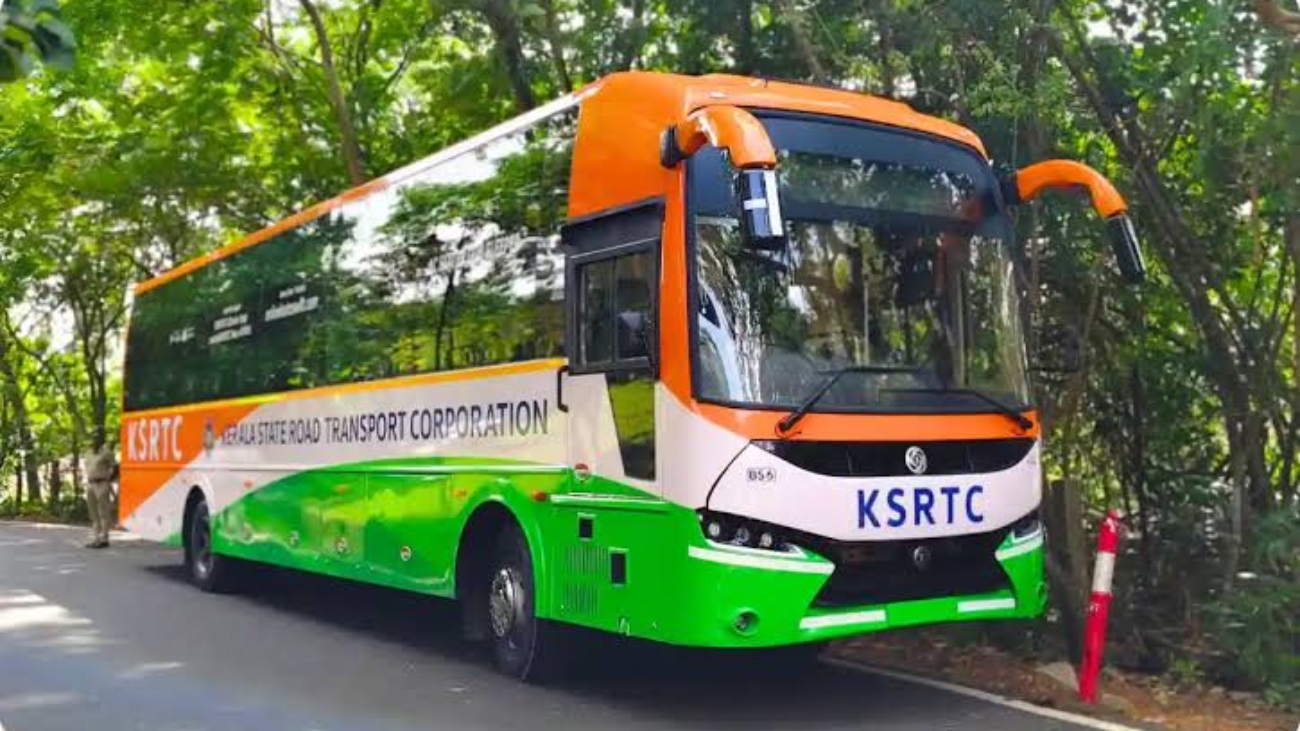
KSRTC has remained trapped in a debate about losses, salaries, and fuel prices for decades. Kerala Vision 2047 requires moving KSRTC out of this defensive posture and treating it as a large, distributed public infrastructure asset rather than only a bus operator. The corporation owns depots, land parcels, workshops, data exhaust from millions of trips, and a captive daily user base. The following ideas deliberately avoid common themes like fleet replacement and route rationalisation, and instead focus on structural, economic, and technological shifts using numbers and measurable outcomes.
The first idea is to convert KSRTC depots into district-level logistics micro hubs. Kerala has around 90 major KSRTC depots and sub-depots. Even if 60 of them are upgraded as night-time logistics hubs, each handling just 20 tonnes of parcels per night, that is 1,200 tonnes moved daily. Kerala’s e-commerce and MSME parcel movement already exceeds 8,000 tonnes per day, most of it handled by private players. KSRTC buses return to depots empty at night. By integrating electric cargo vans and using long-distance buses as trunk movers between districts after 11 pm, KSRTC can capture at least 10 to 15 percent of this market by 2030. At a conservative rate of ₹6 per kg, this alone can generate ₹26 crore per month, without interfering with passenger operations.
The second idea is to monetise idle bus time through structured tourism loops instead of ad hoc contract services. KSRTC has roughly 6,000 buses, but utilisation varies wildly, with many buses running less than 180 km per day against a technical capacity of 350 km. If 1,000 buses are assigned to fixed, repeatable tourism circuits of 250 km per day for 200 days a year, that creates 50 million tourism kilometres annually. With an average ticket value of ₹900 and 40 passengers per trip, this translates to ₹1,800 crore in gross ticket value over a year. The key difference from current tourism services is predictability, branding, and integration with homestays and local economies, not premium luxury.
The third idea is to treat KSRTC as Kerala’s largest moving data network. KSRTC buses touch nearly 15 million passenger trips per day across seasons. By anonymising origin-destination data, dwell time, peak loads, and seasonal variations, KSRTC can become a primary data supplier for urban planning, retail location planning, and disaster response. If even 10 government departments and 50 private firms subscribe to structured datasets at ₹50 lakh per year, that is ₹30 crore annually. More importantly, it places KSRTC at the centre of Kerala’s data-driven governance ecosystem instead of as a passive service provider.
The fourth idea is workforce-linked productivity bonds. KSRTC employs about 40,000 people. Instead of treating wages as a fixed political issue, KSRTC can issue internal productivity-linked bonds where employees voluntarily opt to convert 5 percent of annual salary increments into a five-year bond linked to operational metrics like kilometres per bus, fuel efficiency, and punctuality. If 20,000 employees participate with an average annual contribution of ₹15,000, that creates a ₹300 crore internal corpus over five years. This is not wage cut but deferred value creation, aligned with performance and long-term stability.
The fifth idea is converting KSRTC workshops into state-level remanufacturing centres. KSRTC has some of the largest heavy vehicle workshops in South India. By 2047, electric buses will dominate, but battery packs, motors, and power electronics will require remanufacturing. If three KSRTC workshops are upgraded to remanufacture 5,000 battery packs per year at an average value recovery of ₹1.5 lakh per pack, that is ₹75 crore per year. This also reduces import dependence and creates a new public-sector industrial capability rarely discussed in transport policy.
The sixth idea is school and college mobility contracts. Kerala has around 12,000 schools and 1,300 colleges. If KSRTC signs annual mobility contracts with just 10 percent of these institutions, providing fixed-timing buses for students at ₹400 per student per month for an average of 300 students per institution, that is ₹144 crore per year in stable, prepaid revenue. This model reduces private van chaos, improves safety, and gives KSRTC predictable cash flow rather than daily ticket uncertainty.
The seventh idea is night-time energy balancing using electric buses. By 2047, a significant part of KSRTC’s fleet will be electric, with battery capacities of 250 to 350 kWh. If 2,000 electric buses participate in vehicle-to-grid systems with just 20 kWh available per bus during peak demand hours, that is 40 MWh of flexible capacity. At peak power rates of ₹8 per unit, even limited participation can generate ₹3 to 4 crore annually while helping KSEB stabilise the grid. This positions KSRTC as part of Kerala’s energy infrastructure, not just transport.
The eighth idea is converting long-distance KSRTC services into social freight corridors. Kerala moves massive volumes of agricultural produce from high ranges and coastal belts to urban markets daily. If KSRTC designates 200 long-distance buses with modular undercarriage freight compartments carrying 1 tonne per trip, and each bus makes 300 trips per year, that is 60,000 tonnes annually. At ₹3 per kg, this adds ₹18 crore per year while reducing spoilage and dependence on informal freight vehicles.
The ninth idea is KSRTC-backed driver and technician export programs. Kerala already exports nurses and IT professionals. Skilled heavy vehicle drivers and electric bus technicians are in shortage globally. If KSRTC trains and certifies 500 drivers and technicians annually to international standards, with overseas placements generating a placement fee of ₹2 lakh per candidate, that is ₹10 crore per year. More importantly, it positions KSRTC as a skills institution, not a dead-end employer, improving morale and recruitment quality.
The tenth idea is district-level public mobility guarantees. Instead of loss-making routes, KSRTC can work with local governments to define a minimum mobility guarantee of trips per day per panchayat. Kerala has about 941 panchayats. If just 300 of them co-fund guaranteed services at ₹10 lakh per year each, that is ₹300 crore in assured revenue. This reframes subsidies as contracts for outcomes rather than bailouts for inefficiency.
Taken together, these ideas show that KSRTC’s problem is not buses or staff, but imagination constrained by legacy thinking. The corporation already controls physical assets worth thousands of crores and interacts with nearly every economic segment daily. By 2047, KSRTC can become a logistics player, data provider, energy stabiliser, skills exporter, and local economic backbone, while still doing what it exists to do: move people reliably.
