
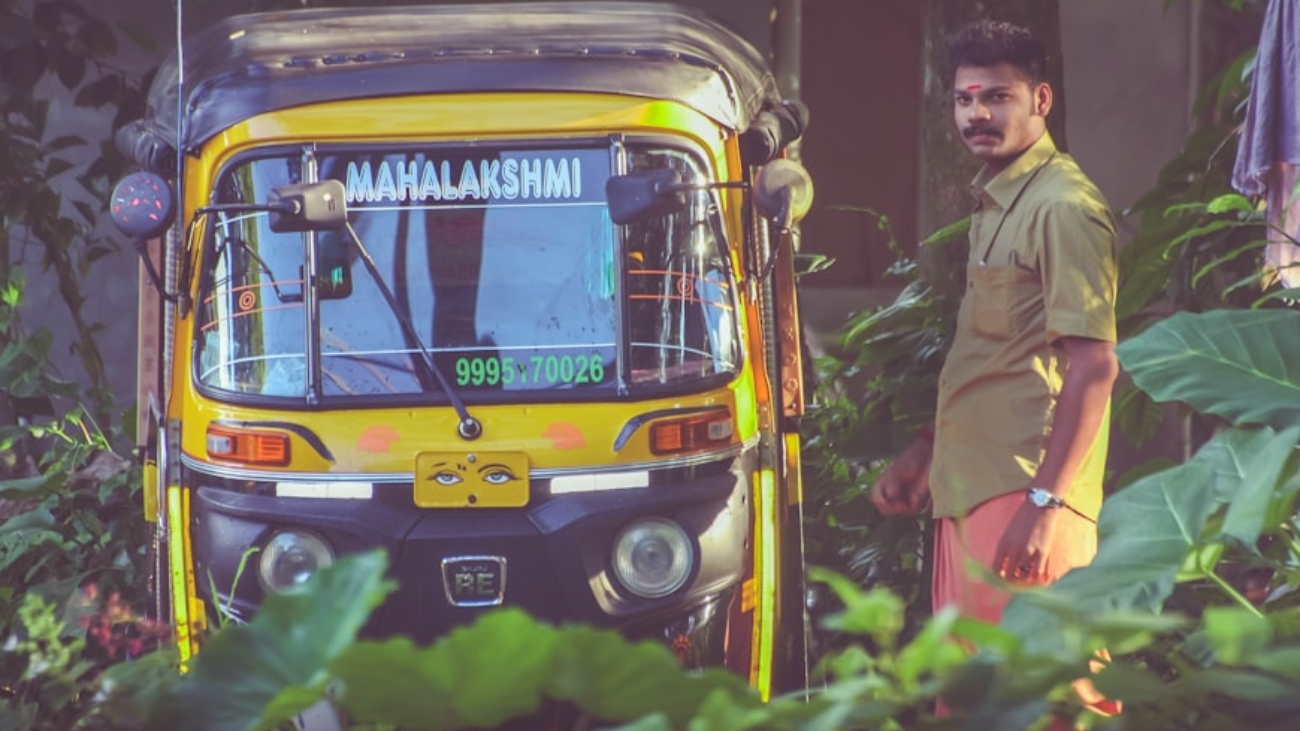
Auto rickshaw drivers occupy a space in Kerala’s daily life that few other professions do. They are transport providers, navigators, informal community guides, emergency responders, cultural ambassadors, and often the first human interface a visitor encounters when entering a town or village. Their presence is deeply embedded in Kerala’s social and economic fabric. As the state moves toward 2047—an era defined by mobility transformation, digital platforms, electric vehicles, ageing populations, tourism expansion, and smart-city development—the role of auto rickshaw drivers will not decline. Instead, it will evolve and gain new strategic relevance.
Their value is not merely functional transportation; it is social connectivity, workforce mobility, and community safety.
Auto rickshaw drivers are Kerala’s most widespread mobility network. Taxis and buses operate at fixed points, but autos penetrate into every corner—narrow roads, interior villages, hill slopes, and crowded urban pockets. In places where public transport does not reach or is infrequent, autos fill the gap. As Kerala’s urbanisation accelerates, last-mile connectivity becomes crucial. By 2047, autos will remain essential for connecting metro stations, bus hubs, government offices, clinics, markets, schools, and homes. Without autos, the mobility ecosystem collapses into inefficiency, especially for the elderly, women, children, and people with disabilities.
Economically, the auto sector supports lakhs of families. Many drivers are first-generation earners who rely entirely on daily income. Their work powers urban commerce: they transport workers to jobs, students to schools, patients to hospitals, and customers to businesses. They indirectly support thousands of small and medium enterprises. By 2047, Kerala’s economic resilience will depend on stable, affordable mobility—and auto drivers form a significant part of this informal infrastructure.
Auto drivers also hold strategic relevance in tourism. When travellers reach Kerala’s railway stations, airports, or bus stands, the auto driver is often their first contact. This first impression shapes perceptions of the city’s safety, friendliness, and professionalism. An auto driver can make a tourist feel welcome, help with directions, suggest eateries, and introduce local culture. In districts like Kochi, Alappuzha, Thiruvananthapuram, and Kozhikode, trained and culturally aware auto drivers can enhance Kerala’s tourism experience. By 2047, tourist autos can evolve into curated services—heritage routes, food tours, art circuits, village tours, and eco-experiences. Auto drivers become ambassadors of Kerala’s culture.
Another powerful dimension is safety and community vigilance. Kerala’s autos are everywhere, at all hours. Drivers have an instinctive understanding of neighbourhoods: who lives where, what patterns are normal, and when something is unusual. They witness accidents, provide help during medical emergencies, identify missing persons, bring injured people to hospitals, assist in police reporting, and ensure women reach home safely. During crises—floods, storms, disease outbreaks—autos become lifelines when larger vehicles cannot operate. By 2047, Kerala can formally integrate auto drivers into community safety networks, emergency preparedness programmes, and disaster response teams.
The social intelligence of auto drivers is an under-appreciated strategic resource. Because they interact daily with students, elderly citizens, women, migrant workers, tourists, and office-goers, they understand shifts in society, stress points in daily life, economic anxieties, public grievances, and neighbourhood dynamics. With structured feedback channels and digital reporting tools, auto drivers can offer insights valuable to urban planning, policing, tourism strategy, and welfare design.
As Kerala moves toward electric mobility, auto drivers form the bridge between old and new systems. EV autos reduce pollution, noise, and fuel cost. They can be integrated with solar charging stations, battery-swapping networks, and digital route optimisation platforms. By 2047, a large share of Kerala’s auto fleet will likely be electric, contributing to climate goals and reducing urban emissions. Drivers must be supported with subsidies, training in EV maintenance, and access to affordable financing. Their adoption of EVs accelerates Kerala’s green economy transition.
Digital platforms have already begun reshaping the auto sector. Ride-hailing apps, QR-based payments, GPS navigation, and digital wallets are becoming common. But Kerala has a unique opportunity: instead of allowing private platforms to dominate, the state can build cooperative or government-backed ride platforms run by auto unions and local communities. By 2047, Kerala can pioneer a model where auto drivers retain control, avoid exploitative commission systems, and earn stable incomes. Digital literacy programmes will ensure that no driver is left behind in this technological shift.
Auto stands must be redesigned into smart mobility points. Clean shelters, charging docks, washrooms, digital boards, Wi-Fi, CCTV, and complaint redressal systems will elevate the profession’s dignity. When infrastructure respects workers, workers serve society with more pride and professionalism.
The ageing population of Kerala and increasing incidence of chronic diseases open a new role for auto drivers: health mobility assistants. Many elderly citizens rely on autos for hospital visits, physiotherapy sessions, dialysis appointments, and pharmacy runs. With training in patient-handling basics, first aid, and disability assistance, auto drivers can become essential partners in Kerala’s health ecosystem. This service-oriented model enhances both income and social value.
Women’s safety is another area where auto drivers are crucial. Kerala can create women-driven auto fleets, women-preferred auto networks, night-safety autos, and emergency-response autos linked to police control rooms. These initiatives empower female mobility, increase workforce participation, and reassure families.
Auto drivers can also be integrated into Kerala’s environmental programmes. They can report illegal waste dumping, waterlogging spots, damaged roads, and environmental violations. Their daily presence across the landscape makes them ideal “mobile observers” for municipal governance.
Skill development is key. By 2047, auto drivers can be trained in:
Customer service
Tourism storytelling
Basic English and foreign languages
Digital navigation systems
EV operation and maintenance
Road safety and first aid
Micro-entrepreneurship
Such training transforms the auto sector from an informal occupation into a skilled profession.
Importantly, auto drivers must be given dignity and recognition. They face long hours, weather extremes, inconsistent income, and public misunderstanding of their challenges. A stable welfare system—insurance, pension schemes, health coverage, skill-upgradation grants—will ensure their long-term security. Their welfare should be viewed not as charity but as investment into one of the most essential public services.
Ultimately, Kerala Vision 2047 sees auto rickshaw drivers as more than transport workers. They are:
The backbone of first-mile and last-mile mobility
Silent protectors of community safety
Tourist ambassadors
Participants in emergency response
Crucial agents in the shift to electric mobility
Informal social observers
Essential partners in healthcare mobility
Custodians of Kerala’s service culture
By 2047, the auto rickshaw sector can evolve into a modern, tech-enabled, socially empowered, environmentally aligned, and economically resilient profession.
A future-ready Kerala needs future-ready auto drivers. Their growth, dignity, and transformation will directly strengthen the state’s mobility ecosystem and social harmony.
