
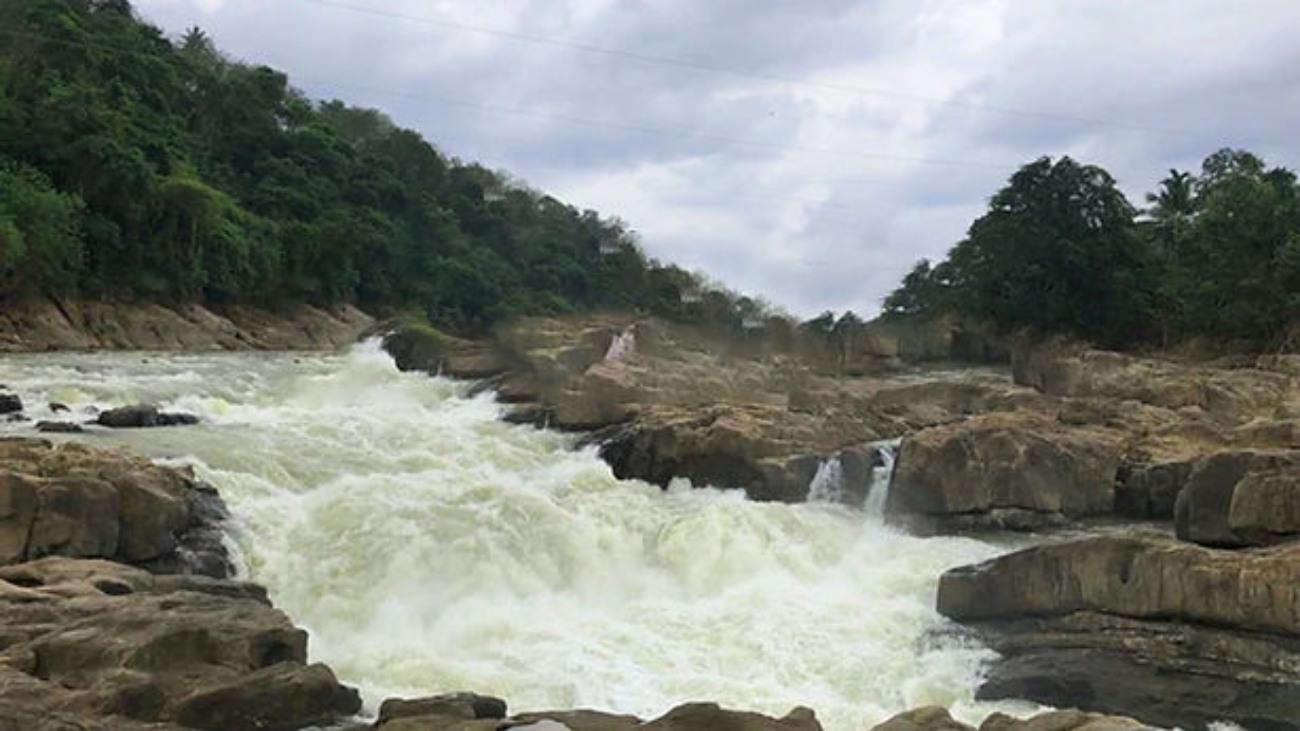
Pathanamthitta is a district often perceived as quiet, rural, and slow-paced—but beneath that surface lies one of Kerala’s most strategically important regions. It is the spiritual capital of Kerala, the ecological heartland of the Western Ghats, the cultural anchor of the Travancore region, and a district with one of the highest diaspora linkages worldwide. As Kerala moves toward 2047, the role of Pathanamthitta will expand far beyond pilgrimage tourism and plantation agriculture. It will become a centre of ecological security, spiritual economy, knowledge-based industries, renewable energy, advanced agriculture, and cultural diplomacy. Kerala Vision 2047 must recognise Pathanamthitta not as a peripheral district, but as a stabilising pillar for the state’s long-term sustainability, identity, and development.
A major pillar of Pathanamthitta’s strategic importance is its geography. More than half of the district lies within the Western Ghats, making it essential for Kerala’s environmental stability. Rivers such as Pamba, Achankovil, and Manimala originate or flow through this region, supporting water security for large parts of central Kerala. Pathanamthitta’s forests regulate rainfall, protect biodiversity, prevent soil erosion, and serve as carbon sinks. By 2047, Kerala’s fight against climate change will depend greatly on preserving the ecological integrity of Pathanamthitta. This requires advanced forest management, restrictions on quarrying, scientific river conservation, community-led eco-restoration projects, and a long-term climate adaptation roadmap. Protecting Pathanamthitta is equivalent to protecting Kerala’s entire hydrological future.
The second cornerstone is the spiritual and pilgrimage economy built around Sabarimala, one of the largest pilgrimage sites in the world. Millions of devotees travel through Pathanamthitta every year, creating a seasonal economic surge unmatched by any other Kerala district. By 2047, the Sabarimala ecosystem must be transformed into a model of sustainable pilgrimage management. This includes smart crowd control systems, green mobility solutions, renewable energy usage, expanded base camp infrastructure, scientific waste management, and digital services for pilgrims. Pathanamthitta can become an international example of how pilgrimage centres can promote ecological stewardship rather than environmental strain. Beyond Sabarimala, temples, churches, and tribal shrines across the district offer opportunities for spiritual tourism, heritage walks, and traditional arts showcasing.
Another strategic dimension is the district’s exceptionally high global migration. A significant proportion of families have members working in the Gulf, Europe, Australia, and North America. This diaspora has created financial stability, expanded perspectives, and built strong networks. By 2047, Pathanamthitta can transform its diaspora relationships into economic and knowledge partnerships. A “Global Pathanamthitta Network” could support investment in startups, tourism projects, healthcare, and education. Return migrants can receive legal, entrepreneurial, and financial guidance to reintegrate and open new ventures. This diaspora can become a bridge connecting the district to global markets and technologies.
Agriculture remains central to Pathanamthitta’s identity, but it must evolve. Rubber, spices, bananas, tapioca, and smallholder farming have shaped the economy for decades. However, global commodity price fluctuations have destabilised household incomes. Vision 2047 must promote diversification into high-value crops, precision agriculture, organic farming, and agro-processing units. The district’s climate is ideal for cocoa, medicinal plants, specialty spices, honey production, and artisanal food products. Establishing agro-tech incubators, farm-to-market digital platforms, and micro-processing centres can significantly boost income for rural families. The district can emerge as Kerala’s centre for speciality agriculture and niche food exports.
Pathanamthitta also has immense potential in ecotourism. The district’s forest belts, hill stations, rivers, wildlife, and tribal hamlets can be developed into low-impact tourism zones. Konni elephant reserve, Gavi, Kakki, Perunthenaruvi, and Achankovil represent untapped natural tourism assets. By 2047, Pathanamthitta can pioneer conservation-based tourism, guided by local tribes, youth, and conservationists. Eco-lodges, forest trails, river safaris, biodiversity research camps, and farm tourism can provide employment while protecting the environment. This model can generate revenue without compromising ecological stability.
Education and healthcare represent two more areas of strategic relevance. Pathanamthitta already has a strong foundation in schooling, nursing education, and healthcare institutions. By 2047, the district can transform itself into a centre for specialised higher education, particularly in environmental sciences, theology, humanities, nursing, rural development, tourism management, and Ayurveda. A university focusing on climate science and river management could be located here, given the district’s ecological importance. Healthcare can expand to include geriatric centres, physiotherapy hubs, and rehabilitation facilities, serving both residents and diaspora returnees.
Infrastructure development must be thoughtfully executed. Road networks connecting Sabarimala, Konni, Mallappally, Ranni, and Adoor must be upgraded with resilience to monsoon damage. Renewable energy—especially small hydropower, rooftop solar, and bioenergy—can be widely adopted. Broadband expansion and digital infrastructure will enable rural entrepreneurship, remote work, and online services. Urban planning in Thiruvalla, Adoor, and Pandalam must prioritise public transport, waste management, and green spaces. Pathanamthitta can become a model for rural-urban balance.
Cultural preservation is another essential theme. The district has deep roots in classical arts, Christian heritage, Hindu ritual traditions, tribal artforms, and Malayalam literature. By 2047, Pathanamthitta can establish cultural museums, film archives, heritage centres, and performance spaces celebrating traditional music, rituals, and storytelling. Festivals like Maramon Convention and various local temple arts can be promoted globally. Cultural vibrancy enhances tourism, identity, and inter-community harmony.
Pathanamthitta’s tribal communities—particularly in the forest region—hold valuable ecological knowledge and cultural practices. Their welfare must be a core part of Vision 2047. This includes secure land rights, healthcare access, advanced education, livelihood diversification, and involvement in forest-based enterprises. Tribal youth can become eco-guides, conservationists, forest rangers, and cultural ambassadors. Integrating tribal wisdom strengthens Kerala’s environmental resilience.
Finally, Pathanamthitta must be recognised as Kerala’s “Silent Backbone.” It does not boast mega-industrial projects or massive IT hubs, yet it anchors the state through its forests, rivers, migration strength, spirituality, and demographic stability. A secure, ecologically healthy, culturally confident Pathanamthitta stabilises the entire state.
By 2047, Pathanamthitta can emerge as:
A global model of sustainable pilgrimage
A centre of environmental and water security
A leader in speciality agriculture and ecotourism
A hub for diaspora-driven development
A knowledge district for climate and humanities research
A culturally rich and socially cohesive community
Kerala’s future strength depends on recognising the strategic importance of its quieter regions. Pathanamthitta, with its ecology, spirituality, and global connectivity, is one of those irreplaceable pillars.
