
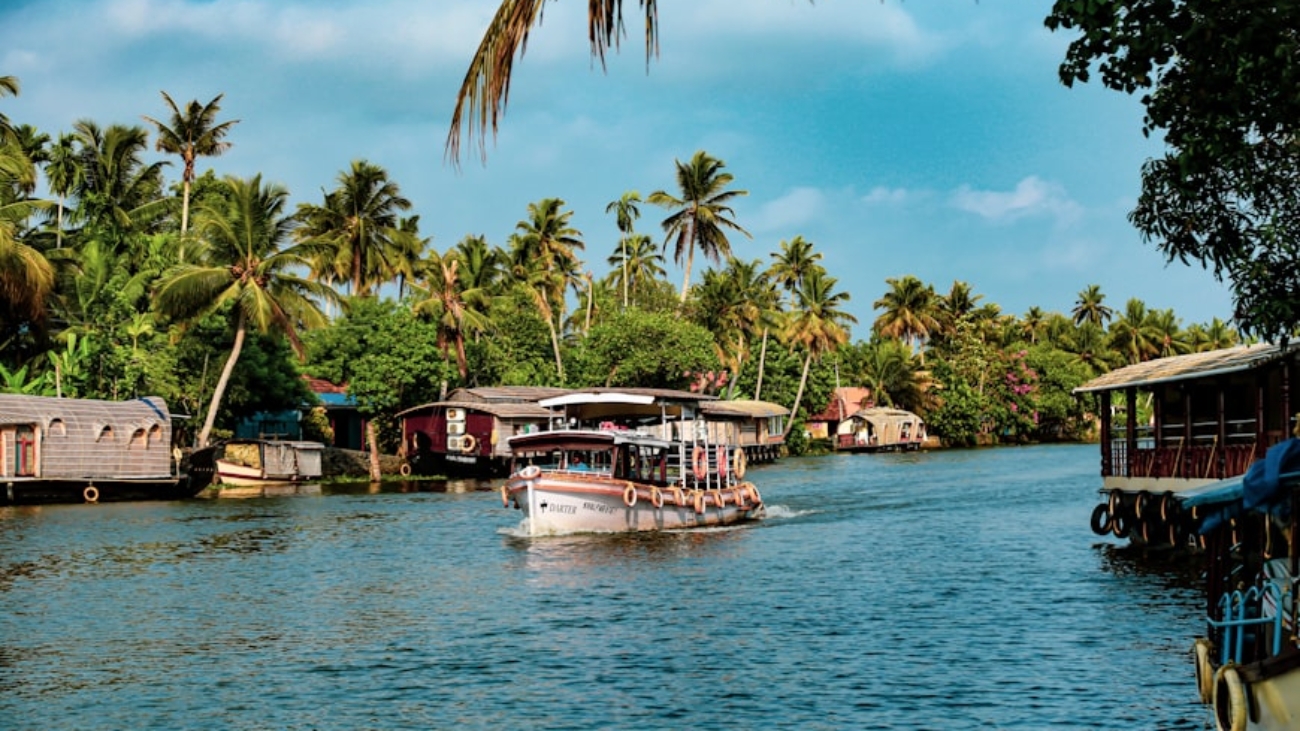
The Vaikom–Cherthala–Kumarakom belt sits at the heart of Kerala’s backwater ecosystem, connecting Kottayam, Alappuzha, and Ernakulam through waterways, roads, and cultural landscapes. These three regions carry distinctive strengths—Vaikom with its temple heritage and social reform legacy, Cherthala with its lagoon-side industries and proximity to the coastal economy, and Kumarakom as one of India’s most renowned backwater tourism destinations. Yet the full potential of this belt remains unrealized due to fragmented development, environmental stress, unplanned commercial growth, and limited integration between tourism, agriculture, mobility, and livelihood sectors. Kerala Vision 2047 imagines this belt as a unified backwater innovation corridor—sustainable, culturally rich, economically dynamic, and globally appealing.
The transformation begins with a holistic revival of the Vembanad backwater ecosystem. By 2047, the belt must adopt large-scale ecological restoration: mangrove expansion, lake desilting, wetland rejuvenation, and clean-water programmes coordinated across districts. Pollution controls, scientific fishing limits, sustainable boating norms, and waste-free tourism zones will protect the fragile ecosystem. Controlled sluice systems and flood-mitigation embankments will ensure safer settlements. Restoring the ecological integrity of Vembanad is the foundation on which all future development in this belt rests.
Vaikom must evolve into a heritage–culture–wellness hub. The Vaikom Temple and its surrounding precincts can undergo streetscape improvements with pedestrian-first pathways, heritage signages, shaded walkways, and curated festival spaces. A Vaikom Social Reform Museum can celebrate the Vaikom Satyagraha, caste reform movements, and Kerala’s transformation story. By 2047, Vaikom can host annual cultural festivals, spiritual retreats, classical arts workshops, and eco-literacy programmes. Wellness tourism rooted in Ayurveda, yoga, and river-side healing centres can attract domestic and international visitors. The town’s waterways, including the Vaikom boat jetty, can be upgraded for regular water transport linking Cherthala and Kumarakom.
Cherthala stands at the centre of mobility and industry within this belt. With its long tradition in coir manufacturing, agriculture, and fisheries, Cherthala can transform into a green industrial and logistics hub by 2047. The coir sector can move toward high-value products such as geotextiles, biodegradable packaging, and engineered natural fibre composites. Food-processing parks for fish, coconut, vegetables, and spices can create new value chains. Startup zones focusing on aquaculture technology, wetland conservation, and circular-economy solutions can flourish. A Cherthala Mobility Node integrating bus terminals, water transport stations, and EV charging hubs can position the town as a key transit point between Kochi, Alappuzha, and Kottayam.
Kumarakom must evolve into an international eco-tourism model. Already a major global destination, the challenge is to transition toward sustainable tourism by 2047. Houseboats must adopt electric propulsion, solar roofs, and waste-management systems. Resorts must follow lake-friendly design codes, water recycling, energy efficiency, and zero-plastic norms. A Kumarakom Wetland Research & Interpretation Centre can offer guided tours, bird-watching experiences, and educational exhibits on wetland ecology. Community-led tourism—where local families run homestays, canoe tours, handicraft stalls, and farm experiences—can deepen the region’s social and economic base. The destination must shift from luxury tourism alone to inclusive, environmental, and cultural tourism.
The entire belt needs a unified water mobility grid. By 2047, ferries, water taxis, cargo boats, and electric tourist vessels can run on scheduled routes connecting Vaikom, Cherthala, Kumarakom, Muhamma, Thanneermukkom, and even Alappuzha and Kochi. Water metro-style jetties with digital ticketing, safety systems, and shaded waiting areas can reduce road congestion. A dedicated water logistics corridor can move agricultural produce, fish, and coir products through backwaters to nearby markets and ports.
Rural livelihood ecosystems must be prioritized. The belt is home to farmers, coir workers, fishers, toddy tappers, and artisans. By 2047, integrated Farmer–Fisher Resource Centres can offer cold storage, solar dryers, common packaging units, and digital market linkages. Women’s SHGs can lead micro-enterprises in food products, natural fibre crafts, herbal wellness items, and eco-friendly packaging. Ecological agriculture—pokkali rice, organic vegetables, medicinal plants, and aquaculture-integrated farming—can be expanded with certification and branding support.
Urban development needs modernization backed by environmental sensitivity. Vaikom’s heritage zones, Cherthala’s commercial corridors, and Kumarakom’s tourism clusters can implement green urban infrastructure: rain gardens, permeable pavements, canal cleaning systems, compact town centres, cycling paths, and electric mobility. Waste-to-energy micro-plants, community composting units, and plastic-free markets can support ecological goals. Disaster-resilient construction is essential given the region’s susceptibility to flooding.
Tourism as a combined regional brand can generate enormous value. A curated trail titled “The Sacred Waters of Kerala” can connect temples, churches, mosques, boat jetties, coir villages, bird sanctuaries, and rice fields. This belt can host annual cultural festivals—backwater carnivals, food festivals, artisan fairs, birding festivals, and wellness summits—drawing visitors throughout the year. Digital tourism platforms can provide 360-degree virtual tours, AR-based storytelling, and real-time biodiversity maps.
Education and research must support the belt’s transformation. By 2047, new institutes focusing on wetland conservation, coir technology, agriculture innovation, and sustainable tourism management can be established. Skill centres can train youth in boat operation, hospitality, renewable energy, food processing, and digital services. Partnerships with international environmental institutions and tourism schools can elevate local expertise.
The governance model must be integrated. A Vaikom–Cherthala–Kumarakom Backwater Development Authority can coordinate infrastructure, tourism, ecology, water management, and mobility. Data-driven planning using GIS, AI-based flood prediction, and digital water-level monitoring can guide decisions. Community participation ensures local ownership and long-term sustainability.
Kerala Vision 2047 thus imagines this belt as one of Kerala’s flagship development corridors—a backwater civilization modernized responsibly, a heritage landscape revitalized with pride, and an economy powered by innovation, ecology, and culture. Vaikom as the heritage heart, Cherthala as the industrial–mobility engine, and Kumarakom as the global ecological showcase together form a powerful tri-region model of Kerala’s future: sustainable, inclusive, prosperous, and deeply rooted in nature.
