
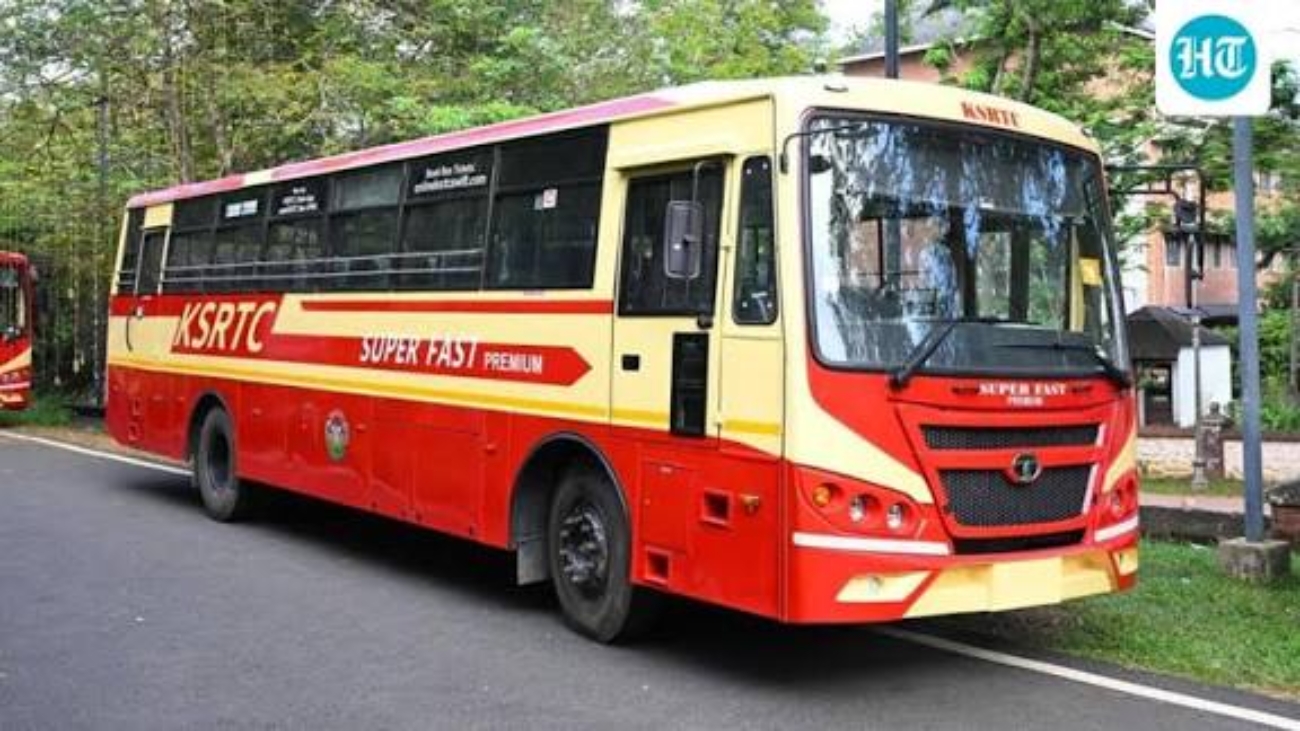
KSRTC’s fleet operates on Kerala’s roads day and night, across urban congestion, coastal humidity, high-range gradients, and monsoon extremes. This constant exposure makes KSRTC uniquely positioned to act as a real-time road and climate sensing network, even though it is never described that way. A standalone vision treats every KSRTC bus as a moving infrastructure sensor, feeding continuous intelligence into road engineering, disaster preparedness, and climate adaptation systems by 2047.
Kerala spends thousands of crores annually on road construction and maintenance, yet much of this expenditure relies on periodic inspections, contractor reports, and public complaints. KSRTC buses traverse the same roads repeatedly, often 20 to 30 times a day on key corridors. By equipping buses with vibration sensors, suspension load monitors, braking pattern trackers, and basic environmental sensors, KSRTC can generate high-resolution data on road surface quality, pothole formation, waterlogging, and gradient stress. Even a sensor package costing ₹25,000 per bus, deployed on 5,000 buses, requires an investment of ₹125 crore, far less than a single year’s road repair budget.
The data value is immediate. Repeated abnormal vibration signatures at the same GPS coordinates across multiple buses signal structural road failure days or weeks before visible damage occurs. This enables preventive maintenance instead of reactive patchwork. If early intervention reduces major road failures by even 10 percent, Kerala can save several hundred crore rupees annually in reconstruction costs. More importantly, it reduces accidents, vehicle damage, and travel delays that silently tax the economy.
Climate sensing is equally important. Kerala’s rainfall intensity has increased, but localised flooding remains poorly predicted. KSRTC buses can carry low-cost water depth sensors near wheel hubs and humidity and temperature sensors on roofs. When multiple buses report abnormal water depth at the same location, it becomes an automatic flood alert. This information can feed directly into district disaster management systems. In landslide-prone high ranges, abnormal braking and traction patterns can indicate soil instability before catastrophic failure.
From a transport perspective, this system improves fleet longevity. Road condition data allows KSRTC to adjust speed limits, suspension settings, and maintenance schedules route-wise rather than uniformly. If better road intelligence extends average bus life by just one year across a fleet of 6,000 buses, the capital savings run into hundreds of crores over a decade. Insurance premiums can also be negotiated lower using documented risk data.
There is a clear revenue opportunity. Public Works Department, local bodies, smart city missions, and even private toll road operators need reliable road condition data. If 14 district road authorities and five state-level agencies subscribe to this data at ₹5 crore per year collectively, it generates ₹25 to ₹30 crore annually. This turns KSRTC into a service provider to the infrastructure sector rather than a passive road user.
The governance benefit is transparency. Road quality disputes between contractors and government agencies are currently subjective and litigation-prone. Sensor data from thousands of daily passes creates an objective, time-stamped record of road performance. Payment-linked performance contracts become feasible, reducing corruption and improving accountability in public works. KSRTC’s neutral public-sector status gives this data credibility that private survey vehicles cannot easily replicate.
Operationally, the system can be rolled out in phases. High-density urban corridors and flood-prone districts are prioritised first, followed by hill roads and coastal highways. Data processing can be handled through a central analytics unit, potentially in collaboration with engineering institutes in Kerala, creating a new applied research ecosystem around public infrastructure.
By 2047, Kerala will need to adapt infrastructure faster than climate patterns change. Static inspection models will fail under this pressure. A moving, continuously sensing network embedded in KSRTC’s daily operations offers a uniquely Kerala-specific solution that leverages what already exists rather than importing expensive new systems.
This vision fundamentally redefines what a bus does. It is no longer just a vehicle carrying people but a mobile instrument safeguarding roads, lives, and public investment across the state.
