
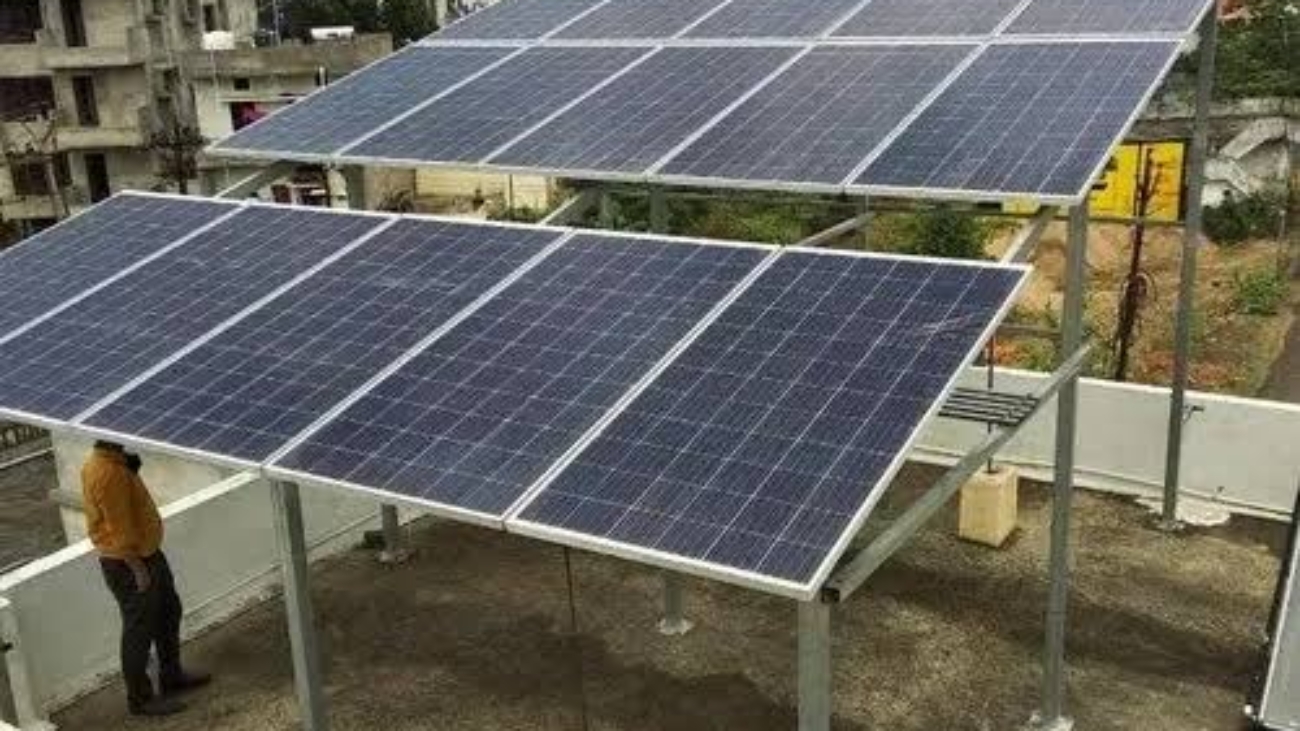
Kerala’s markets—vegetable markets, fish markets, meat markets, grain markets, flower bazaars, town retail hubs, and municipal shopping complexes—sit at the heart of economic activity. They are busy, vibrant spaces that shape the daily life of cities and towns. Yet beneath this activity lies an enormous, overlooked opportunity: the vast, unused rooftops of Kerala’s markets. From Kochi’s Broadway and Vyttila to Thiruvananthapuram’s Chalai, Kozhikode’s SM Street region, Kollam’s Chinnakada, and the district-level mandis across the state, market complexes have thousands of square metres of rooftop space that lie idle. As Kerala attempts to build a sustainable, decentralized energy ecosystem by 2047, these rooftops represent a goldmine for renewable generation—particularly solar power.
Kerala Vision 2047 must treat these rooftops not as mere structural covers, but as strategic energy assets capable of supplementing the electricity needs of traders, shops, cold-storage units, street lighting, and even nearby residential clusters. Rooftop solar represents a practical, scalable pathway to reduce Kerala’s dependence on expensive electricity imports, cut carbon emissions, stabilise local grids, and create resilient energy ecosystems for future growth.
The journey begins with recognising the scale of the opportunity. A medium-sized municipal market of 1–2 acres can host hundreds of solar panels, generating enough electricity to power the entire building. A large district market could generate surplus energy that feeds back into the grid. If even 500 of Kerala’s major markets adopt rooftop solar, the state could add hundreds of megawatts of clean energy without occupying an inch of new land—an invaluable advantage in a state where land scarcity limits renewable expansion.
But this transformation requires systematic planning. Kerala’s markets vary in age, structure, and quality. Many older markets have asbestos roofs, unreinforced concrete, or uneven layouts. Vision 2047 must start with a statewide rooftop assessment, mapping the solar potential of every major market. Engineers must evaluate load-bearing capacity, sun exposure, shading patterns, roof orientation, and structural stability. Markets that require retrofitting must receive support for reinforcement, waterproofing, and layout optimisation. The goal is to create safe, efficient platforms for solar installation.
Next comes the financial and ownership model. Traders and municipal bodies often lack upfront capital for solar investments. Kerala Vision 2047 should establish three investment pathways:
1. Government-funded installations where municipalities retain ownership and traders pay a minimal energy user fee.
2. Public–Private Partnerships, where private companies install and operate panels under long-term power purchase agreements.
3. Trader cooperative ownership, where shop owners collectively invest in a solar array and benefit from reduced bills and revenue from surplus energy.
These models ensure that all markets—from small village panchayat markets to large city centres—can participate regardless of budget.
A critical dimension of market energy transformation is cold storage and refrigeration. Kerala’s vegetable, meat, and fish markets experience significant power consumption spikes due to chillers, ice makers, and freezers. Many traders struggle with high electricity bills, which affects their profitability. Solar power can subsidise these energy-intensive operations, reducing costs and making the markets more competitive. Seasonal surpluses during bright summer months can directly offset periods of high refrigeration demand—aligning energy generation with energy need.
Solar-powered markets must also integrate battery storage solutions. While Kerala receives abundant sunlight, cloud cover and monsoons pose challenges. By 2047, Kerala must use market rooftop systems paired with energy storage units that provide backup during outages or peak usage hours. Batteries can power lights, fans, security systems, CCTV cameras, digital kiosks, and essential operations during emergencies, making markets more resilient. These hybrid systems ensure that markets remain functional even when grid disruptions occur due to storms or disasters.
The integration of solar energy also supports Kerala’s shift toward smart markets. By 2047, every major market must include digital boards displaying electricity production, consumption, and carbon savings. Shops should have access to solar-powered charging stations, Wi-Fi, digital payment systems, and e-governance kiosks. Solar energy reduces operational costs, freeing funds for hygiene upgrades, waste management, and infrastructure improvements. Markets that become energy-efficient will attract more footfall, encouraging cleaner, safer, better-organized commercial spaces.
Environmental benefits are equally compelling. Markets produce significant heat, waste, and emissions. Rooftop solar panels help reduce urban heat islands by shading roofs and lowering indoor temperatures. This improves the working conditions of traders and labourers. Additionally, solar-powered ventilation systems, fans, and air purifiers can transform indoor markets—especially fish and meat markets—into far more hygienic and breathable environments. Renewable energy also lowers Kerala’s carbon footprint, allowing the state to meet its climate commitments.
A visionary integration involves combining rooftop solar with rainwater harvesting systems. Most market roofs are large, sloped, and ideal for capturing rainwater. By 2047, Kerala should design dual-purpose rooftop panels that channel rainwater into storage tanks while generating electricity when the sun is out. This combination addresses two critical challenges simultaneously: water scarcity and energy scarcity. Markets can use stored rainwater for cleaning, sanitation, and gardening, reducing pressure on municipal water systems.
Kerala must also embrace solar entrepreneurship. The installation, maintenance, cleaning, repair, and monitoring of rooftop systems will create thousands of jobs. Youth from local areas can be trained as solar technicians, rooftop installers, electrical safety officers, and energy auditors. Every market cluster can appoint trained local teams who maintain the system, ensuring reliability and community ownership. This workforce development strengthens both the renewable sector and rural/urban employment.
Policy reform will be central to success. Kerala must amend building codes to mandate solar installations in new markets and encourage voluntary adoption in existing ones. Municipalities can offer tax rebates, rental discounts, or electricity concessions to traders who support rooftop solar initiatives. Energy regulatory commissions should enable smooth grid integration and attractive feed-in tariffs for surplus energy. Coordination between the Power Department, Local Self-Governments, and market committees will ensure rapid rollout.
Importantly, solar transformation must be designed with community participation. Traders must understand the economic benefits, not view the initiative as a government imposition. Awareness campaigns, public meetings, demonstration projects, and financial transparency will create trust. When traders see their electricity bills drop and comfort levels improve, adoption will accelerate organically.
By 2047, Kerala must aim to convert every major market—urban or rural—into a solar-powered commercial ecosystem. Markets should evolve into energy-positive buildings that generate more electricity than they consume. They must become models of sustainability, efficiency, and innovation—structures that demonstrate the future of urban public spaces.
If Kerala succeeds in this transformation, the impact will ripple across sectors. Cities will become more resilient. Traders will become more profitable. Carbon emissions will shrink. The renewable sector will grow. And Kerala will establish itself as a pioneer in building sustainable, people-centric commercial infrastructure.
Kerala Vision 2047 offers the opportunity to turn something ordinary—market rooftops—into something extraordinary: a decentralised solar revolution that powers the state toward a greener, more self-reliant future.
