
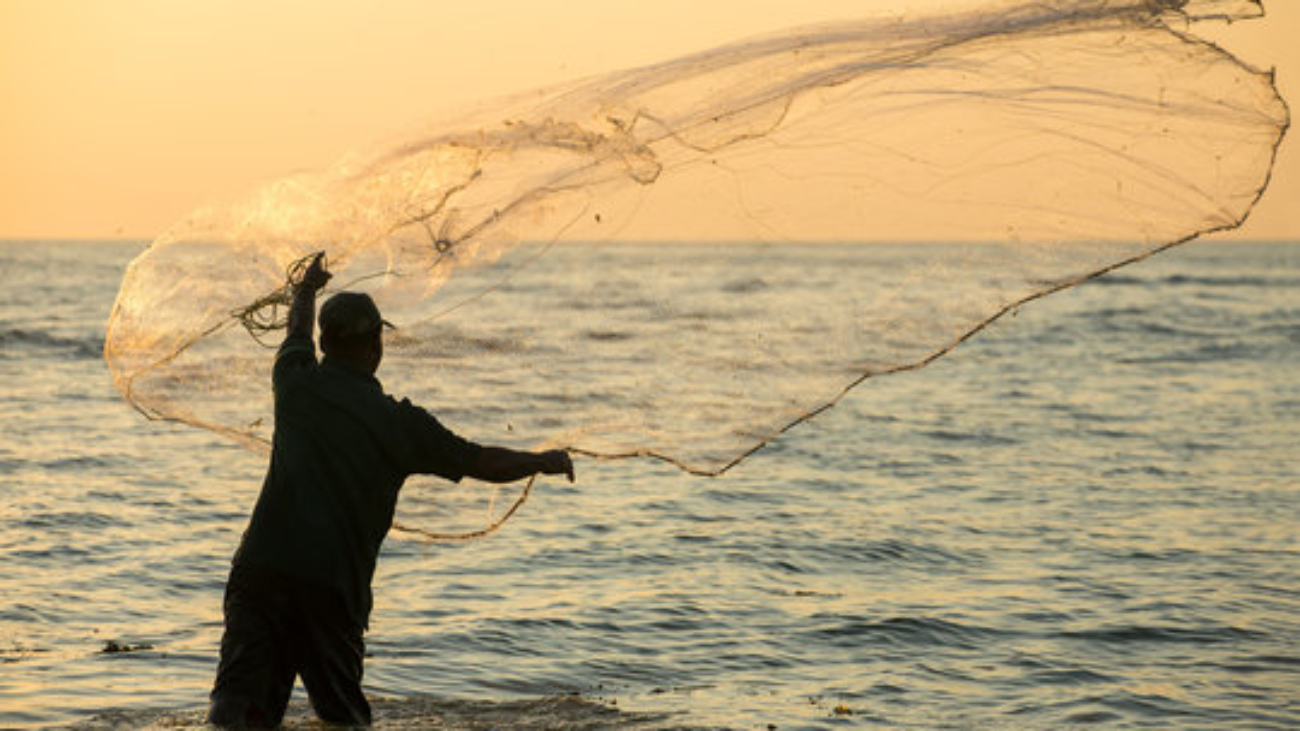
Valan / Valanchiyar communities in Kerala have historically been part of the inland and coastal fishing economy, distinct from deep-sea fishing groups but essential to riverine, backwater, estuary, and near-shore livelihoods. Their work traditionally included inland fishing, net-making assistance, boat handling in backwaters, fish drying, local fish trade, and maintenance of small watercraft. These roles formed a decentralised protein supply chain that supported rural and semi-urban Kerala long before modern cold chains or mechanised trawling emerged.
In present-day Kerala, Valan livelihoods are under severe structural stress. Inland water bodies are polluted, fish stocks have declined, and traditional fishing knowledge has not been integrated into modern aquaculture or water management systems. Many Valan households now rely on irregular fishing, casual labour, or low-end service work. Average monthly incomes frequently range between ₹12,000 and ₹22,000, with high seasonality and exposure to health, climate, and market shocks. At the same time, Kerala imports fish worth several thousand crores annually despite having extensive inland water resources.
Kerala Vision 2047 must reposition Valan communities as operators of a modern inland fisheries and aquatic resource economy. Kerala has over 44 rivers, thousands of ponds, reservoirs, canals, backwaters, and irrigation tanks. Inland fisheries potential is significantly underutilised. Estimates suggest that scientifically managed inland aquaculture could produce an additional 5–7 lakh tonnes of fish annually. At an average farm-gate value of ₹180–₹220 per kg, this represents a ₹10,000–₹15,000 crore opportunity that can be anchored by traditional fishing communities.
The first strategic intervention is the creation of Aquatic Resource Management Units at the panchayat and block levels. These units would manage fish stocking, breeding cycles, water-quality monitoring, harvesting schedules, and post-harvest handling across ponds, canals, and reservoirs. Kerala has 152 block panchayats; even one functional unit per block operating at ₹25–₹30 crore annual turnover creates a ₹4,000 crore inland fisheries ecosystem. Valan communities possess the ecological intuition required for such work, but need technical and institutional backing.
Skill upgrading is fundamental. Traditional fishing experience must be combined with training in scientific aquaculture, water chemistry, disease control, feed management, cage culture, and cold-chain handling. A nine-month certification program costing ₹55,000 per worker can upgrade 15,000 workers annually at an investment of ₹82 crore per year. Productivity gains of 2–3 times over traditional methods are achievable within two production cycles.
Income transformation follows scale and predictability. Today’s irregular fishing yields volatile incomes. Under organised aquaculture and managed fisheries contracts, Valan workers can achieve year-round engagement. Even a conservative net income of ₹35,000–₹60,000 per month is realistic for trained operators managing cages, ponds, or cooperative harvest systems. If 75,000 workers achieve an average income increase of ₹25,000 per month, this injects ₹2,250 crore annually into Kerala’s coastal and riparian economies.
Kerala Vision 2047 must integrate Valan communities into public water-body management. Panchayats, irrigation departments, and local bodies collectively manage thousands of water assets but focus mainly on desilting and flood control. Integrating fisheries production into these systems improves water quality, generates revenue, and creates accountability. Even if 20 percent of suitable public water bodies are brought under managed fisheries generating ₹10–₹15 lakh per hectare annually, the revenue impact is transformative.
Asset ownership is decisive. Modern inland fisheries require cages, aerators, water-testing kits, feed storage, ice plants, insulated transport, and small processing units. A shared-asset model deploying ₹7–₹9 lakh per five-worker unit can be financed through long-tenure loans backed by state guarantees. Scaling to 20,000 units over two decades implies capital deployment of roughly ₹14,000 crore, fully aligned with Kerala’s food security and rural development priorities.
Value addition is the next frontier. Kerala’s fish consumption is high, but processing and branding are weak. Dry fish, smoked fish, ready-to-cook products, and institutional-grade supply for hotels, hospitals, and hostels offer higher margins. If even 15 percent of inland fish production is routed through Valan-led processing units with value addition of ₹60–₹80 per kg, this creates a ₹3,000–₹4,000 crore processing economy layered on top of primary production.
Climate resilience is a hidden advantage. Managed inland fisheries improve water retention, reduce eutrophication, and support flood moderation. Healthy aquatic systems act as buffers during extreme rainfall events. Valan-led stewardship of water bodies therefore contributes not only to livelihoods but also to climate adaptation.
Governance improves when livelihood and resource management are linked. Digital monitoring of stock, water quality, harvests, and sales reduces leakage and overexploitation. Panchayats gain recurring revenue streams instead of one-time maintenance costs, while communities gain predictable income.
Intergenerational mobility depends on professionalisation. Younger Valan members trained in aquaculture science, quality control, logistics, and enterprise management can move beyond subsistence fishing. Over a 20-year horizon, even a 10–15 percent transition into enterprise ownership and supervisory roles reshapes the community’s economic standing.
By 2047, Valan / Valanchiyar-led inland fisheries and aquatic resource systems can anchor a ₹25,000–₹30,000 crore annual economy in Kerala, reduce fish imports, strengthen nutrition security, and restore dignity to water-based livelihoods. This is not revivalism, but a production-led reconstruction of Kerala’s relationship with its rivers and backwaters.
