
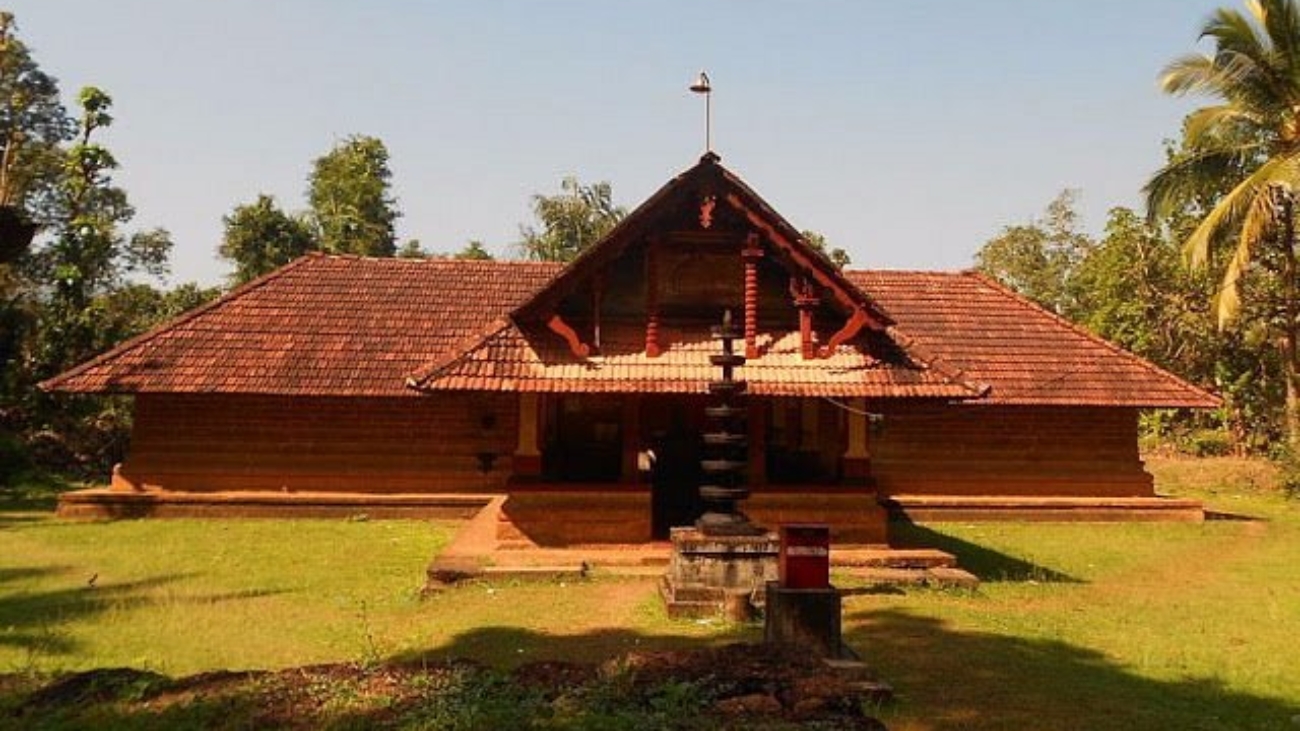
Vilkurup / Perumkollan communities in Kerala have historically been tied to agricultural labour, field preparation, harvesting assistance, and maintenance of agrarian infrastructure. Their work formed the human connective tissue between land, crop cycles, and village survival. Unlike land-owning farmers or specialised artisans, Vilkurup labour was mobile, seasonal, and task-oriented, filling critical gaps during sowing, weeding, irrigation maintenance, harvesting, and post-harvest handling. This flexibility kept rural production functioning, but it also meant chronic economic vulnerability.
In contemporary Kerala, the traditional agrarian ecosystem that absorbed Vilkurup labour has fragmented. Paddy cultivation has declined, landholdings have reduced in size, and mechanisation has displaced manual roles without creating equivalent new ones. As a result, a large share of Vilkurup households are now trapped in irregular daily wage labour across agriculture, construction assistance, cleaning, loading-unloading, and informal services. Average annual workdays often fall below 200, and monthly incomes typically range between ₹10,000 and ₹18,000, with high exposure to debt and health shocks.
Kerala Vision 2047 must reposition Vilkurup labour from unstructured manual work into organised agri-infrastructure and land-management systems. Kerala still manages over 1.9 million hectares of agricultural land, irrigation channels, bunds, canals, farm roads, and water-control structures. The annual public and private spending on agriculture support, irrigation maintenance, soil conservation, and rural land works easily exceeds ₹25,000 crore. However, this spending is fragmented, contractor-heavy, and weakly linked to local labour upskilling.
A Vision 2047 intervention begins with creating Land and Water Maintenance Units at the panchayat and block levels. Each unit would be staffed by trained Vilkurup workers specialising in soil work, bund reinforcement, canal desilting, minor earthworks, drainage management, and farm-access maintenance. Kerala has 941 grama panchayats and 152 block panchayats. Even one functional unit per block, handling ₹15–₹20 crore of annual works, creates a decentralised execution system worth ₹2,500–₹3,000 crore annually.
Skill conversion is the critical lever. Vilkurup labour has deep experiential knowledge of land behaviour, water flow, and seasonal cycles. Vision 2047 must convert this into semi-technical competence. Training in mini-excavator operation, soil compaction standards, slope stabilisation, basic surveying, drainage design, and safety protocols can raise output per worker by two to three times. A nine-month certification costing ₹50,000 per worker could upgrade 30,000 workers annually with a public investment of ₹150 crore, a marginal cost relative to infrastructure budgets.
Income outcomes must be explicit. Today’s irregular labour income rarely exceeds ₹2 lakh per year. Under structured land-management contracts, a trained Vilkurup worker operating equipment or supervising teams can earn ₹30,000–₹45,000 per month, with continuity across seasons. At scale, upgrading even 100,000 workers lifts ₹3,000–₹4,000 crore annually in household income, directly strengthening rural consumption, education, and health spending.
Kerala Vision 2047 must integrate Vilkurup communities into the climate adaptation economy. Kerala loses thousands of crores annually to flood damage, landslides, and soil erosion. Preventive land works are far cheaper than post-disaster repair. Continuous maintenance of drainage networks, hill slopes, and water channels can reduce damage costs by 20–30 percent over a decade. Vilkurup-led land-management units, operating on retainer contracts, provide the manpower backbone for this preventive strategy.
Asset ownership changes the equation. Instead of renting machines from external contractors, Vilkurup producer groups must own mini-excavators, compactors, water pumps, and transport vehicles. A shared-asset model, where five to seven workers jointly operate equipment worth ₹8–₹10 lakh, can be financed through long-tenure loans backed by state guarantees. Deploying 15,000 such units statewide over 20 years implies a capital deployment of roughly ₹15,000 crore, fully absorbable within Kerala’s infrastructure spending trajectory.
Agriculture-linked diversification is another opportunity. Post-harvest handling, compost production, organic manure logistics, soil testing assistance, and farm-input distribution are labour-intensive extensions of existing skills. Kerala consumes over 3 million tonnes of fertilisers and soil amendments annually. Even capturing 10 percent of composting, bio-input handling, and logistics value creates a ₹2,000–₹3,000 crore opportunity dominated by trained rural labour.
Governance reform is central. Panchayats currently struggle with execution capacity and monitoring. Land-management units staffed by accountable local workers reduce leakages, delays, and quality failures. Digital attendance, GPS-tagged work reporting, and milestone-based payments can be integrated without complexity. This improves public trust and ensures that spending translates into durable outcomes.
Intergenerational mobility is the long-term goal. With predictable income, skill certification, and asset ownership, younger Vilkurup members can move into supervisory, technical, and entrepreneurial roles. Over a 20-year horizon, even a modest transition rate of 12–15 percent into higher-skilled positions reshapes the community’s economic profile permanently.
By 2047, Vilkurup / Perumkollan-led land and water management systems can anchor a ₹20,000–₹25,000 crore annual rural economy segment focused on prevention, maintenance, and climate resilience. This is not social upliftment through subsidy, but economic inclusion through productive responsibility. When those who understand land best are empowered to manage it at scale, Kerala’s development becomes more resilient, efficient, and locally rooted.
