
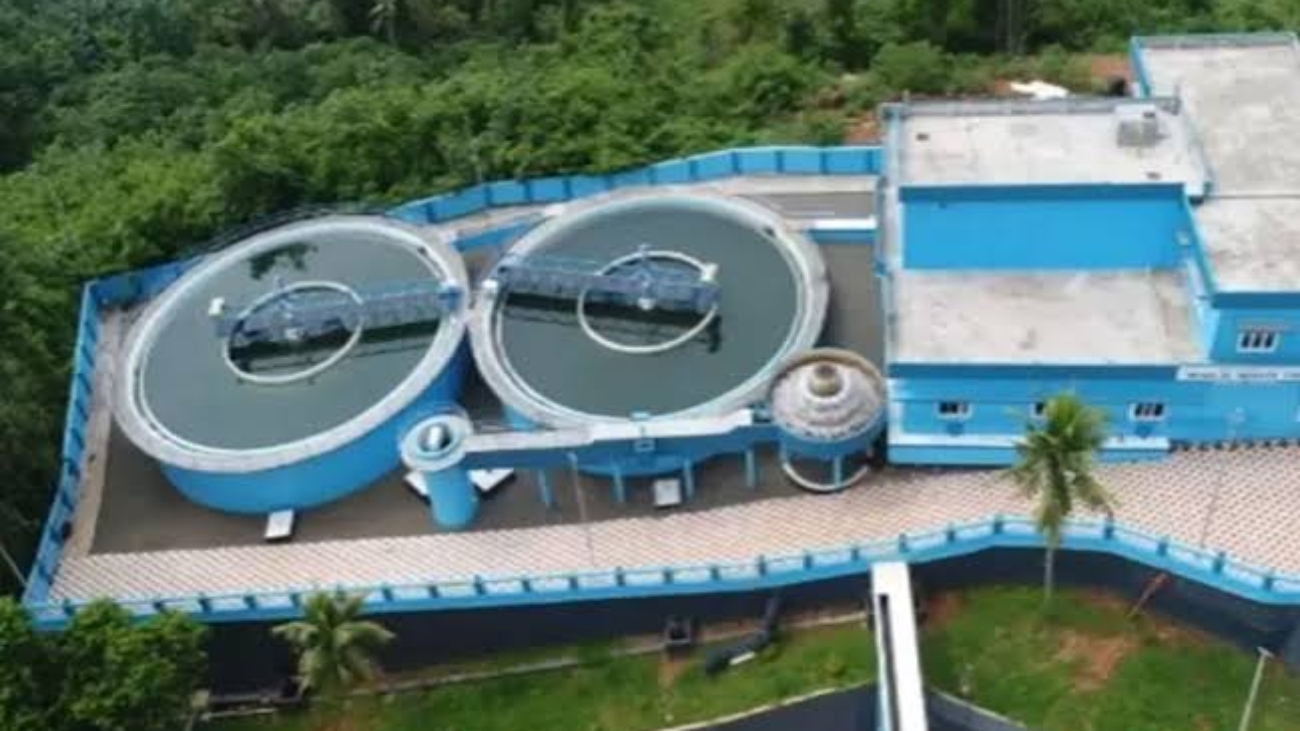
Kerala’s chemical backbone does not only operate inside factories or laboratories. It also runs through pipes, tanks, treatment units and reservoirs that quietly determine public health every single day. The Kerala Water Authority is one of the largest chemistry-driven operational systems in the state, even though it is rarely described in chemical terms. Every litre of drinking water supplied to households passes through multiple chemical decisions before it reaches the tap. As Kerala looks toward 2047, the chemistry embedded in water infrastructure will become one of the most decisive factors in public health, urban resilience and social stability.
Chemistry within the Kerala Water Authority is applied at scale. Unlike industrial plants that control inputs tightly, water systems deal with raw water sources that change continuously. Rivers, reservoirs, wells and surface sources vary by season, rainfall, land use and upstream human activity. During monsoon months, turbidity spikes. In summer, concentration of dissolved salts increases. Industrial discharge, agricultural runoff and sewage intrusion alter chemical composition unpredictably. Water chemistry teams must adapt treatment processes in real time to these variations.
Coagulation and flocculation chemistry form the first critical layer of treatment. Raw water often contains fine suspended particles that cannot be removed by simple settling. Chemical coagulants such as alum or iron salts are added to destabilise particles and form flocs that can be removed by sedimentation and filtration. The dosage is not fixed. It depends on turbidity, organic content, temperature and pH. Overdosing wastes chemicals and produces excess sludge. Underdosing allows contaminants to pass through. Operators rely on jar tests and chemical judgement to balance this continuously.
Disinfection chemistry is the most visible and sensitive aspect of water treatment. Chlorine and related compounds are used to kill pathogens and maintain residual protection through distribution networks. Too little disinfection risks outbreaks of waterborne disease. Too much creates taste, odour and potentially harmful by-products. Maintaining residual chlorine across kilometres of pipelines, varying demand and storage conditions is a complex chemical control problem. It requires understanding reaction kinetics, decay rates and interaction with organic matter.
pH control plays a quiet but crucial role. Water that is too acidic corrodes pipes and leaches metals. Water that is too alkaline affects taste and treatment efficiency. Chemical adjustment using lime, soda ash or other agents ensures stability. This is especially important in older distribution networks where pipe materials vary. Incorrect pH control accelerates infrastructure degradation and increases maintenance costs over decades.
Sludge chemistry is an often overlooked dimension. Coagulation and filtration generate sludge containing concentrated contaminants. This sludge must be thickened, stabilised and disposed of safely. Chemical characteristics determine whether sludge can be dewatered efficiently or poses environmental risk. Poor sludge management leads to secondary pollution even when treated water meets standards.
Groundwater chemistry presents a different set of challenges. In many parts of Kerala, groundwater contains high iron, hardness, salinity or fluoride levels. Treating these requires targeted chemical processes such as oxidation, ion exchange or blending. Unlike surface water plants, groundwater systems are often decentralised, making standardisation difficult. Chemistry teams must design solutions that are effective yet manageable at local scale.
Distribution system chemistry extends beyond treatment plants. Water interacts with pipelines, storage tanks and fittings. Corrosion products, biofilms and sediment accumulation alter water quality after treatment. Chemical monitoring within the network is essential to detect these changes. Maintaining chemical stability from source to tap is more complex than producing clean water at the plant.
Energy use and chemistry are intertwined. Pumping efficiency depends on water quality, scaling potential and corrosion. Chemical mismanagement increases friction losses and equipment wear. Over time, this raises energy consumption significantly. Chemical optimisation therefore contributes indirectly to energy efficiency and cost control.
The scale of KWA’s chemical responsibility is vast. Hundreds of treatment plants, thousands of pumping stations and extensive distribution networks operate simultaneously. Even small errors in chemical control, when multiplied across the system, affect millions of people. Conversely, incremental improvements deliver enormous public health benefits.
Human expertise is central. Water chemistry cannot be fully automated. Operators must interpret test results, respond to sudden changes and make judgement calls. Field experience matters. The behaviour of a river during first monsoon rains cannot be predicted entirely from models. Chemists and technicians learn patterns over years of observation.
Climate change intensifies chemical challenges. Higher temperatures accelerate biological growth and reaction rates. Extreme rainfall increases organic load and contaminant spikes. Sea level rise affects salinity in coastal aquifers. Treatment processes designed decades ago must now operate under new chemical regimes. Adapting without compromising safety is a growing challenge.
Public trust in water supply rests on chemistry, even if citizens never see it. When water tastes different, smells odd or causes illness, trust collapses quickly. Restoring confidence is far harder than maintaining it. Consistent chemical control is therefore not only a technical task but a social responsibility.
Regulatory chemistry intersects with operational chemistry. KWA must meet standards set by health and pollution authorities. This requires rigorous testing, documentation and corrective action. Chemistry teams operate under accountability, knowing that failures can escalate into public crises.
As Kerala approaches 2047, urban density will increase, per capita water demand will rise and source quality will become more stressed. Advanced treatment methods may be required, but the fundamentals remain chemical. Reactions must be controlled. Contaminants must be neutralised. Stability must be maintained.
Digital monitoring and automation will support these efforts, but they do not replace chemical understanding. Sensors detect changes, but chemistry explains them and guides response. The physical reality of water treatment ensures that chemistry remains central.
The Kerala Water Authority represents chemistry in its most direct public form. Unlike industrial chemistry focused on output or profit, water chemistry focuses on safety, consistency and equity. Every household depends on its success, regardless of income or location.
In a future where health systems, urban life and climate resilience are tightly linked, water chemistry will become even more critical. Kerala’s ability to maintain safe, reliable water supply will hinge on the quality of chemical practice embedded in its infrastructure.
The work of KWA’s chemists rarely attracts attention when done well. Water flows, life continues. Yet this invisibility is precisely its value. It means the system is functioning.
As Kerala shapes its vision for 2047, strengthening chemical capacity in water infrastructure is not optional. It is foundational. Clean water is not a policy outcome alone. It is a chemical achievement repeated every day, at scale, across the state.
