
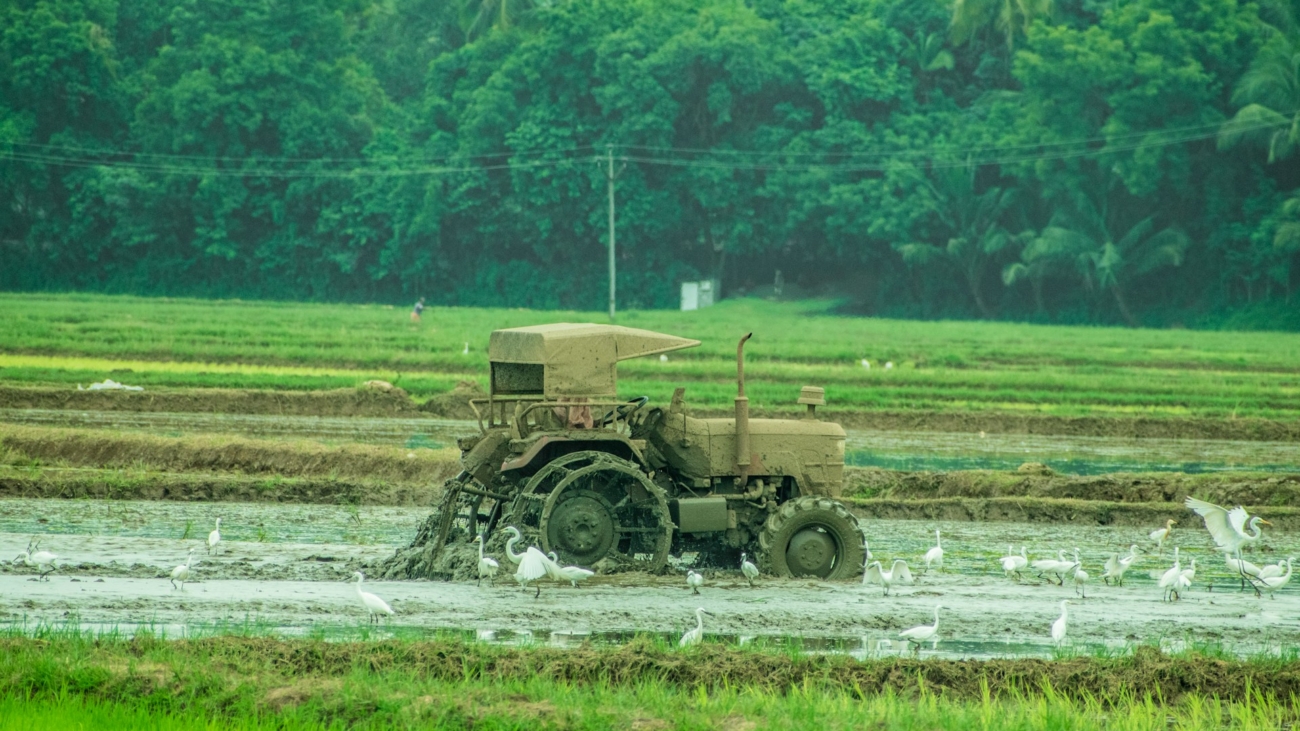
Palakkad has always fed Kerala, yet has rarely controlled the systems that decide price, profit, and policy. Agriculture here is treated as tradition, not as industrial strategy. Women work across farms, households, procurement points, and informal markets, but remain excluded from command over supply chains, processing infrastructure, and market access. Empowerment in Palakkad cannot mean subsistence farming or marginal self-employment. It must mean women commanding agro-industrial systems from soil to shelf. The core theme here must be women as leaders of agro-industrial command and food system power.
The first shift required is to redefine agriculture as industry. Palakkad’s strength lies not just in cultivation, but in volume, predictability, and regional centrality. Women must be trained to think beyond farming into processing, storage, logistics, and distribution. Empowerment begins when women understand how crops move through value chains, where margins are captured, and where losses are hidden. A woman who understands the chain controls outcomes far beyond her field.
The second shift is women-led food processing infrastructure. Rice, vegetables, millets, pulses, and perishables lose value due to lack of processing and storage. Women must lead enterprises that control milling, grading, packaging, cold storage, and secondary processing. This shifts women from price-takers to price-setters. Processing is power because it decides timing, quality, and market reach.
The third shift is supply chain governance. Palakkad sits at the gateway between Kerala and Tamil Nadu, making it a logistics hinge. Women must be trained as supply chain managers, transport coordinators, procurement strategists, and inventory planners. Control over movement decides freshness, pricing, and reliability. When women manage logistics, they gain leverage over both producers and buyers.
The fourth shift is farmer-producer organisations with real authority. Many FPOs exist only on paper. Women-led FPOs in Palakkad must function as commercial entities with negotiating power, professional management, and clear accountability. Empowerment here means women signing contracts, negotiating volumes, and enforcing quality standards—not attending meetings without control.
The fifth shift is price intelligence and market timing. Farmers lose money not due to low production, but poor timing and information asymmetry. Women must be trained to read market signals, futures trends, procurement cycles, and demand patterns. A woman who knows when to sell controls income stability for entire communities.
The sixth shift is agro-finance mastery. Agriculture collapses when finance is misaligned with cycles. Women must be trained in crop-linked finance, working capital management, insurance frameworks, warehousing receipts, and risk mitigation. Empowerment here is financial literacy applied to real assets, not abstract savings schemes.
The seventh shift is mechanisation and technology as command tools. Technology in agriculture is often introduced without ownership. Women must be trained to select, deploy, and manage machinery, sensors, irrigation systems, and software. The woman who controls machines controls labour dynamics and productivity, reversing traditional dependency structures.
The eighth shift is food safety and compliance authority. Modern food systems demand traceability, hygiene, and certification. Women must be trained as food safety officers, compliance auditors, and quality controllers. This gives them non-negotiable authority within the system. When compliance fails, everything stops. That is power.
The ninth shift is climate resilience integrated into production. Palakkad faces heat stress, water scarcity, and yield volatility. Women must lead adaptive practices—crop diversification, water management, soil restoration, and resilient storage. Empowerment here is not environmentalism; it is survival strategy anchored in leadership.
The tenth shift is labour dignity through system design. Women workers in agriculture are exploited due to informality. Women-led agro-industrial systems must formalise labour through predictable wages, safety standards, and skill ladders. Empowerment includes women deciding how labour is treated, not just participating in it.
The eleventh shift is regional food security leadership. Palakkad can become Kerala’s food stabiliser. Women must sit at the centre of district-level food security planning, buffer stock management, emergency supply coordination, and price stabilisation mechanisms. This grants women strategic relevance beyond markets.
The twelfth shift is cultural reframing of farming. Agriculture is often portrayed as backward. Women leaders must reshape its narrative as skilled, technical, and strategic work. When identity shifts, ambition follows. Women stay when they see power, not pity.
If Palakkad succeeds in this model, it becomes Kerala’s proof that women can command food systems at scale. Not as cultivators alone, but as industrial strategists controlling land, logistics, finance, and markets. In a future defined by food stress and supply shocks, the district that trains women to govern agriculture trains society to remain fed.
