
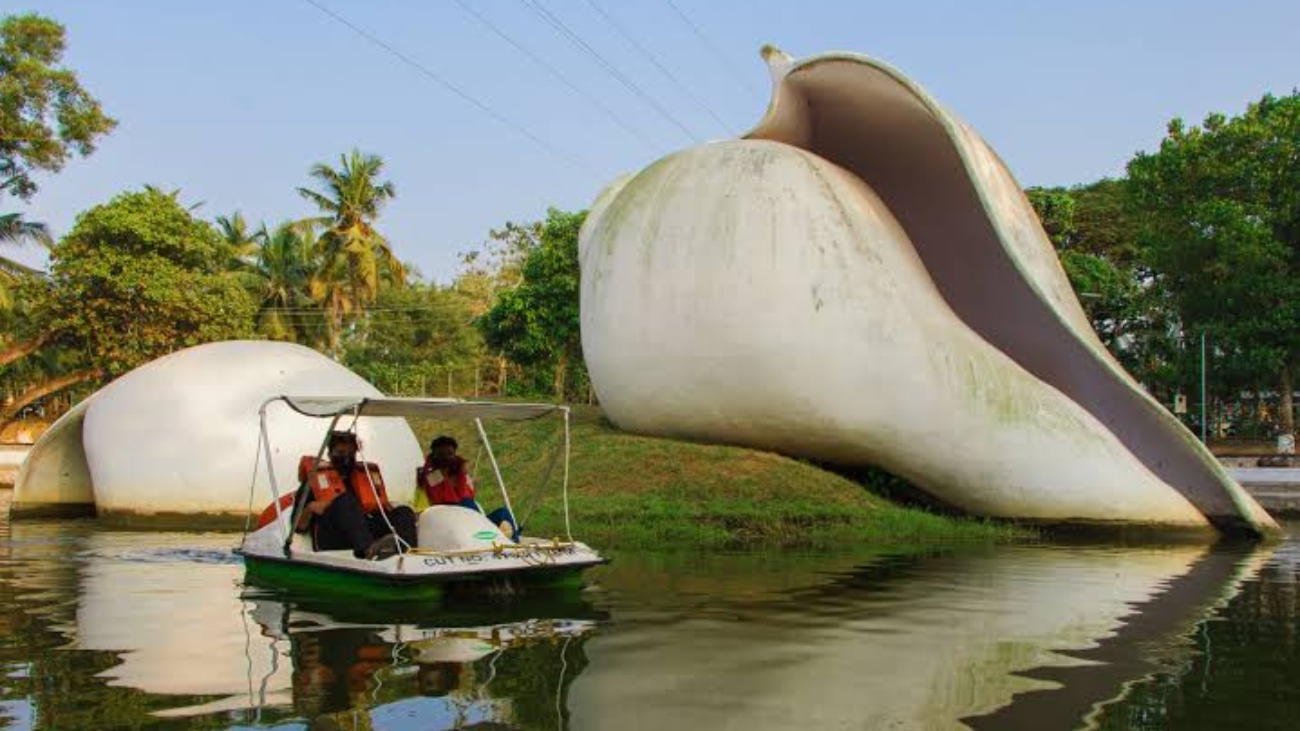
The Akkulam–Veli area of Thiruvananthapuram district represents a tourism-ecology-urban interface that has long suffered from high promise and weak fiscal design. The lake system, beach frontage, parks, resorts, event spaces, and surrounding residential neighbourhoods generate episodic but intense economic activity, while public costs related to maintenance, sanitation, environmental protection, and crowd management remain persistently underfunded. Vision Kerala 2047 requires this area to transition from a neglected leisure zone into a self-financing urban commons where recreation, ecology, and revenue are structurally aligned.
Property taxation in Akkulam–Veli does not reflect locational advantage. Proximity to waterfronts, tourism amenities, and transport corridors significantly increases land value and rental potential, yet assessments often remain tied to legacy residential classifications. By 2047, property valuation must incorporate amenity proximity and usage intensity. Properties benefiting from lake views, beach access, and tourism infrastructure should be assessed gradually to reflect this advantage, while owner-occupied housing away from activity nodes is protected through phased reassessment. This approach captures value without triggering speculative displacement.
Tourism and event-driven activity is the defining economic characteristic of the area. Parks, festivals, resorts, recreational facilities, and beach-related commerce generate heavy footfall during weekends and seasons, placing stress on sanitation, waste management, security, lighting, and transport. Yet these costs are largely socialised. Vision Kerala 2047 should normalise visitor-linked service contributions collected through parking systems, ticketed facilities, accommodations, and organised events. When transparently earmarked, even modest per-visitor charges can fund cleanliness, safety, and facility upkeep without discouraging tourism.
Lake and beach maintenance is a recurring fiscal drain. Desilting, water quality management, weed control, waste removal, and shoreline protection require continuous expenditure. Vision Kerala 2047 must treat ecological maintenance as a standing service, not a periodic project. Environmental service contributions should be applied to commercial establishments, resorts, event operators, and large-scale recreational users who benefit directly from clean and accessible water bodies. This converts environmental protection into a predictable fiscal loop rather than a grant-dependent activity.
Commercial hospitality and leisure businesses represent another under-monetised revenue base. Resorts, restaurants, amusement facilities, and rental services generate high turnover but contribute little beyond basic licensing. By 2047, turnover-band-based trade licensing and area service agreements should be standard. Revenues should be ring-fenced for lakefront lighting, promenades, public toilets, waste management, and security. International waterfront districts demonstrate that such models improve visitor experience and business value simultaneously.
Mobility and parking management are critical fiscal and environmental levers. Unregulated parking and traffic congestion degrade public spaces and increase maintenance costs. Vision Kerala 2047 should adopt demand-based parking pricing, restricted vehicle access near sensitive lakefront zones, and pedestrian-priority corridors. Revenue from these measures should directly fund footpaths, cycling tracks, lighting, and enforcement. Reduced vehicle pressure also lowers environmental degradation, compounding fiscal benefits.
Residential communities around Akkulam–Veli bear indirect costs of tourism activity, including noise, congestion, and waste. A finance model that ignores this creates resentment and resistance. Vision Kerala 2047 should ensure that a portion of tourism-linked revenue is visibly reinvested into neighbourhood services such as roads, drainage, lighting, and parks. When residents see benefits, social licence for tourism strengthens.
Expenditure efficiency must focus on durability and prevention. Waterfront infrastructure deteriorates faster due to humidity and salt exposure. Vision Kerala 2047 should mandate marine- and lake-grade materials, predictive maintenance, and lifecycle budgeting for public assets. Though upfront costs are higher, lifecycle savings of 20–25 percent are achievable, effectively expanding fiscal capacity.
Energy and utilities offer supportive opportunities. Parks, promenades, resorts, and public facilities are suitable for solar lighting and shared energy systems. By 2047, energy savings from public lighting and facilities should be pooled into a local recreation and ecology fund, supporting surveillance, emergency response, and maintenance without recurring budget pressure.
Borrowing should be limited and tightly linked to revenue-generating assets. Akkulam–Veli does not need speculative construction but steady investment in public amenities, sanitation, and ecological restoration. Small, ring-fenced loans backed by parking revenue, visitor fees, and hospitality contributions can finance these needs. Debt servicing should remain below 6–7 percent of locally generated revenue to preserve flexibility.
Transparency is essential in a public leisure zone. Citizens and visitors must trust that charges improve experience rather than disappear into general budgets. By 2047, public dashboards showing visitor numbers, revenue collection, cleanliness metrics, water quality indicators, and reinvestment outcomes should be standard. Visibility builds trust and compliance.
By mid-century, the Akkulam–Veli area should aim to finance the majority of its maintenance, sanitation, and public amenity costs through locally generated, visitor- and activity-linked revenues. State support can then focus on large-scale ecological restoration and tourism promotion rather than routine upkeep.
Akkulam–Veli has the potential to be Thiruvananthapuram’s everyday commons rather than an episodically managed attraction. Vision Kerala 2047 must ensure that enjoyment, ecology, and economics reinforce each other. A leisure landscape that pays for its own care can remain clean, accessible, and dignified across generations.
