
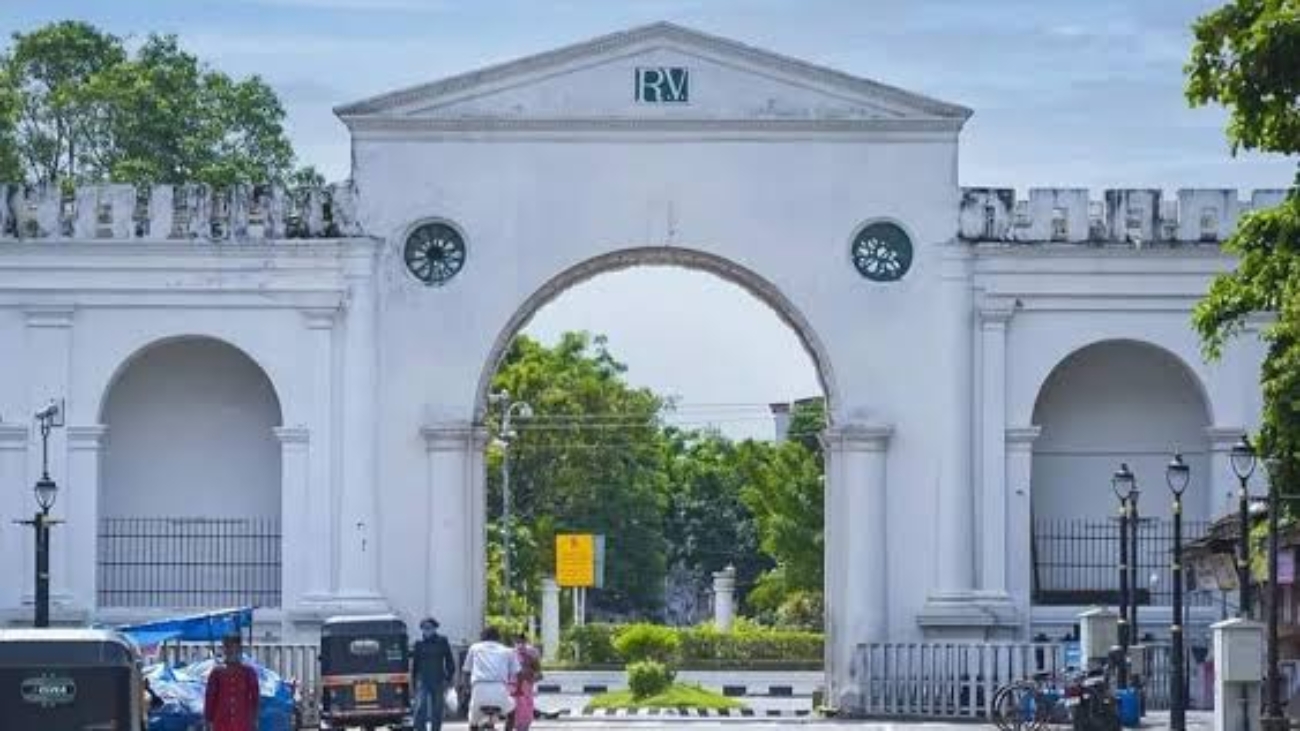
The Fort area of Thiruvananthapuram district represents the city’s oldest administrative, cultural, and commercial core. It hosts government offices, heritage precincts, wholesale markets, pilgrimage flows, and dense residential clusters. Unlike growth-frontier areas, Fort’s challenge is not expansion but overload. Intense daily footfall, aging infrastructure, and heritage constraints create high public costs, while revenue mechanisms remain largely frozen in time. Vision Kerala 2047 requires the Fort area to transition from a subsidy-dependent historic core into a financially sustainable civic heart that funds its own preservation, functionality, and dignity.
Property taxation in the Fort area suffers from a dual distortion. On one hand, many properties are under-assessed due to age, rent control legacies, and heritage classification. On the other, commercial activity intensity far exceeds what residential-style valuation captures. By 2047, property assessment must shift from age-based depreciation to usage-based valuation. Buildings hosting wholesale trade, lodging, offices, or high-footfall retail should be assessed on economic activity and service load rather than physical age alone. Heritage protection need not mean fiscal exemption; differential valuation can protect façades while capturing economic value generated inside. Gradual recalibration can significantly raise effective collections without sudden shocks.
Footfall-driven commerce is the Fort area’s defining economic characteristic. Markets, temples, government offices, and transport nodes attract thousands daily, placing heavy demand on sanitation, waste removal, policing, lighting, and road maintenance. Yet the cost of servicing this population is borne primarily by residents and the general municipal budget. Vision Kerala 2047 should normalise footfall-linked service contributions through market levies, time-based vending fees, and commercial access charges. When designed transparently and reinvested locally, such mechanisms convert congestion into fiscal capacity rather than decay.
Wholesale trade and informal commerce require special treatment. The Fort area hosts dense clusters of small traders operating on thin margins but high turnover. Flat licensing fees either undercharge large operators or overburden micro-traders. By 2047, turnover-band-based trade licensing should replace uniform fees, improving equity and compliance simultaneously. Even modest improvements in formalisation and reporting can expand aggregate revenue while reducing harassment and discretion.
Heritage management is often treated purely as an expenditure item. Vision Kerala 2047 must reverse this logic. Cultural assets generate economic value through tourism, pilgrimage, and identity branding. A heritage-linked finance model, including visitor service contributions, guided access fees, and event-based charges, can create a dedicated preservation fund. International historic districts routinely finance maintenance this way without compromising access or sanctity. For the Fort area, such a fund can stabilise conservation spending without competing with routine civic needs.
Parking and mobility management are critical fiscal levers. Unregulated parking and traffic congestion impose large social costs while generating little revenue. By 2047, the Fort area should adopt demand-based parking pricing, limited access windows for freight, and pedestrian-priority zones. Revenue from these measures should be earmarked for footpaths, lighting, sanitation, and last-mile connectivity. Beyond revenue, these tools improve livability and reduce maintenance burden, creating compounding benefits.
Expenditure efficiency is particularly important in a heritage zone. Reactive repairs on aging infrastructure are costly and often damage historical fabric. Vision Kerala 2047 should prioritise preventive conservation and predictive maintenance. Mapping underground utilities, drainage capacity, and structural health allows planned interventions that cost less over time and preserve heritage integrity. Lifecycle cost reductions of 15–20 percent are achievable, effectively freeing fiscal space without new taxation.
Waste and sanitation finance must reflect intensity of use. Markets and pilgrimage sites generate waste far beyond residential norms. Differential waste service pricing for bulk generators, combined with on-site segregation requirements, can reduce municipal handling costs and improve cleanliness. By 2047, sanitation finance should be predictable, usage-linked, and transparent.
Borrowing in the Fort area should be minimal and strategic. Large new construction is neither feasible nor desirable. Capital needs relate to restoration, pedestrianisation, drainage upgrades, and utility renewal. These can be financed through small, ring-fenced loans backed by stable revenue streams such as parking fees, market charges, and heritage funds. Keeping debt servicing below 6–7 percent of locally generated revenue preserves flexibility in a sensitive area.
Transparency is essential to maintain social legitimacy. Residents and traders are often wary of new charges, especially in historic cores. By 2047, publicly visible accounts showing how local revenues directly fund cleanliness, safety, heritage conservation, and mobility will be critical. Evidence from historic cities worldwide shows that acceptance rises sharply when benefits are visible and local.
By mid-century, the Fort area should aim to finance the bulk of its maintenance and conservation costs through locally generated, activity-linked revenues. State support can then focus on strategic heritage and administrative functions rather than routine upkeep. This rebalancing protects both fiscal sustainability and cultural legacy.
The Fort area embodies Thiruvananthapuram’s memory and identity. Vision Kerala 2047 must ensure that preserving this legacy does not mean freezing it fiscally. A historic core that cannot pay for its own survival will inevitably decline. A historic core that captures the value it generates can remain vibrant, functional, and dignified for generations.
