
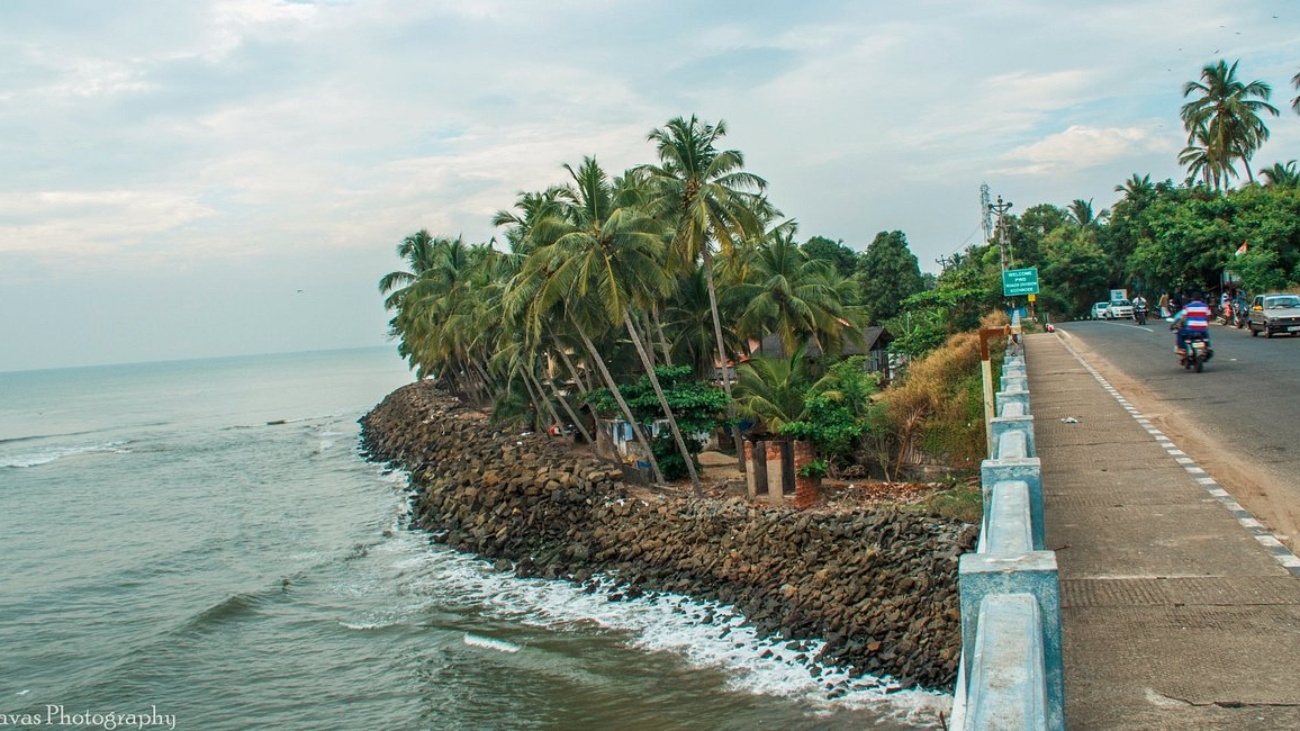
The Kadalundi area, straddling Kozhikode and Malappuram districts, is one of North Kerala’s most environmentally valuable yet fiscally neglected coastal zones. Defined by the Kadalundi river mouth, mangroves, wetlands, rail–road bridges, fishing livelihoods, bird sanctuary tourism, and dense settlements, the area carries high ecological and infrastructure management costs while capturing very little local revenue. Seasonal flooding, erosion, and sanitation stress recur with predictable regularity. Vision Kerala 2047 requires Kadalundi to transition from a conservation-by-neglect zone into a river–estuary commons that finances its own protection, access, and dignity.
Property taxation in Kadalundi undercaptures both locational advantage and public investment in risk mitigation. Proximity to the estuary, rail bridge, beach access, and tourism interest has raised land utility, yet assessments remain conservative due to flood exposure and legacy classifications. By 2047, valuation must adopt a risk-adjusted utility model. Properties benefiting from embankments, raised roads, drainage upgrades, and improved access should be reassessed gradually to reflect reduced vulnerability, while genuinely exposed and low-income households receive targeted relief. This ensures resilience investment feeds back into fiscal capacity rather than remaining a permanent subsidy.
River and wetland management is the area’s largest recurring public cost. Desilting, embankment repair, waste removal, sewage interception, mangrove protection, and flood response consume resources annually. Vision Kerala 2047 must treat river–wetland services as a priced urban utility. Environmental service contributions should apply to commercial establishments, tourism operators, institutions, and higher-density housing clusters that benefit directly from flood control and ecological buffering. Ring-fenced revenues can create a permanent estuary maintenance fund, reducing dependence on post-monsoon emergency grants.
Fishing livelihoods form the social backbone of Kadalundi and must be protected with care. Landing sites, net repair areas, ice storage, and informal markets generate continuous sanitation and access demand. Vision Kerala 2047 should clearly separate subsistence fishing from commercial-scale processing and export. Small-scale fishers should face minimal fiscal burden and receive service priority, while larger processing units and traders contribute through fisheries-linked service agreements. Revenues should be reinvested locally into harbour sanitation, lighting, cold-chain waste handling, and worker safety.
Eco-tourism and birdwatching have grown steadily around the estuary and sanctuary, creating episodic footfall that strains sanitation, waste management, signage, and safety. Yet these costs are almost entirely socialised. Vision Kerala 2047 should normalise visitor-linked service contributions via parking systems, guided-tour permits, and organised activities. Modest per-visitor charges, transparently earmarked, can fund toilets, waste logistics, walkways, lighting, and habitat protection without dampening demand.
Transport infrastructure adds another layer of fiscal stress. The rail bridge, road junctions, and daily commuter flows generate congestion, road wear, and safety risks. Yet movement remains largely unpriced locally. Vision Kerala 2047 should introduce managed parking, time-windowed freight access, and corridor-specific access fees. Revenues should be reinvested into road strengthening, drainage integration, pedestrian safety, and traffic management, converting transit load into durability.
Environmental vulnerability is the defining fiscal risk. Flooding, bank erosion, salt intrusion, and climate variability accelerate infrastructure decay and public health costs. Vision Kerala 2047 must institutionalise resilience-linked service contributions for developments and commercial activities benefiting from embankments, drainage upgrades, and early-warning systems. Preventive estuary investment consistently costs far less than repeated recovery.
Expenditure efficiency must prioritise prevention over repair. Repeated post-flood reconstruction drains public finances. Vision Kerala 2047 should mandate predictive maintenance, pre-monsoon audits, and condition-based contracts for embankments, drains, roads, and bridges. International experience shows preventive river management can reduce long-term costs by 30–40 percent compared to reactive approaches—avoided costs that effectively function as revenue.
Energy and water efficiency offer stabilising gains. Public buildings, markets, and housing clusters can adopt shared solar, efficient pumping, and rainwater harvesting. By 2047, savings from reduced public energy and water expenditure should be pooled into a local estuary resilience fund supporting monitoring systems, lighting, and emergency preparedness.
Borrowing must be conservative and resilience-linked. Kadalundi does not need expansionary projects but sustained investment in drainage integration, embankment strengthening, access roads, sanitation, and habitat protection. Small, ring-fenced loans backed by environmental service contributions, visitor fees, and mobility charges can finance these needs. Debt servicing should remain below 6–7 percent of locally generated revenue to preserve flexibility in flood years.
Transparency is essential in an environmentally sensitive area where trust erodes after repeated crises. By 2047, public dashboards showing estuary maintenance schedules, flood mitigation works, revenue inflows, and service outcomes should be standard. Visibility builds cooperation among residents, fishers, tourism operators, and institutions.
By mid-century, the Kadalundi area should aim to finance most of its river–wetland management, sanitation, and access maintenance through locally generated, risk- and usage-linked revenues. State and central funds can then focus on basin-level ecological protection beyond local scope rather than routine urban firefighting.
Kadalundi is a living estuary, not a backdrop. Vision Kerala 2047 must ensure that conservation is not sustained by neglect alone. A revenue system that prices risk honestly, protects livelihoods, and funds prevention continuously can allow Kadalundi to remain ecologically rich, socially dignified, and fiscally resilient.
