
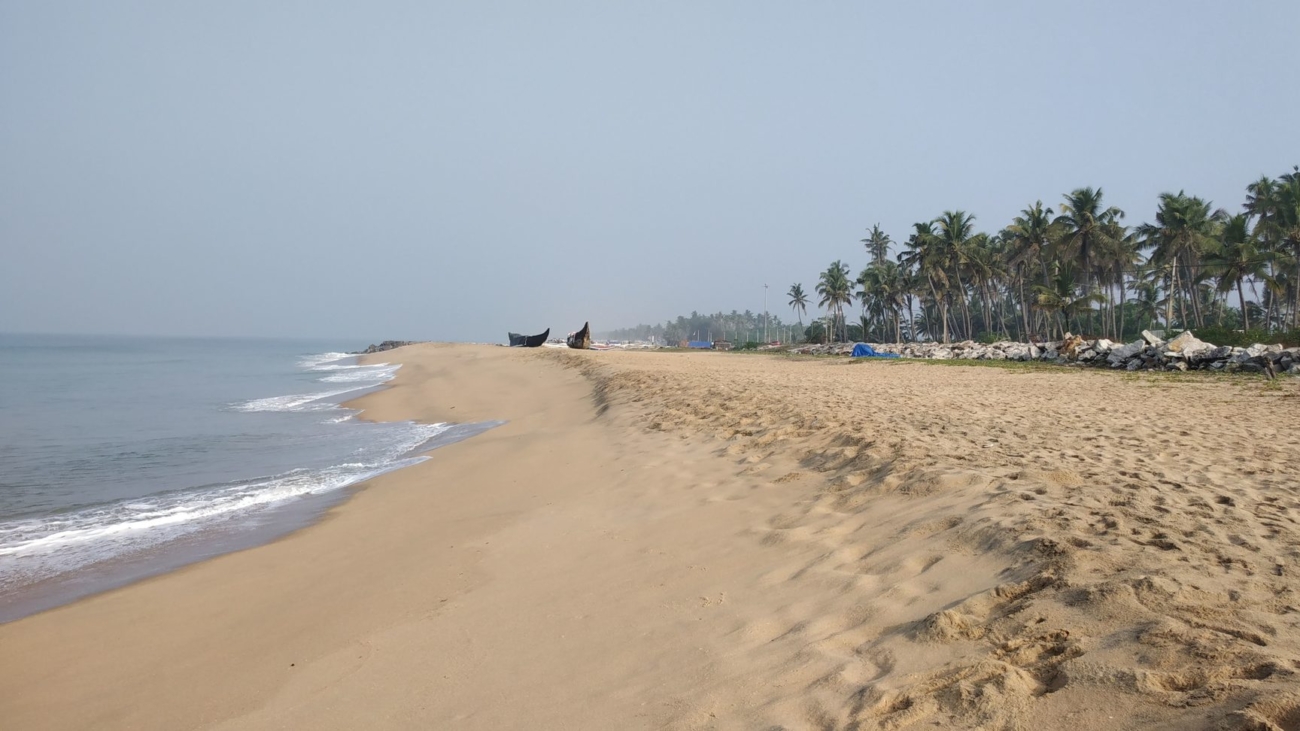
The Pallithura area of Thiruvananthapuram district occupies a narrow but highly strategic coastal–urban interface shaped by fishing livelihoods, dense habitation, tourism spillover from nearby beaches, and proximity to fast-growing technology and transport corridors. Despite this strategic location, Pallithura remains fiscally fragile, with high service stress and low revenue capture. Vision Kerala 2047 requires Pallithura to transition from a welfare-survival finance model to a dignity-anchored coastal revenue system that prices activity fairly, protects livelihoods, and funds resilience continuously.
Property taxation in Pallithura is structurally constrained by dense settlement patterns, small plot sizes, and lower household incomes. Uniform reassessment would be inequitable and destabilising. By 2047, property finance must follow a dual-track approach. Traditional fishing households and long-settled low-income residences should be protected through slow, income-sensitive reassessment and exemptions. At the same time, properties benefiting from coastal access, tourism spillover, commercial rentals, and transport proximity should be assessed based on functional value rather than legacy classification. This allows revenue growth without displacement pressure.
Fishing-related activity is the core economic engine and the largest service burden. Landing sites, net repair areas, ice storage, small processing units, and informal markets generate continuous demand for sanitation, waste management, road access, and public health services. Vision Kerala 2047 should formalise fisheries-linked service agreements for commercial-scale operations, calibrated to volume and activity type. Revenues must be ring-fenced for sanitation, cold-chain waste handling, access roads, lighting, and worker safety. Subsistence fishing and small artisanal activity should remain exempt or subsidised.
Tourism spillover from nearby beaches creates episodic but intense stress. Visitors increase waste, traffic, noise, and public safety demand without contributing to local upkeep. By 2047, visitor-linked service contributions should be normalised through parking systems, beach access management, and temporary commercial permits. Even small per-visitor charges, transparently earmarked, can fund cleanliness, public toilets, lighting, and enforcement, improving both resident life and visitor experience.
Transport pressure is a growing fiscal risk. Narrow coastal roads carry rising volumes of taxis, buses, and delivery vehicles serving tourism and nearby urban centres. Road damage, congestion, and safety risks escalate faster than maintenance budgets. Vision Kerala 2047 should introduce differentiated access fees for commercial vehicles and time-windowed freight movement. These revenues can finance marine-grade road surfaces, drainage, and traffic calming, reducing long-term repair costs.
Environmental vulnerability defines Pallithura’s long-term costs. Coastal erosion, flooding, salt corrosion, and climate volatility impose recurring expenditure. Vision Kerala 2047 must institutionalise resilience-linked service contributions for developments and commercial activities benefiting from sea walls, drainage upgrades, and early-warning systems. This converts climate adaptation from episodic disaster relief into a predictable fiscal loop. Preventive coastal investment consistently costs far less than repeated recovery.
Expenditure efficiency is critical in a salt-exposed environment. Reactive repairs fail quickly and waste public funds. Vision Kerala 2047 should mandate marine-grade standards, predictive maintenance, and lifecycle budgeting for roads, lighting, sanitation facilities, and public buildings. Though upfront costs are higher, lifecycle savings of 25–30 percent are achievable, effectively expanding fiscal capacity.
Public health expenditure is another hidden drain. High density, occupational exposure, and environmental risk increase disease burden. Vision Kerala 2047 should integrate preventive public health spending into local finance planning. Clean water access, waste control, and vector management reduce downstream healthcare costs significantly. These avoided costs must be treated as fiscal returns on infrastructure investment.
Energy and utilities provide modest but important opportunities. Community buildings, fishery infrastructure, and public facilities can adopt shared solar and efficient lighting. By 2047, savings from reduced public energy expenditure should be pooled into a local coastal maintenance and safety fund, supporting lighting, surveillance, and emergency shelters.
Borrowing must be extremely conservative. Pallithura should avoid large debt exposure given environmental risk and income sensitivity. Small, ring-fenced loans for essential resilience and sanitation infrastructure can be backed by predictable revenues such as visitor fees, fisheries service agreements, and transport charges. Debt servicing should remain below 5–6 percent of locally generated revenue to preserve flexibility.
Transparency is essential to rebuild trust in a community historically accustomed to neglect and crisis-driven intervention. By 2047, public dashboards showing sanitation schedules, resilience works, revenue collection, and service outcomes should be visible and locally accessible. When residents see continuity rather than episodic attention, social confidence increases.
By mid-century, the Pallithura area should aim to finance a substantial share of its sanitation, maintenance, and resilience costs through locally generated, activity-linked revenues, while protecting traditional livelihoods through targeted exemptions. State and central funds can then focus on major coastal protection and housing upgrades rather than routine survival costs.
Pallithura’s future will be shaped by how fairly it prices activity and how seriously it invests in dignity. Vision Kerala 2047 must ensure that being coastal does not mean being fiscally exposed. A finance system that protects livelihoods, captures value responsibly, and funds resilience continuously can transform Pallithura from a vulnerable edge into a stable, humane coastal neighbourhood.
