
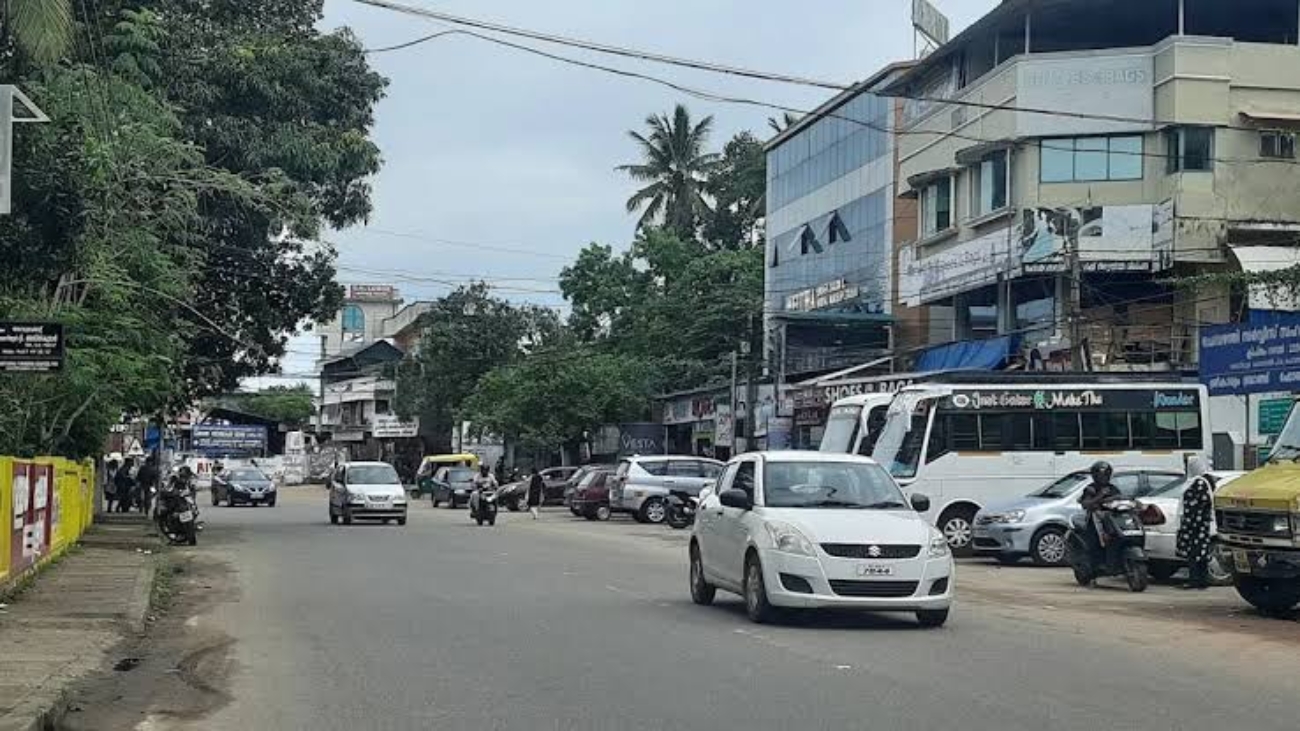
The Sreekaryam area of Thiruvananthapuram district sits at the confluence of education, research, healthcare, and mid-density residential life. With the University of Kerala campuses, research institutions, hospitals, hostels, coaching centres, and growing rental housing, Sreekaryam functions as a knowledge-and-services neighbourhood rather than a conventional commercial zone. Its fiscal stress does not come from lack of activity, but from activity that is intellectually dense and financially under-captured. Vision Kerala 2047 requires Sreekaryam to transition into a knowledge-backed revenue model, where institutions and users who benefit from public infrastructure contribute proportionately to its upkeep and upgrade.
Property taxation in Sreekaryam underperforms relative to usage intensity. Large institutional buildings, hostels, and rental properties are often assessed conservatively due to legacy classifications, despite generating continuous footfall and service demand. By 2047, property valuation must reflect functional use rather than nominal ownership type. Buildings used for education, accommodation, and allied services should be assessed based on occupancy levels, rental yield, and infrastructure load. A gradual shift to use-weighted valuation can significantly raise effective collections without penalising owner-occupied households.
The dominant fiscal pressure in Sreekaryam arises from its floating population. Students, researchers, patients, and staff move through the area daily, stressing roads, footpaths, sanitation, water supply, and public safety systems. Yet the cost of servicing this population is absorbed largely by resident taxation and general municipal funds. Vision Kerala 2047 should normalise user-linked service contributions through mechanisms such as managed parking, short-term access permits for bulk institutional transport, and service-area charges for high-footfall facilities. When transparently earmarked, these revenues convert intensity into maintainability rather than decay.
Educational and research institutions are the area’s defining asset and must become fiscal partners rather than passive beneficiaries. Vision Kerala 2047 should formalise institution-area service contributions linked to pedestrian infrastructure, lighting, drainage, emergency access, and public transport connectivity. Such contributions should be predictable, modest, and ring-fenced for local improvements. Global university districts demonstrate that this approach strengthens campus–city relationships while stabilising public finances.
Rental housing is another critical factor. Hostels, paying guest accommodations, and informal rentals generate high occupancy turnover, increasing waste, water use, and wear on public assets. By 2047, differentiated service pricing for bulk rental properties should be introduced, with safeguards for affordability. Incentives for on-site waste management, water reuse, and energy efficiency can reduce operating costs while improving compliance and service quality.
Expenditure efficiency is especially important in an area where infrastructure is heavily used but not visibly expanding. Vision Kerala 2047 should prioritise predictive maintenance for roads, footpaths, drainage, and public toilets. Condition-based contracts reduce emergency repairs and can lower lifecycle costs by 15–20 percent. These savings effectively function as additional revenue by preserving fiscal space for upgrades.
Mobility management is a significant opportunity. Congestion around institutions and hospitals creates safety risks and inefficiency. By 2047, Sreekaryam should adopt demand-based parking pricing, time-windowed freight access, and pedestrian-priority zones near campuses. Revenue from these measures should be reinvested into footpaths, crossings, lighting, and public transport shelters, improving both safety and fiscal balance.
Energy and digital infrastructure offer complementary finance pathways. Large institutional roofs are ideal for aggregated solar installations. Shared energy systems can reduce demand on public grids and stabilise supply. By 2047, a portion of energy savings should be captured into a local infrastructure fund supporting lighting, surveillance, and emergency systems. Similarly, anonymised mobility and service-usage data, governed with strict privacy safeguards, can be licensed for research and planning, creating small but growing revenue streams aligned with the area’s knowledge profile.
Borrowing, where required, should be modest and asset-backed. Sreekaryam does not need landmark projects but steady upgrades to walkability, sanitation, drainage, and safety infrastructure. Small, ring-fenced loans backed by predictable institutional contributions and service fees can finance these needs without long-term fiscal risk. Debt servicing should remain below 7 percent of locally generated revenue to maintain flexibility.
Transparency is crucial in a highly educated area. Students, faculty, and residents expect clarity and accountability. By 2047, public dashboards showing collections, expenditures, maintenance schedules, and service performance should be standard. When contributions are visibly linked to improvements, acceptance rises and informal resistance declines.
By mid-century, the Sreekaryam area should aim to finance most of its operating costs and a substantial share of capital maintenance through locally generated, knowledge- and usage-linked revenues. State support can then be directed toward strategic research and healthcare investments rather than routine urban services. This alignment strengthens both academic ecosystems and civic capacity.
Sreekaryam’s identity is built on learning and inquiry. Vision Kerala 2047 must ensure that its public finance model reflects that intelligence. An area that converts intellectual density into fiscal stability can remain vibrant, accessible, and dignified without slipping into infrastructural fatigue.
