
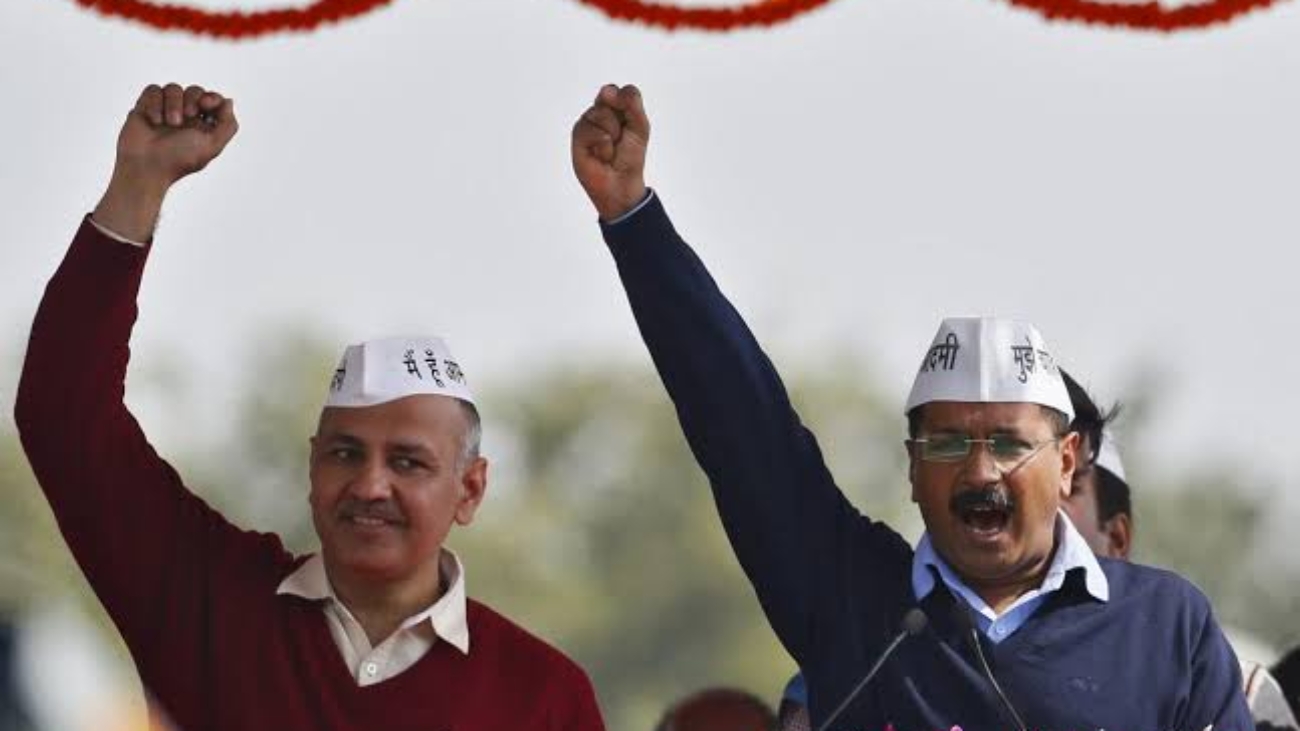
The most fundamental structural weakness confronting the Aam Aadmi Party is the gap between governance success and organisational scalability. This is not a failure of intent or competence, but a mismatch between what the party does exceptionally well and what it has not yet been able to build beyond a few geographies.
AAP’s rise was powered by a sharp focus on governance outcomes. In Delhi, and later in Punjab, the party demonstrated that visible improvements in schools, healthcare, electricity, water supply, and administrative responsiveness could translate into electoral legitimacy. This model was refreshing in an Indian political landscape often dominated by symbolism and rhetoric. For many voters, AAP proved that politics could be transactional in a positive sense: deliver services, earn trust.
However, governance excellence does not automatically generate a scalable political organisation. Delhi offered a uniquely favourable environment: a compact geography, high media density, urban issues with immediate visibility, and a governance structure that allowed rapid demonstration of results. Punjab, though larger, still provided a relatively coherent administrative canvas. Outside these contexts, AAP has struggled to replicate the same momentum.
The core issue lies in organisational depth. Sustainable political parties require layered leadership, local grievance-handling mechanisms, continuous cadre engagement, and institutional memory. In many states, AAP’s presence remains episodic, flaring up during elections and receding afterward. Without strong booth-level networks, district leadership pipelines, and everyday political work, governance promises remain abstract. Voters may admire Delhi’s model but hesitate to trust a party that feels organisationally distant.
This creates a paradox. AAP’s strongest selling point—efficient governance—requires power to demonstrate. But power itself requires organisation. Where organisation is thin, the party cannot win enough seats to govern. Where it cannot govern, it cannot demonstrate its core competence. The loop reinforces itself, trapping AAP in pockets of success rather than enabling expansion.
Leadership centralisation intensifies this challenge. In the absence of strong regional organisations, state units depend heavily on central leadership for visibility and direction. This limits local experimentation and slows adaptation to diverse political cultures. India’s states differ enormously in social composition, political history, and voter expectations. A model that resonates in Delhi must be translated, not transplanted. Translation requires empowered local leadership, which in turn requires organisational trust and autonomy.
Another constraint is time. Building deep organisation is slow, unglamorous work. It involves handling small disputes, sustaining volunteer morale, and surviving losses without collapse. AAP’s rapid rise created expectations of quick breakthroughs elsewhere. When those breakthroughs did not materialise, momentum faltered. Volunteers drawn by protest energy or governance idealism often disengaged when faced with the grind of long-term party-building.
This weakness is not unique to AAP. Many movements that begin with reformist energy struggle with institutionalisation. The difference is that AAP’s credibility is real. Its governance record is not rhetorical. That makes the organisational gap more striking, not less. The party has something valuable to scale, but lacks the machinery to scale it consistently.
The risk ahead is strategic stagnation. If AAP remains confined to a few strongholds, it risks being perceived as a regional governance brand rather than a national political alternative. Admiration without presence does not convert into power. Over time, voters may support AAP where it governs well, but default to other parties elsewhere.
The solution is not faster expansion, but slower consolidation. Organisation must precede ambition, not follow it. This means investing in local leadership development, accepting uneven growth, and tolerating long gestation periods in new states. Governance success should be treated as proof of concept, not as a substitute for political infrastructure.
AAP’s long-term relevance depends on whether it can make this transition. From a party that governs well where it exists, to a party that exists meaningfully before it governs. Without that shift, its success will remain impressive but geographically limited.
