
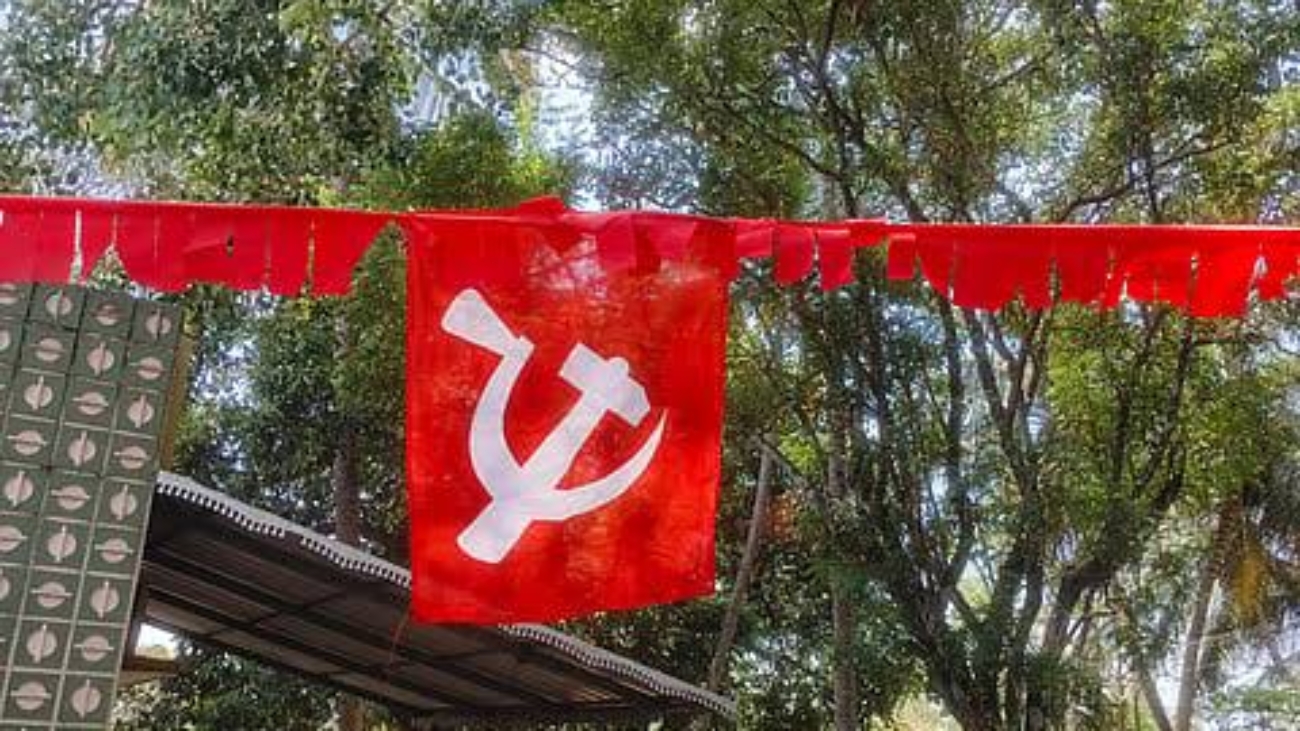
The contemporary political challenge confronting the Communist Party of India in Kerala is its limited ability to shape, lead, or even significantly influence present-day policy debates. This is not because the party lacks intellectual tradition or historical seriousness, but because it increasingly operates as a responder rather than an initiator in a rapidly evolving policy landscape. In a state where political relevance is closely tied to agenda-setting capacity, this lag has become a critical weakness.
Kerala’s political discourse has changed in character over the last two decades. Earlier debates were anchored in land reform, labour rights, public sector expansion, and welfare distribution. These were domains where CPI had clarity, experience, and legitimacy. Today, the policy terrain is far more complex. Questions of migration governance, private-sector employment quality, service economy regulation, ageing population management, healthcare financing, climate adaptation, and technological disruption dominate public concern. These issues demand new conceptual tools and forward-looking frameworks.
In this environment, CPI is rarely seen as the party that frames the problem. Policy debates are usually initiated either by CPM through governance actions or by national-level discourse filtered through media and civil society. CPI’s interventions tend to follow these narratives rather than precede them. Statements are issued, positions clarified, concerns raised, but seldom does the party define the terms of discussion. This reactive posture limits its visibility and reduces its perceived necessity.
One reason for this is structural. As a junior partner within the Left front, CPI often prioritises unity over differentiation. Public policy experimentation or sharp positioning risks creating friction. As a result, the party’s policy voice is cautious, measured, and often internalised. While this discipline preserves coalition stability, it also suppresses innovation. Over time, caution becomes habit, and silence replaces leadership.
Another factor is institutional bandwidth. Policy leadership today requires dedicated research capacity, sustained engagement with emerging sectors, and continuous interaction with experts, professionals, and affected communities. CPI’s organisational resources are limited compared to larger parties. Without specialised policy cells or thematic ownership, it struggles to sustain deep engagement on complex contemporary issues.
This limitation is particularly visible in labour politics. Kerala’s workforce has shifted decisively toward services, informality, and migration. Traditional factory-based union frameworks are no longer sufficient. Issues such as platform work, overseas labour protection, contract employment, and skill obsolescence demand new organising models and regulatory imagination. CPI has not yet articulated a distinctive response to these transformations, allowing others to dominate the conversation.
Migration is another missed opportunity. Kerala is one of the most migration-dependent societies in the world, both in outbound and inbound labour. Return migration, ageing expatriates, migrant worker integration, and remittance-linked vulnerabilities are central policy challenges. These issues intersect deeply with Left concerns about labour dignity and social protection. Yet CPI has not claimed ownership over migration policy as a defining political domain.
Climate and ecological stress further illustrate the gap. Kerala faces increasing climate volatility, floods, landslides, and coastal erosion. These challenges require integrated policy thinking that balances development, livelihood, and environmental protection. While CPI voices concern, it has not emerged as a leading force proposing systemic climate governance frameworks tailored to Kerala’s socio-economic reality.
The impact of this policy marginality is cumulative. Media discussions, academic debates, and civil society consultations rarely foreground CPI as a reference point. Younger voters, professionals, and policy-oriented citizens encounter Left politics primarily through CPM or through non-party platforms. CPI’s absence from agenda-setting spaces weakens its appeal to those who engage politics intellectually rather than through inherited loyalty.
Internally, this marginality affects morale and ambition. When cadres and leaders do not see their party shaping debates, confidence erodes. Political work shifts toward maintenance rather than expansion. Survival within alliances becomes the implicit objective, replacing the aspiration to lead ideas.
This is not a question of ideological correctness. CPI’s principles remain aligned with many contemporary concerns: inequality, labour precarity, social protection, and democratic accountability. The problem lies in translation. Principles are not being converted into concrete, future-oriented policy frameworks that address new forms of insecurity.
Kerala’s political culture rewards seriousness and originality. Parties that can explain emerging problems and propose credible pathways forward earn respect, even from opponents. CPI’s historical stature positions it well to play this role, but only if it invests consciously in policy leadership rather than rhetorical response.
Without such investment, CPI risks being perceived as a party that agrees with the right positions after they are articulated by others. Agreement without ownership does not build relevance. In competitive political ecosystems, the ability to name problems is as important as the ability to solve them.
Kerala’s future will be shaped by transitions that demand early thinkers and first movers. Parties that wait for consensus will follow, not lead. CPI’s challenge is to decide whether it wants to remain a moral witness to policy debates or re-enter them as an active architect.
