
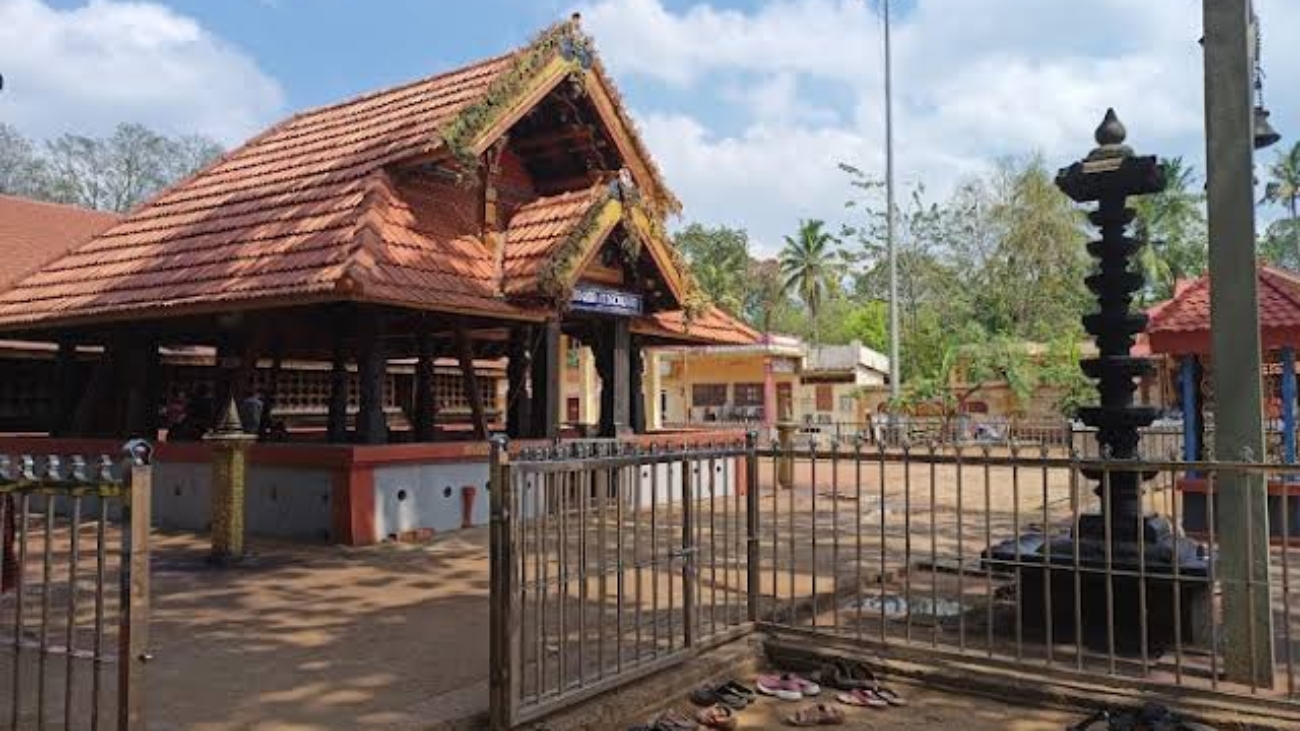
Kerala’s education and labour policies have long suffered from a spatial blindness. Schools are planned in one logic, workplaces in another, and community life exists in a third plane altogether. Yet the lived reality of Kerala tells a different story. Daily life already revolves around a small number of trusted physical anchors: temples, churches, and mosques. These are not merely religious spaces. They are timekeepers, gathering points, conflict mediators, and informal welfare centres. Vision Kerala 2047 must recognise that ignoring these anchors is not secularism, but inefficiency.
The concept of Temple–Church–Mosque Adjacent Skill Schools begins with the idea that education must meet people where they already are. Most daily wage workers, informal labourers, women engaged in household-bound work, and older workers cannot access distant industrial training institutes or daytime colleges. Time, travel cost, and social discomfort act as silent barriers. However, these same individuals already visit religious institutions regularly, often daily or weekly, across all communities. Placing skill schools within walking distance of these institutions is not religious intrusion into education; it is spatial intelligence.
These skill schools would not be run by religious bodies, nor would they teach religion. Their proximity is functional, not ideological. The religious institution acts as a trust anchor, not a curriculum authority. The school itself is state-accredited, professionally staffed, and outcome-driven. Its legitimacy comes from employability and certification, not from symbolic association. Yet the psychological effect of familiarity is powerful. When education happens near known spaces, resistance drops. Participation rises.
The timing of these schools is as important as their location. Unlike conventional institutions, these centres operate primarily during early mornings, late evenings, and flexible weekend slots. They are designed for people who work during the day, care for families, or move between multiple income sources. A mason finishing a day’s work, a shop assistant closing late, or a woman completing domestic responsibilities can walk into a learning space without crossing social or physical distances that discourage adult education.
The curriculum is tightly aligned with local labour realities. In a coastal Christian belt, modules may focus on carpentry, electrical maintenance, marine equipment servicing, and hospitality services. Near temple-centric agrarian zones, training may include machinery operation, food processing, precision manufacturing, and maintenance trades. In mosque-adjacent commercial corridors, logistics management, bookkeeping, warehouse operations, and multilingual trade communication become priority skills. This is not segregation. It is contextual optimisation. Students are free to enrol across centres, but the curriculum respects the dominant labour ecology of the area.
Education in these centres is modular and stackable. There is no assumption that learning must be linear or continuous. A worker may complete a safety certification this month, a technical module six months later, and a supervisory course after two years. Each module adds formal value to existing labour experience. Over time, these modules accumulate into recognised diplomas or degrees. Dropout ceases to be a terminal failure. It becomes a pause.
One of the most powerful outcomes of this model is its effect on dignity. For decades, Kerala has unintentionally sent a message that learning belongs to the young and the idle, while work belongs to those who could not succeed academically. Skill schools embedded in community life reverse this narrative. Learning becomes a lifelong, socially normal activity. An older worker attending an evening class is not seen as a failure returning to education, but as a professional upgrading skills.
These centres also serve as bridges between communities. When a skill school near a temple enrols students from nearby Christian and Muslim neighbourhoods, or vice versa, interaction happens naturally, without forced integration exercises. Shared problem-solving replaces abstract coexistence. Working together on machines, projects, and certifications builds mutual respect far more effectively than slogans or campaigns.
From a governance perspective, these schools offer something rare: low capital cost with high social penetration. Land acquisition is minimal because facilities use compact designs and shared infrastructure zones near existing institutions. Transportation subsidies are unnecessary because distance is reduced. Dropout monitoring becomes easier because the school is embedded in the daily rhythms of the neighbourhood. The state gains efficiency not by spending more, but by aligning with how people actually live.
Critics may argue that proximity to religious institutions risks politicisation or communal signalling. This risk exists only if governance is weak. Vision Kerala 2047 requires clear legal frameworks that separate location from control. Management boards must include educators, industry representatives, and local government officials, not religious authorities. Transparency in admissions, curriculum, and outcomes must be absolute. When rules are clear and performance visible, symbolism loses its power to distort.
Over time, these skill schools can evolve into community labour intelligence hubs. They can track local employment trends, anticipate skill shortages, and advise district administrations on infrastructure planning. Instead of reactive welfare measures, the state gains anticipatory capacity. Education stops being an abstract promise and becomes a local economic instrument.
The deeper significance of this idea lies in what it says about Kerala’s future. Vision Kerala 2047 is not about building grand institutions that look impressive in policy documents. It is about stitching capability into everyday life. When education quietly integrates into the spaces people already trust, transformation becomes organic rather than disruptive.
A Kerala where learning lights are on at night beside temples, churches, and mosques is not a retreat into tradition. It is a sign of maturity. It shows a society confident enough to modernise without severing itself from its own social geometry. That confidence, more than any single policy, is what will carry Kerala into 2047.
