
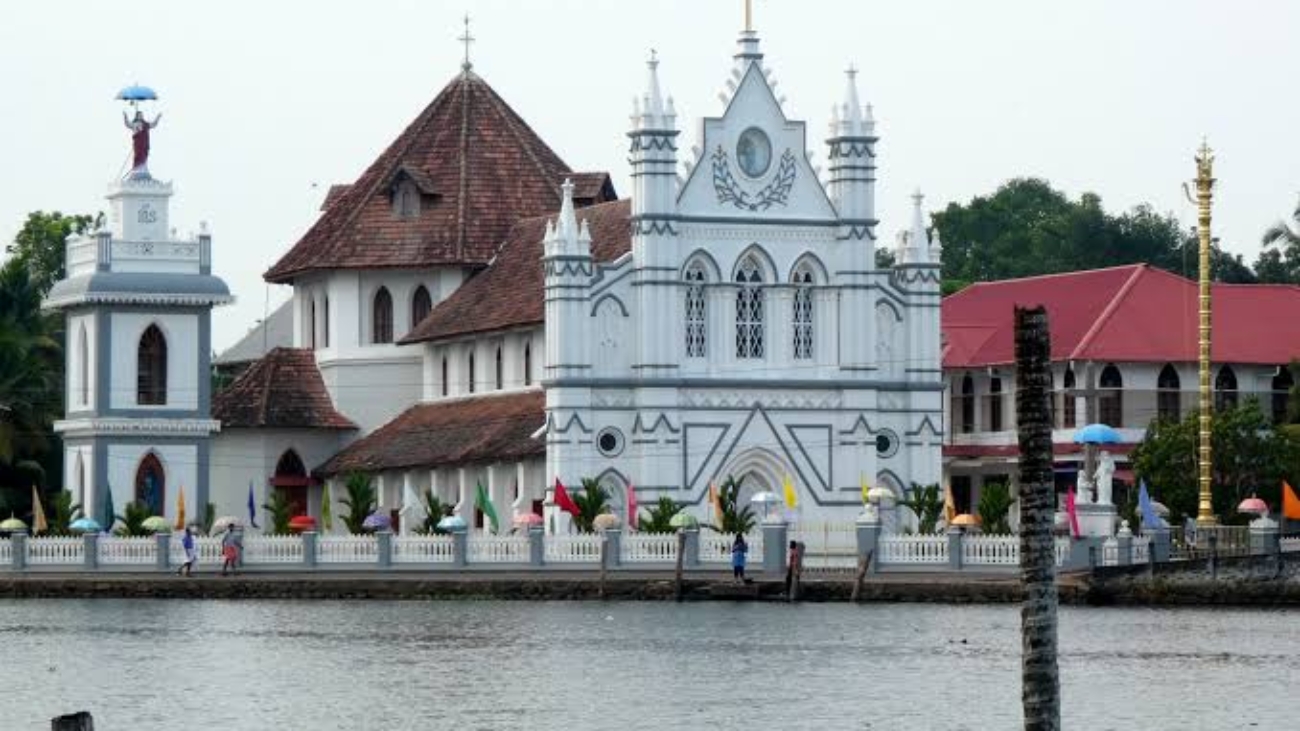
The institutional footprint of the Syro-Malabar Church in Kerala’s education sector is among the largest and most consequential in the state. Schools, colleges, professional institutions, and universities run by this community have shaped Kerala’s human capital for generations. They produced doctors, engineers, administrators, teachers, and migrants who powered both the state’s social mobility and its global dispersal. Yet as Kerala approaches 2047, this legacy model of education faces a structural limit. Reputation, discipline, and scale are no longer sufficient. Vision Kerala 2047 requires a decisive transition: from legacy educational assets to innovation-driven knowledge engines.
For decades, the educational strategy was clear and effective. Build institutions early, maintain standards, focus on discipline, and prioritise credentialing. In a developing society, this approach created enormous advantage. Degrees translated directly into jobs, migration opportunities, and social status. Educational institutions functioned as ladders of mobility rather than engines of innovation. This was appropriate for its time.
That context has changed irreversibly. Degrees no longer guarantee employment. Migration pathways are tightening. Knowledge is no longer scarce; relevance is. Global competition in education has intensified, and value has shifted from certification to capability. Kerala’s challenge is not enrolment or literacy, but the absence of cutting-edge research, applied innovation, and industry integration. Institutions that remain focused on legacy prestige risk becoming static at precisely the moment when agility is required.
Syro-Malabar educational institutions are uniquely positioned to lead this transition because they already possess three critical assets. First, scale and geographic spread across Kerala and abroad. Second, credibility among parents, students, and regulators. Third, administrative continuity that allows long-term planning. What they lack is not capacity, but orientation.
Vision Kerala 2047 demands that these institutions reconceptualise their role. Schools and colleges can no longer function merely as teaching centres. They must become nodes in a broader innovation ecosystem. This means embedding research, experimentation, and problem-solving into their core identity. It requires shifting from syllabus delivery to knowledge creation and application.
A crucial step is redefining the relationship between education and industry. Historically, the connection was indirect. Students graduated and entered the job market elsewhere. Institutions measured success by placement rates or migration outcomes. In an innovation-driven model, industry engagement begins inside the campus. Curricula are co-designed with industry partners. Faculty collaborate on applied research. Students work on real-world problems long before graduation. Institutions become places where solutions are developed, not just taught.
Kerala’s needs offer a natural laboratory. Ageing populations, healthcare delivery, climate resilience, agri-processing, logistics, education technology, and digital governance are not abstract topics. They are immediate challenges. Syro-Malabar institutions can anchor specialised research centres focused on these domains, linking academic work directly to state priorities. This positions education as infrastructure, not just service.
Healthcare education provides a clear example. The community already runs many of Kerala’s hospitals and nursing colleges. Yet most medical education remains focused on clinical training rather than innovation. By integrating biomedical research, medical device development, health data analytics, and geriatric care models, these institutions can turn healthcare education into a globally competitive innovation cluster. The same logic applies to engineering, agriculture, and management education.
Another critical shift involves faculty culture. Legacy institutions often reward seniority and administrative compliance over research output and innovation. Vision Kerala 2047 requires rebalancing incentives. Faculty must be encouraged and supported to pursue research, collaborate internationally, and engage with industry. This may require uncomfortable reforms, including differentiated roles, performance-based progression, and openness to external talent. Without this, institutional inertia will prevail.
Internationalisation is equally important. Many Syro-Malabar institutions have informal links with diaspora professionals and overseas universities. These links must be formalised. Joint degrees, research collaborations, visiting professorships, and global classrooms can integrate Kerala-based institutions into international knowledge networks. This does not require abandoning local identity. It requires upgrading ambition.
The governance model of educational institutions must also evolve. Many are still managed with a heavy emphasis on control and risk avoidance. While this ensured stability, it now constrains innovation. Innovation requires autonomy, experimentation, and tolerance for failure. Vision Kerala 2047 implies creating internal governance frameworks that protect academic freedom while maintaining ethical oversight. The Church’s moral authority can be a strength here if it is translated into ethical governance rather than administrative rigidity.
There is also a broader societal dimension. Educational institutions shape values as much as skills. By positioning themselves as innovation engines, Syro-Malabar institutions can cultivate a culture of inquiry, entrepreneurship, and problem-solving among Kerala’s youth. This counters the state’s growing risk aversion and overreliance on external employment markets. Education becomes a generator of confidence rather than a passport for exit.
Policy alignment is essential. The state must recognise and support this transition. Regulatory frameworks should encourage research activity, interdisciplinary programmes, and industry collaboration. Funding models must reward innovation outcomes, not just enrolment numbers. Without policy support, even the most ambitious institutions will struggle.
The alternative is stagnation. Legacy reputation can sustain institutions for some time, but global comparisons are unforgiving. Students increasingly look beyond Kerala. Faculty migrate to better research environments. Institutions that fail to evolve gradually lose relevance, even if they remain full.
Vision Kerala 2047 is therefore a call for institutional courage. Syro-Malabar educational institutions were once disruptive forces that reshaped society. They must rediscover that spirit. The question is not whether they can change, but whether they choose to. The tools exist. The need is clear. The window is narrowing.
If Kerala is to become a knowledge-driven society rather than a credential-exporting one, this transition is non-negotiable. The institutions that once powered mobility must now power innovation. That is the difference between honouring a legacy and being constrained by it.
