
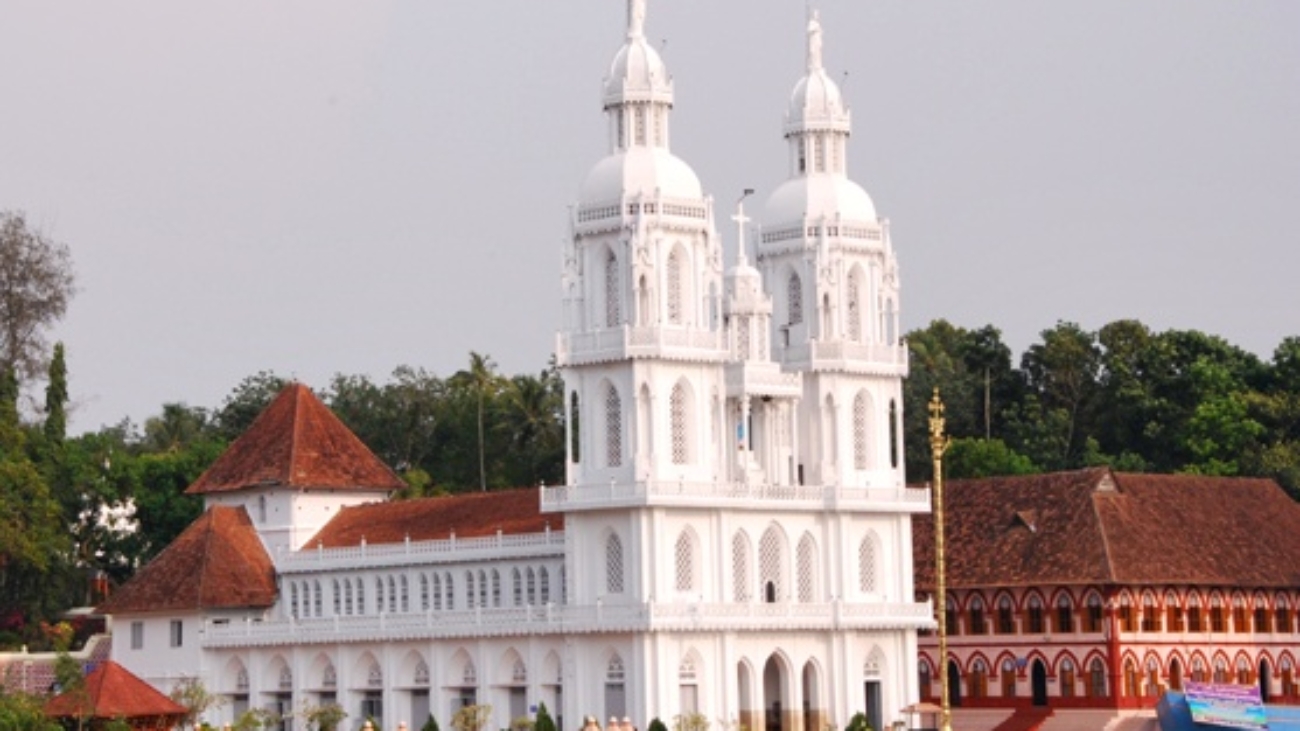
The economic story of the Syro-Malabar Church community in Kerala is inseparable from the history of migration. For over six decades, this community has been one of the most globally mobile social groups in the state. From early movements into plantation economies, to large-scale migration to the Gulf from the 1960s, and later to Europe, North America, and Australia, Syro-Malabar Christians became architects of Kerala’s remittance economy long before the term entered policy vocabulary. That success, however, now faces a structural ceiling. Vision Kerala 2047 demands a transition from a remittance-driven model to one of global capital orchestration.
Remittances played a transformative role in Kerala’s post-independence development. They funded housing, education, healthcare, consumption, and social mobility. Entire regions in central Kerala were reshaped by migrant income, particularly in districts like Kottayam, Ernakulam, Thrissur, and Idukki. Syro-Malabar households converted overseas wages into land ownership, institutional endowments, and generational security. For decades, this inflow masked deeper structural weaknesses in Kerala’s productive economy. Growth was sustained not by domestic industrial expansion but by money earned elsewhere.
By the early 2000s, remittances had become both a strength and a trap. While they provided stability, they also encouraged capital to remain passive. Savings were channelled disproportionately into real estate, gold, and low-risk deposits. Entrepreneurial risk-taking declined. Productive investment lagged behind comparable migrant societies globally. The economic logic was understandable. Migration income was hard-earned and uncertain. Preservation felt wiser than experimentation. Yet what was rational at the household level has become limiting at the state level.
Vision Kerala 2047 requires recognising that the global position of the Syro-Malabar community has changed fundamentally. This is no longer a community of temporary migrant labour alone. It is now embedded across the global professional class. Doctors, nurses, engineers, academics, finance professionals, administrators, and entrepreneurs of Syro-Malabar origin occupy stable, influential positions in advanced economies. Their engagement with Kerala need not be limited to remittances. It can be structured as long-term capital participation, knowledge transfer, and institutional co-creation.
The concept of global capital orchestration goes beyond sending money home. It implies coordinating dispersed capital, skills, networks, and institutional credibility into purposeful economic systems. This requires moving from individual decisions to collective platforms. Instead of thousands of households independently investing in land or apartments, structured diaspora-backed investment vehicles can pool capital into manufacturing clusters, healthcare innovation, education technology, agri-processing, climate resilience infrastructure, and export-oriented services.
Such orchestration cannot be left to informal sentiment alone. It requires institutional design. Trust-based vehicles anchored in Kerala but governed by global standards are essential. The Syro-Malabar community already possesses a unique advantage here: dense institutional networks with moral credibility. Church-linked trusts, educational boards, healthcare systems, and cooperative traditions provide scaffolding for capital mobilisation that few other communities possess. What is missing is a shift in intent from preservation to productive deployment.
Kerala’s policy environment must adapt accordingly. The state has historically treated remittances as consumption support rather than as strategic capital. Vision Kerala 2047 must reposition diaspora capital as a development partner. This includes regulatory clarity for diaspora funds, tax-neutral structures for long-term investments, simplified land and labour norms for industrial ventures, and credible dispute resolution mechanisms. Without these, even willing capital remains hesitant.
A critical opportunity lies in sectoral focus. Kerala does not need heavy industry replication. Its comparative advantage lies in high-skill, medium-scale, globally integrated sectors. Healthcare services and medtech manufacturing, medical tourism ecosystems, higher education exports, niche manufacturing, agri-tech, climate adaptation technologies, and digital services align naturally with Syro-Malabar global skill profiles. Capital orchestration should be thematic, not diffuse.
Another underutilised dimension is reverse institutional linkage. Syro-Malabar-run hospitals, colleges, and schools abroad are growing quietly, especially in the Middle East and the West. These institutions can be linked structurally with Kerala-based research, training, and manufacturing units. Capital then flows not as charity or remittance, but as business reinvestment across borders. Kerala becomes a node in a global value chain rather than an endpoint of consumption.
The generational shift makes this moment urgent. Second- and third-generation diaspora members are less emotionally attached to land purchases or ancestral homes. Their connection to Kerala is cultural and institutional rather than territorial. If Kerala does not offer structured, credible avenues for engagement, this connection weakens further. Global capital orchestration provides a way to convert emotional distance into strategic participation.
This transition also requires cultural recalibration within the community. For decades, success was measured by secure migration, asset accumulation, and institutional patronage. Vision Kerala 2047 demands a new success metric: value creation within Kerala that is globally competitive. This involves accepting higher risk, longer gestation periods, and professional governance norms. It also requires separating faith-based moral authority from business decision-making while retaining ethical accountability.
The state benefits directly from this shift. Productive capital generates employment, innovation, and tax revenue. It reduces overdependence on volatile overseas labour markets. It anchors talent locally while remaining globally connected. Most importantly, it changes Kerala’s economic psychology from dependency to participation.
Global examples reinforce this logic. Jewish, Armenian, Chinese, and Korean diasporas moved from remittance dependence to capital orchestration over generations. They built venture funds, industry clusters, and institutional partnerships anchored in homeland regions. Syro-Malabar Christians possess similar prerequisites: global dispersion, high human capital, dense networks, and strong internal trust. What has been missing is a clear developmental invitation and architecture.
Vision Kerala 2047 must therefore frame the Syro-Malabar diaspora not as benefactors, but as co-architects. This reframing alters expectations on both sides. The community moves from emotional giving to strategic investing. The state moves from gratitude to partnership. Both gain resilience.
If this transition is not made, the remittance model will slowly decay. Gulf labour markets are already tightening. Immigration norms in the West are becoming more restrictive. Passive capital tied to real estate offers diminishing returns. The opportunity cost of inaction is high.
By 2047, Kerala will either be a state that successfully converted migration into global capital leadership, or one that exhausted its remittance advantage without building a productive base. The Syro-Malabar community sits at the centre of this fork. Its historical strengths created the present. Its strategic choices will shape the future.
