
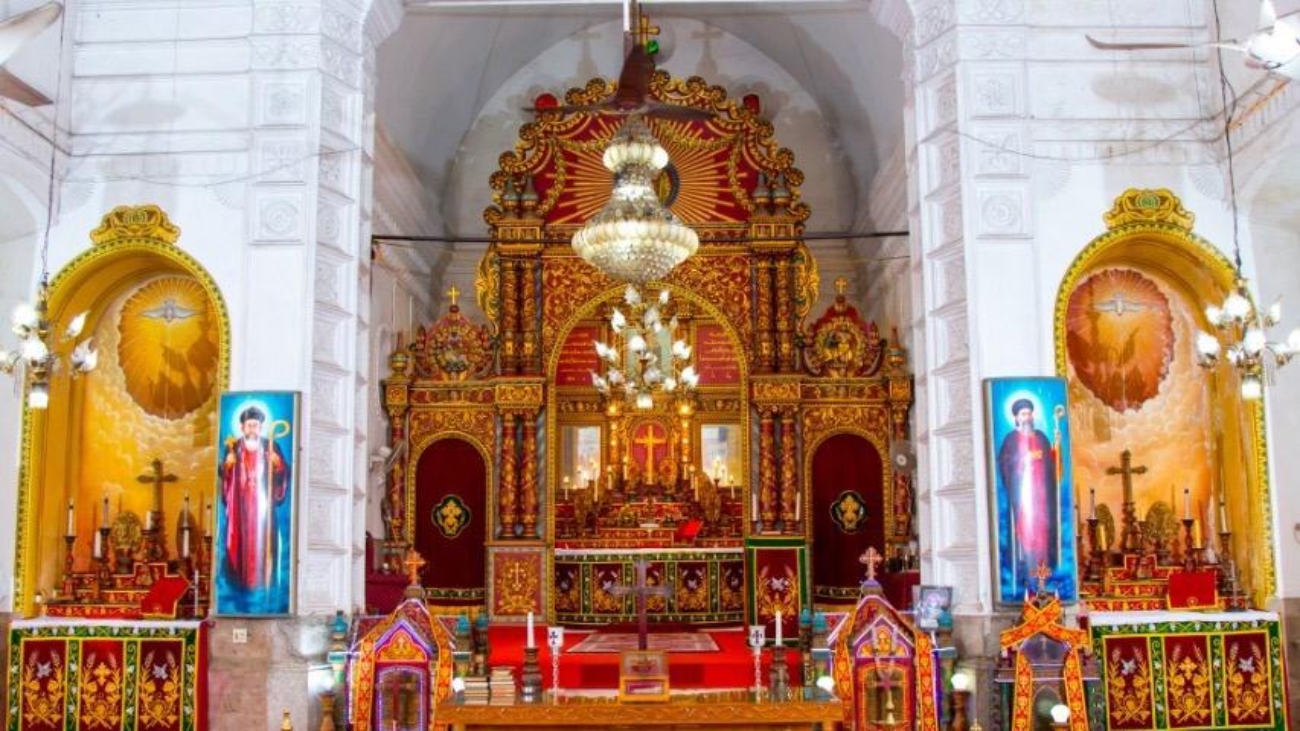
Kerala’s reputation as India’s healthiest state rests on foundations laid long before modern public health language entered policy documents. Long life expectancy, low infant mortality, and early disease surveillance were not accidental outcomes; they were produced by dense networks of local institutions that combined moral authority with service delivery. As Kerala moves toward 2047, the healthcare challenge is no longer basic access, but sustainability, quality, and equity in an aging society. One Christian group whose historical trajectory makes it uniquely relevant to this moment is the Malankara Orthodox Syrian Church.
The Malankara Orthodox Church traces its lineage to the St Thomas Christian tradition and became autocephalous in the early twentieth century, asserting administrative independence in 1912. This period coincided with sweeping social changes in Travancore and Cochin, including the Temple Entry Proclamation of 1936, the expansion of public education, and early public health reforms. Orthodox parishes, schools, and charitable institutions evolved not in isolation from these events, but alongside them, often acting as intermediaries between state initiatives and local populations.
Healthcare engagement within the Orthodox tradition emerged early. By the late nineteenth century, mission hospitals and dispensaries attached to Syrian Christian communities were already functioning in central Kerala. These were modest facilities by modern standards, but they played a critical role in vaccination drives, maternal care, and epidemic response. During outbreaks of smallpox and cholera in the early twentieth century, parish-based mobilization enabled rapid dissemination of public health instructions at a time when state capacity was limited. This fusion of trust and logistics is a recurring theme in Kerala’s health history.
Post-independence, as Kerala embarked on its experiment with public welfare and decentralized governance, Orthodox institutions expanded their healthcare footprint. Hospitals, nursing schools, and medical colleges under church management emerged across districts. By the 1980s and 1990s, these institutions had become integral to Kerala’s mixed healthcare model, where public provision coexisted with mission-run and private facilities. Importantly, Orthodox healthcare institutions did not operate purely as commercial entities; many were embedded in a service ethic that cross-subsidized care for poorer patients.
As Kerala approaches 2047, the nature of healthcare demand is shifting dramatically. The state’s total fertility rate has been below replacement for decades. According to population projections, nearly 25 percent of Kerala’s population will be above 60 by the mid-2040s. This demographic transition brings with it a surge in non-communicable diseases, long-term care needs, dementia, and mobility-related conditions. Traditional hospital-centric models are ill-equipped to handle this shift sustainably.
Healthcare empowerment in this context must be understood not only as treatment capacity, but as the ability of communities to manage health across the life cycle. The Malankara Orthodox Church’s parish-based structure, with thousands of parishes functioning as stable social units, provides a ready-made platform for decentralized healthcare delivery. Historically, parishes have acted as nodes for education, dispute resolution, and charity. Extending this role into preventive and community healthcare is both feasible and historically consistent.
There is precedent. During the 1950s and 1960s, Orthodox parishes supported tuberculosis patients through nutrition programs and convalescence arrangements, long before formal state insurance schemes existed. During the early HIV awareness phase in the 1990s, church-affiliated hospitals participated in stigma-reduction and counseling initiatives at a time when public discourse was hesitant. More recently, during the COVID-19 pandemic, Orthodox institutions were involved in quarantine support, hospital bed management, and community kitchens, demonstrating operational flexibility under crisis.
Vision Kerala 2047 demands institutionalization of such responsiveness rather than episodic mobilization. One critical area is eldercare. Kerala’s family structures are fragmenting under migration and urbanization. The traditional assumption that families will absorb eldercare responsibilities is no longer tenable. Orthodox-run healthcare institutions, with their experience in nursing education and hospital management, can anchor a network of community-based eldercare centers linked to parishes. These would combine medical monitoring, physiotherapy, mental health support, and social engagement, reducing hospital load while improving quality of life.
Another area is workforce empowerment. Kerala has long exported healthcare workers, particularly nurses, to global markets. While remittances have benefited households, the domestic system faces periodic shortages and burnout. Vision 2047 requires retaining talent while maintaining global standards. Orthodox nursing and allied health institutions can lead in designing flexible career pathways that allow professionals to move between clinical care, community health, teaching, and research without exiting the state. Historically, such internal mobility existed informally within church-run institutions; formalizing it would strengthen resilience.
Healthcare financing is equally crucial. Kerala’s out-of-pocket health expenditure remains significant despite public schemes. Community-backed health insurance models, piloted in parts of Kerala during the 2000s, showed promise but struggled with scale and trust. The Orthodox Church’s long-standing financial and administrative credibility can underpin parish-linked health risk pools, supplementing state insurance rather than competing with it. Such models echo early cooperative movements where community oversight reduced fraud and improved compliance.
Technology will reshape healthcare delivery by 2047, but technology alone cannot substitute for trust. Remote diagnostics, AI-assisted triage, and home-based monitoring systems require patient adherence and data-sharing. Institutions with moral legitimacy and relational continuity can accelerate adoption. Orthodox parishes, where clergy often maintain lifelong relationships with families, can act as intermediaries in explaining, normalizing, and ethically governing such technologies.
Importantly, this vision does not imply clerical control over healthcare. The Orthodox Church’s strength lies in its ability to convene professionals, volunteers, and administrators within a shared ethical framework. Historically, many of its healthcare institutions have been professionally managed with clear boundaries between spiritual authority and operational decision-making. Preserving this distinction is essential to credibility in a plural society.
Kerala’s healthcare future will be judged by its ability to care for the vulnerable without exhausting its workforce or finances. Aging societies around the world are struggling precisely because their institutions evolved for younger populations. Kerala has an opportunity to adapt earlier, using institutions that have already demonstrated longevity and adaptability across centuries of social change.
The Malankara Orthodox Syrian Church, with its deep roots, administrative maturity, and healthcare legacy, is not a peripheral actor in this story. It is part of the infrastructure that made Kerala healthy in the first place. By consciously aligning this legacy with the demographic realities of the coming decades, healthcare empowerment can move from being a policy aspiration to a lived system.
