
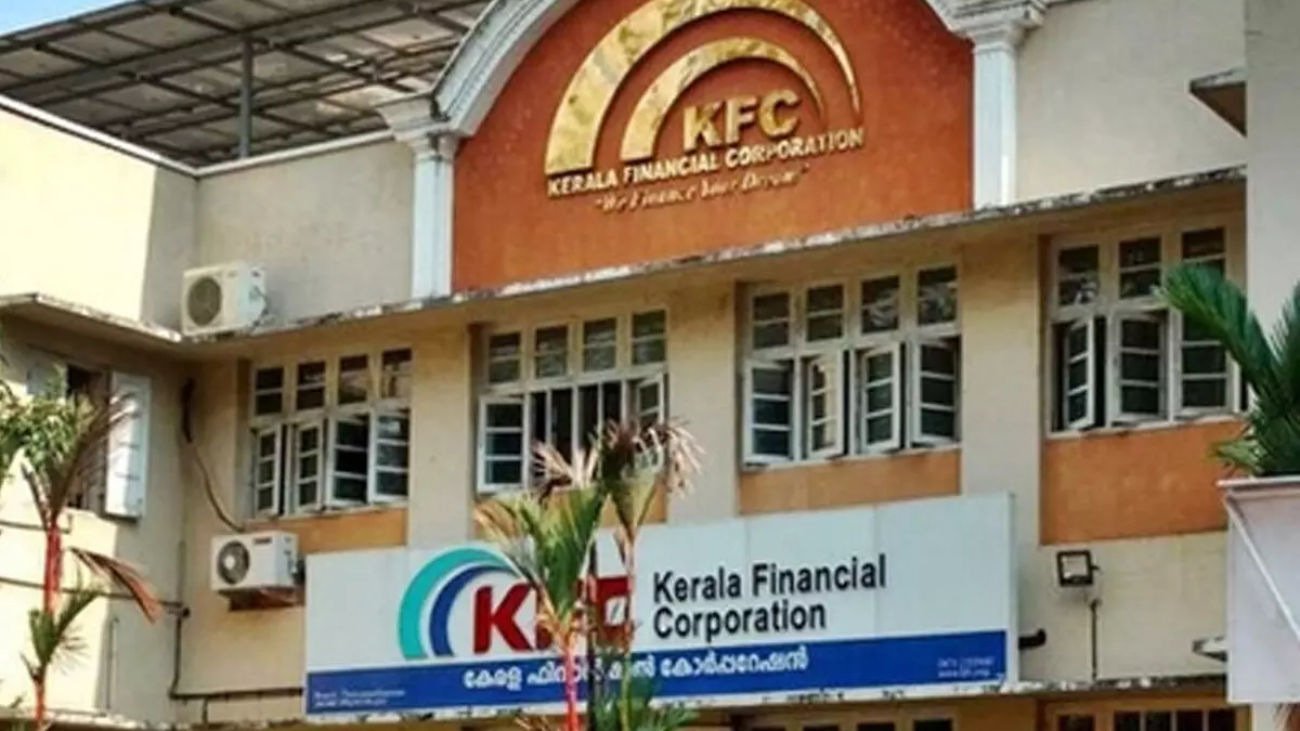
Kerala’s future financial risk will not come from defaults alone, but from irrelevance. As economic value shifts toward intangibles, services, platforms, and climate-linked adaptation work, finance institutions that cannot see non-physical assets will systematically misprice risk. The innovation opportunity for Kerala Financial Corporation lies in creating an intangible-aware financing framework that recognises capability, process maturity, and revenue logic as bankable assets.
Most KFC lending frameworks are still optimised for land, buildings, machinery, and fixed infrastructure. This biases capital toward sectors that look safe on paper but may be structurally declining. Meanwhile, sectors with strong future demand such as applied AI services, healthcare coordination, climate resilience services, policy-tech platforms, cultural exports, and cooperative platforms remain underfinanced because their balance sheets appear asset-light. The risk is not that these sectors are weak, but that financial instruments are outdated.
An intangible-aware framework begins with redefining appraisal. Instead of asking only what assets exist, KFC can assess how value is created and sustained. This includes quality of contracts, strength of client concentration, repeat revenue ratios, process documentation, regulatory embeddedness, and skill depth of the core team. These indicators are already used informally by venture capital and private equity; formalising them within a public financial institution brings discipline without speculation.
Such a framework allows KFC to finance enterprises where the primary assets are workflows, data pipelines, domain expertise, certifications, and long-term service contracts. For example, a healthcare logistics operator with signed hospital agreements and predictable cash flows may be less risky than a manufacturing unit dependent on volatile commodity prices, yet current systems favour the latter. Intangible-aware lending corrects this distortion.
Risk management in this model shifts from seizure to supervision. Since intangible assets cannot be auctioned easily, KFC’s protection lies in structured monitoring, covenants tied to performance metrics, and early-warning systems rather than post-failure recovery. This incentivises deeper engagement during the loan lifecycle, improving outcomes for both lender and borrower. It also aligns with Kerala’s institutional strengths in governance and oversight.
There is a policy advantage here. By documenting and publishing anonymised patterns on how intangible-heavy enterprises perform, KFC can inform state industrial and startup policy with real evidence. This closes the loop between finance and policy, reducing reliance on generic incentives and improving targeting of public capital.
Importantly, this approach does not turn KFC into a venture capitalist. Exposure limits, sectoral caps, and blended finance structures can preserve prudence. The innovation lies in expanding what is considered financeable, not abandoning discipline. Pilot programs, co-lending with banks, and partial guarantees can further manage transition risk.
By 2047, the most competitive regions will be those whose public finance institutions understand invisible assets as clearly as visible ones. An intangible-aware financing framework allows KFC to fund the economy Kerala is becoming, not the one it is leaving behind.
