
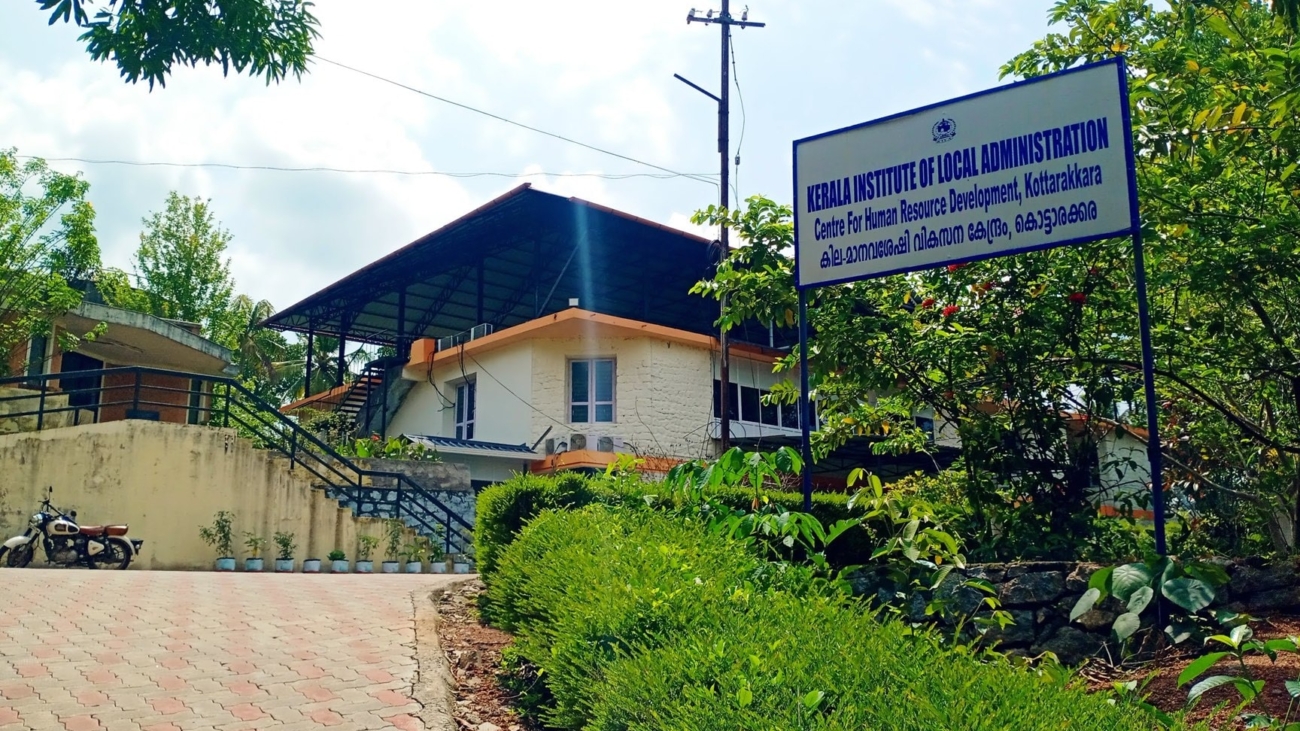
Kerala’s local governance challenge is no longer awareness or participation, but technical depth. Elected representatives and officials are expected to engage with climate finance, digital systems, migrant integration, complex procurement rules, and data-driven decision-making, often without structured opportunities to build expertise. The strategic opportunity for Kerala Institute of Local Administration lies in creating a system of cadre-level skill stacking that upgrades capability continuously without changing recruitment or electoral processes.
Current training models are episodic. Orientation programs happen at the beginning of a term, followed by occasional workshops tied to schemes or compliance requirements. This does not match the evolving complexity of governance. Skill stacking treats capability as cumulative. Short, focused modules build on each other over time, allowing representatives and officials to acquire depth in specific domains while continuing their regular roles.
These stacks can be designed around emerging governance needs rather than administrative silos. Climate adaptation planning, urban logistics, AI-assisted service delivery, public finance analytics, eldercare systems, migrant worker governance, and infrastructure lifecycle management are all areas where local bodies increasingly make decisions without sufficient technical grounding. Skill stacks create recognised pathways to competence in these domains.
KILA’s advantage is neutrality and reach. Because it is not a line department or political actor, it can offer these credentials as professional development rather than ideological training. Completion can be recognised internally for committee assignments, leadership roles, or eligibility to pilot advanced projects, creating incentives without coercion.
This model also addresses a structural gap in Kerala’s governance ecosystem. Many local bodies rely heavily on a few technically strong individuals, creating concentration risk. When these individuals move, retire, or lose elections, capacity collapses. Skill stacking distributes knowledge across the system, making governance more resilient to turnover.
Technology enables this without overburdening participants. Blended formats using short in-person sessions, asynchronous learning, case-based discussions, and field projects fit into real governance schedules. The emphasis is on applied competence rather than examination performance, aligning learning with outcomes.
Over time, this creates an informal but powerful cadre of technically fluent local leaders who can engage meaningfully with state agencies, consultants, and private vendors. It reduces dependence on external expertise and improves negotiation capacity, particularly in contracts, PPPs, and infrastructure projects.
By 2047, the quality of Kerala’s local governance will be determined less by formal qualifications and more by accumulated applied skill. If KILA becomes the steward of cadre-level skill stacking, it will quietly professionalise democracy without diluting it.
