
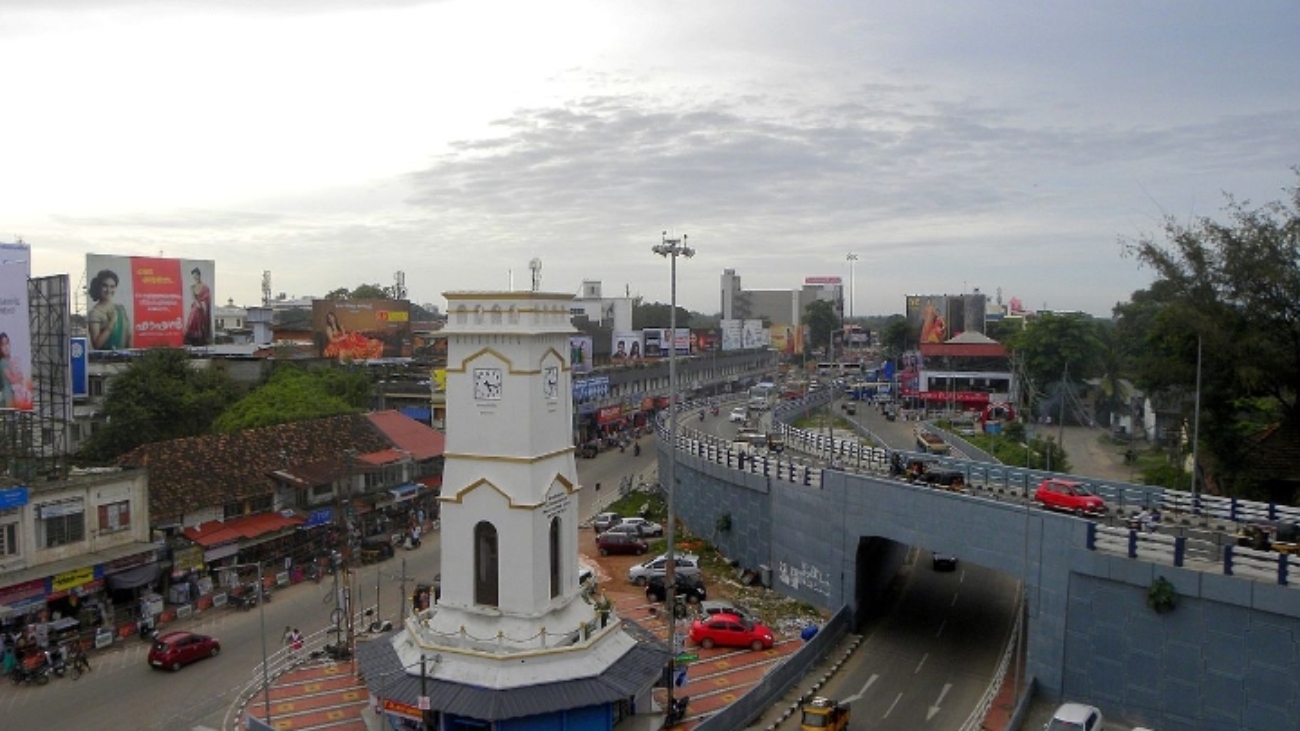
Kollam’s smart city future must be shaped by its geography rather than imposed over it. The city sits at a rare intersection of lake, coast, port, and hinterland, yet these elements operate largely in isolation. A smart Kollam in 2047 must function as a connected water–land system where transport, economy, ecology, and daily life are synchronized instead of fragmented.
The most underutilized asset in Kollam is Ashtamudi Lake. Despite its scale and proximity, the lake remains peripheral to everyday urban mobility and economic planning. A smart city vision must integrate water-based transport as a core mobility layer, not a tourism add-on. Ferries, water taxis, and freight movement across the lake can reduce road congestion, shorten travel times, and reconnect neighborhoods that are currently separated by inefficient road routes.
Port infrastructure must be reimagined beyond traditional cargo handling. Kollam’s port can function as a multi-purpose urban asset supporting coastal trade, fisheries, small-scale logistics, and maritime services. Smart planning must ensure that port activity coexists with residential life through intelligent zoning, timing regulations, and pollution control. A working port need not be a hostile neighbor if managed with precision.
Kollam’s economy has historically depended on trade, fisheries, cashew processing, and services. Smart city development must revive these sectors through modernization rather than replacement. Cold chains, quality certification, shared processing facilities, and digital access to markets can significantly improve incomes without large-scale displacement. Economic intelligence lies in upgrading value chains that already exist.
Mobility within Kollam must prioritize continuity over expansion. Roads here often feel disconnected and interrupted. Smart traffic systems must focus on smoothing flows rather than widening corridors. Coordinated signals, predictable bus frequencies, and strong last-mile connectivity can dramatically improve movement without heavy construction. Water–land transfer points should become seamless nodes rather than bottlenecks.
Housing policy in Kollam must be sensitive to water proximity. Informal settlements near lakes and canals face recurring flood risk, while new developments often ignore hydrological reality. Smart city planning must combine safe relocation where necessary with flood-adaptive housing designs where possible. Elevated structures, amphibious architecture, and flexible ground use can allow people to live safely without erasing communities.
Climate resilience is central to Kollam’s future. Rising sea levels, stronger monsoons, and coastal erosion directly threaten the city’s core. Smart Kollam must adopt a layered defense strategy combining ecological buffers, adaptive infrastructure, and early warning systems. Mangroves, wetlands, and restored canals are not environmental luxuries but cost-effective protection mechanisms.
Public health in Kollam must be planned around environmental exposure. Water quality, waste leakage, and vector control are tightly linked here. Smart systems must monitor lake health, drainage performance, and sanitation continuously. When environmental data directly informs public health action, disease prevention becomes proactive rather than reactive.
Urban waste management in Kollam must prioritize containment. Flooding turns poorly managed waste into a citywide hazard. Decentralized waste processing, strict segregation, and water-safe disposal systems are essential. Clean water and clean streets are inseparable in a city shaped by canals and backwaters.
Education and skill development must align with Kollam’s geography. Maritime services, logistics, fisheries technology, water management, and coastal engineering offer natural employment pathways. Smart cities do not force generic skills onto local populations; they build futures from place-based strengths. Kollam’s youth should see opportunity in their city rather than inevitability of migration.
Public spaces in Kollam must reconnect people with water. Lakesides, canals, and waterfronts should be accessible, safe, and multifunctional. Walkways, markets, cultural spaces, and leisure areas along water bodies increase civic pride while improving surveillance and maintenance. When people use public space, it stays alive.
Governance in Kollam must be especially transparent due to overlapping authorities across port, fisheries, municipality, and state agencies. A smart city approach must unify data and accountability across these domains. Citizens should know which agency controls what, and how decisions impact their locality. Clarity reduces conflict and delays.
Digital systems in Kollam must prioritize coordination rather than novelty. Integrating transport, port operations, environmental monitoring, and civic services into a single operational view allows faster response during emergencies and smoother daily functioning. Smartness here is about integration, not spectacle.
Economic resilience in Kollam depends on diversification without dilution. Tourism, trade, fisheries, education, and services must coexist without one overpowering the rest. Smart policy must ensure that no single sector captures the city at the expense of others. Balanced cities survive shocks better than specialized ones.
By 2047, a smart Kollam should feel fluid rather than rigid. Movement across land and water should feel natural. Economic activity should feel grounded in place. Environmental systems should feel protected rather than threatened. The city’s intelligence will lie in how well it aligns its future with its geography.
