
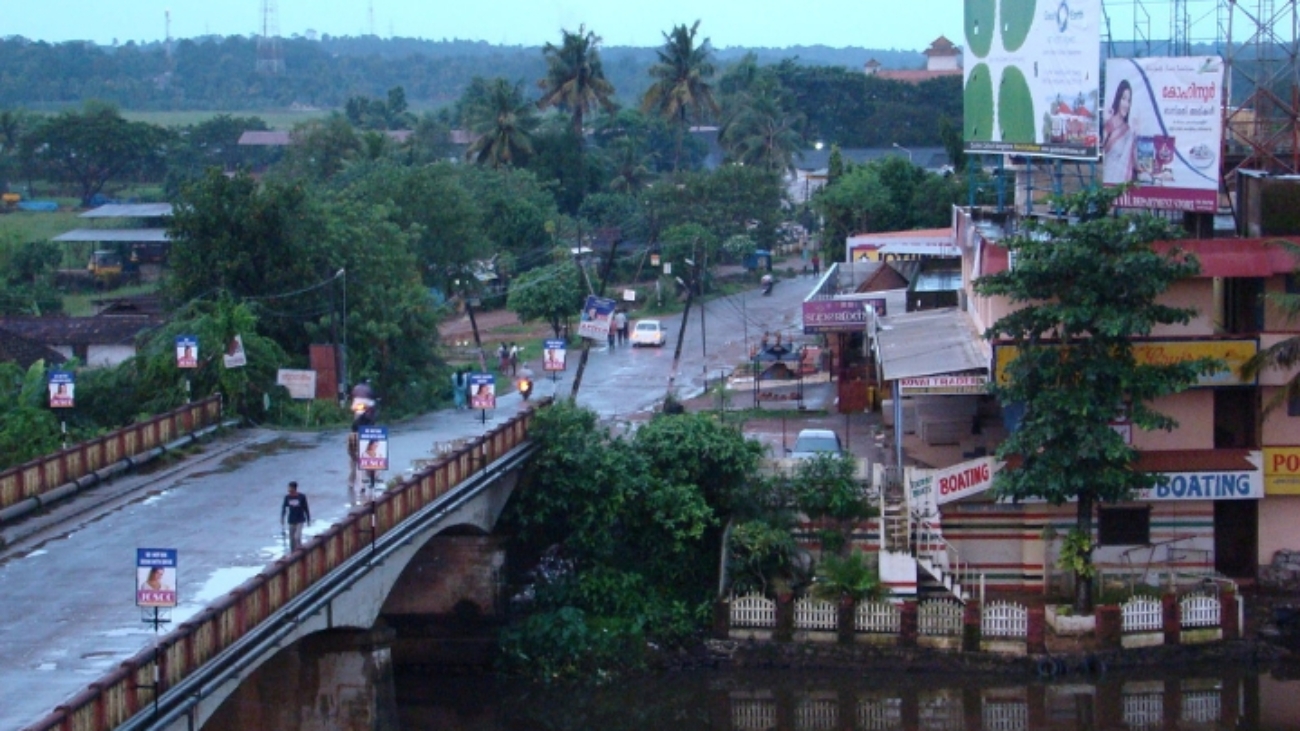
Kottayam’s smart city future must be built around knowledge density rather than physical expansion. This is a city shaped by literacy, publishing, education, healthcare, and migration, yet its urban form does not fully reflect its intellectual strength. A smart Kottayam in 2047 must translate knowledge into organized economic, civic, and cultural systems that operate quietly but effectively.
The defining characteristic of Kottayam is its educated population spread across a semi-urban landscape. Unlike compact cities, Kottayam functions as a distributed town where institutions, residences, and workplaces are interwoven loosely. Smart city planning must strengthen this distributed form rather than force dense centralization. The goal is not to compress the city, but to synchronize it.
Mobility in Kottayam must prioritize short, predictable trips rather than long-distance commuting. Many daily journeys are within a limited radius but are slowed by poor coordination. Smart transport planning must focus on frequent buses, safe walking routes, and reliable last-mile connectivity. When movement becomes predictable, time savings accumulate across the city without large infrastructure projects.
Education is Kottayam’s greatest asset, but it currently operates in isolation from the local economy. Smart city development must connect colleges, schools, publishers, healthcare institutions, and digital workspaces into a knowledge network. Research, content creation, training, and services must feed into local enterprise rather than exporting talent by default. When knowledge circulates locally, cities retain value.
Publishing, media, and content creation have deep roots in Kottayam. Smart cities must modernize this legacy by supporting digital publishing, language technology, archiving, and educational platforms. Libraries, presses, studios, and learning spaces should be treated as economic infrastructure, not cultural leftovers. Knowledge economies thrive on continuity as much as innovation.
Healthcare planning in Kottayam must focus on integration rather than expansion. The city already hosts strong medical institutions, but access and continuity vary. Smart systems must link clinics, diagnostics, pharmacies, and transport to ensure seamless care. Preventive health, early diagnosis, and home-based care are especially important in an ageing population.
Housing in Kottayam must remain affordable and adaptable. Many households depend on remittances, making housing investment common but sometimes misaligned with local demand. Smart city policy must encourage rental housing, mixed-use development, and adaptive reuse of existing buildings. Cities that reuse intelligently grow sustainably without sprawl.
Water management in Kottayam requires sensitivity to both lake systems and inland drainage. Proximity to Vembanad Lake influences flood patterns and water quality. Smart systems must monitor water flow, pollution, and seasonal variation continuously. Urban development must respect hydrological reality rather than override it. Water intelligence here is risk intelligence.
Public spaces in Kottayam must support quiet civic life. Reading rooms, libraries, walking paths, lakeside spaces, and community halls are central to the city’s identity. Smart city development must expand and modernize these spaces without commercializing them excessively. Cities that value calm create long-term social stability.
Digital infrastructure in Kottayam must serve productivity first. High literacy and connectivity offer an opportunity to become a hub for remote work, education services, research support, and digital administration. Smart cities must ensure that connectivity translates into income and institutional capacity, not just consumption.
Employment generation in Kottayam must align with its strengths. Education services, healthcare support, publishing, digital content, language services, and professional consulting offer scalable employment without heavy environmental impact. Smart city policy must nurture these sectors deliberately rather than chase unrelated industrial models.
Governance in Kottayam must be transparent and low-friction. Citizens here are informed and attentive. Smart governance systems must prioritize clarity, predictable service delivery, and accessible information. When governance is legible, civic trust deepens naturally.
Cultural life in Kottayam values continuity over spectacle. Religious institutions, literary traditions, and community networks provide social stability. Smart city development must respect these rhythms while enabling modern livelihoods. Cities that rush change without grounding lose coherence.
Climate resilience in Kottayam must focus on water management, heat mitigation, and ecological protection. Tree cover, open land, and water bodies must be preserved as functional assets. Smart cities recognize that ecological stability underpins economic and social health.
Economic resilience depends on diversification without dilution. Overdependence on remittances exposes households to global volatility. Smart city planning must encourage local enterprise and institutional employment to balance external income flows. Stability emerges from multiple income streams.
By 2047, a smart Kottayam should feel composed rather than congested. Knowledge should translate into opportunity. Calm should coexist with productivity. The city’s intelligence will lie in how quietly it works for people who value depth over display.
