
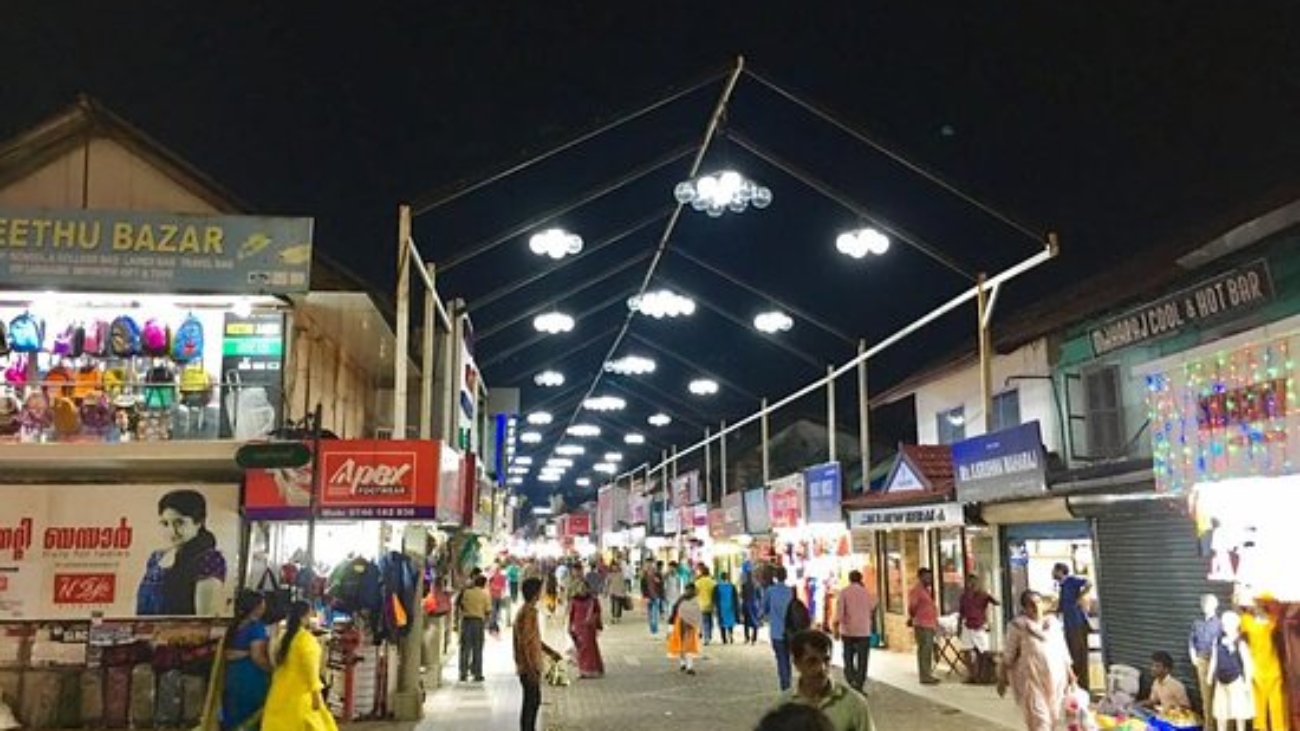
Kozhikode’s smart city future must begin by accepting its true nature. It is not a planned capital city, not a gated IT enclave, and not an industrial sprawl. It is a layered city shaped by trade, education, migration, beaches, bazaars, and dense neighborhoods. Any smart city vision that tries to overwrite this character will fail. The intelligence of Kozhikode in the coming decades must come from organizing what already exists rather than replacing it.
The first transformation Kozhikode needs is spatial coherence. The city today feels like multiple towns stitched together without rhythm. Smart Kozhikode must operate as a connected mesh of walkable local centers rather than a single congested core. Every major neighborhood should function as a self-sufficient urban cell with access to daily services, workspaces, learning centers, healthcare, and public spaces. When dependence on the city core reduces, congestion declines without expensive road expansion.
Mobility in Kozhikode must prioritize predictability over speed. Short, reliable travel matters more than fast but uncertain movement. A smart mobility system here would combine frequent buses, feeder services, safe walking streets, and last-mile connectivity tuned to real demand. Transport intelligence should respond to market hours, school timings, beach activity, and festival cycles rather than follow rigid schedules. Movement should feel natural, not stressful.
Kozhikode’s coastline is its greatest asset and greatest risk. A smart city vision must treat the coast as a living system, not a backdrop for real estate. Public access to the sea must be protected and expanded, not privatized. Coastal infrastructure must absorb storms and erosion through ecological buffers like dunes and vegetation rather than only concrete barriers. The beach should function as climate defense, social space, and economic zone simultaneously.
Economic intelligence in Kozhikode must focus on small and medium enterprises. The city thrives on trade, food, services, education, and healthcare rather than large factories. Smart city planning must strengthen these sectors by providing shared infrastructure, digital marketplaces, logistics support, and skill upgrading. When local businesses become more efficient, employment grows without attracting disruptive mega-projects.
Education is deeply embedded in Kozhikode’s identity. A smart city must integrate educational institutions with the city instead of isolating them. Libraries, research spaces, cultural venues, and innovation hubs should be accessible beyond campus boundaries. Learning must spill into public life. When students and professionals interact naturally with the city, ideas circulate and talent stays.
Public health must be designed into everyday urban life. Kozhikode already has strong medical institutions, but a smart city must shift focus from treatment to prevention. Clean air corridors, shaded walking routes, noise regulation, and accessible recreation directly reduce disease burden. Health intelligence should guide urban design choices long before hospitals feel pressure.
Water management is central to Kozhikode’s future. The city receives heavy rainfall yet struggles with flooding and scarcity. Smart systems must track water movement across streets, canals, wells, and buildings. Rainwater should be captured locally, reused intelligently, and drained safely without overwhelming low-lying areas. Water must be treated as a continuous flow system, not a seasonal problem.
Waste handling must become invisible. Smart Kozhikode should aim for a city where waste does not accumulate in public view or enter water systems. Decentralized processing, strict segregation, and local reuse must replace long-distance dumping. Cleanliness is not about aesthetics alone; it is about dignity and public trust.
Governance in Kozhikode must become quieter and clearer. Citizens should not need intermediaries to understand what the city is doing. Projects, budgets, timelines, and outcomes must be visible in simple formats. When governance becomes legible, conflict reduces and cooperation increases. A smart city does not shout; it explains.
Cultural life is Kozhikode’s hidden strength. Food streets, reading rooms, debates, mosques, temples, churches, and beaches form a dense social network. Smart city development must protect these informal institutions. Technology should support access, safety, and continuity, not sanitize or commercialize them excessively. Culture is not an obstacle to modernization; it is the stabilizer that allows change without fracture.
Housing policy must prioritize affordability and proximity. Kozhikode cannot afford long-distance commuter belts that drain time and energy. Mixed-income housing close to opportunity centers ensures social balance and economic efficiency. A smart city is compact enough to live fully, not stretched enough to exhaust its residents.
Digital systems in Kozhikode must remain human-scaled. The goal is not more apps, but fewer frustrations. Services should work predictably, require minimal interaction, and fail gracefully. When systems disappear into the background, citizens feel the city is working for them.
By 2047, a smart Kozhikode should feel calm, connected, and capable. It should move at a humane pace while offering modern opportunity. It should respect its past without being trapped by it. The intelligence of the city will lie not in spectacle, but in how smoothly daily life flows for ordinary people.
