
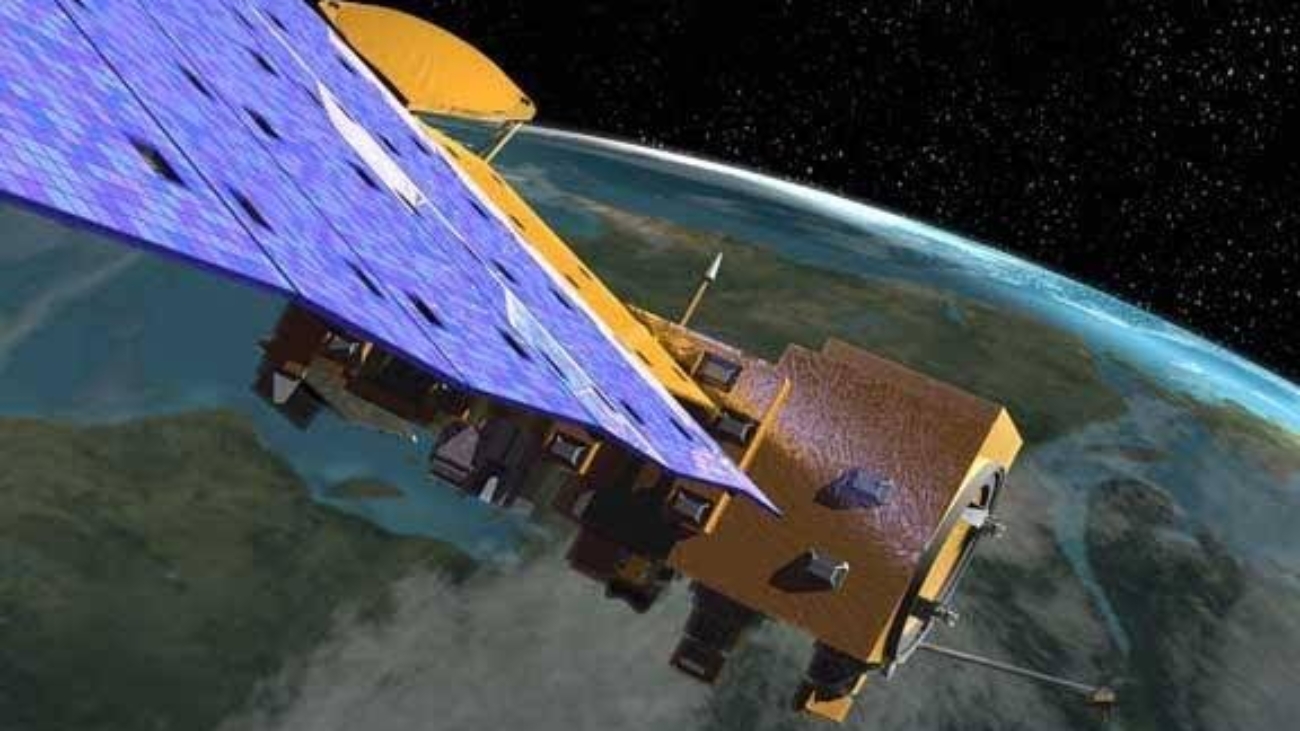
Kerala’s governance systems still operate largely on static reports, delayed surveys, and episodic field inspections, even as the state faces fast-moving ecological, urban, and climate stresses. Decisions are often taken with partial visibility, outdated maps, and fragmented departmental data. The strategic opportunity for Kerala State Remote Sensing and Environment Centre lies in evolving into a geospatial nervous system for the state, continuously sensing, integrating, and interpreting spatial reality in near real time.
A geospatial nervous system treats the state as a living organism rather than a collection of files. Satellite imagery, drone surveys, sensor networks, rainfall data, river gauges, coastal observations, land-use records, and infrastructure layers are integrated into a single spatial intelligence fabric. Instead of producing maps as end products, the system produces continuous situational awareness that updates as the ground reality changes.
This shift is critical for Kerala because many of its risks are dynamic rather than static. Flooding patterns change with new construction and altered drainage. Landslide risk evolves with rainfall intensity, slope modification, and vegetation loss. Urban heat islands emerge silently as land cover shifts. A nervous system detects these changes early, before they manifest as disasters or irreversible damage.
Such a system fundamentally changes how policy works. Planning moves from assumption-based to signal-driven. Infrastructure investments can be aligned with emerging stress zones rather than historical averages. Disaster preparedness becomes anticipatory instead of reactive. Environmental regulation shifts from blanket rules to location-specific intelligence, reducing both ecological harm and unnecessary restriction.
For local governments, the impact is transformative. Panchayats and municipalities rarely lack intent; they lack visibility. Decision-ready spatial layers showing water flow, waste accumulation, road stress, population density shifts, or hazard exposure allow everyday governance choices to be grounded in evidence rather than intuition or pressure. This quietly improves outcomes without altering democratic authority.
A geospatial nervous system also creates institutional memory. Changes in land, water bodies, coastlines, forests, and urban form are tracked over time, allowing policymakers to see not just what is happening, but what has been happening for decades. This long-view perspective is essential in a state where short political cycles often clash with long ecological timelines.
Importantly, this does not require public spectacle or constant dashboards. The power of a nervous system lies in internal alerting, early signals, and calibrated response. KSREC’s credibility as a technical institution allows it to serve this role quietly, feeding intelligence to departments, local bodies, and planners without politicising data.
By 2047, states that govern well will not be those with the most plans, but those with the best sensing. If KSREC becomes Kerala’s geospatial nervous system, governance shifts from reacting to events to responding to signals, reducing loss, waste, and conflict across the board.
