
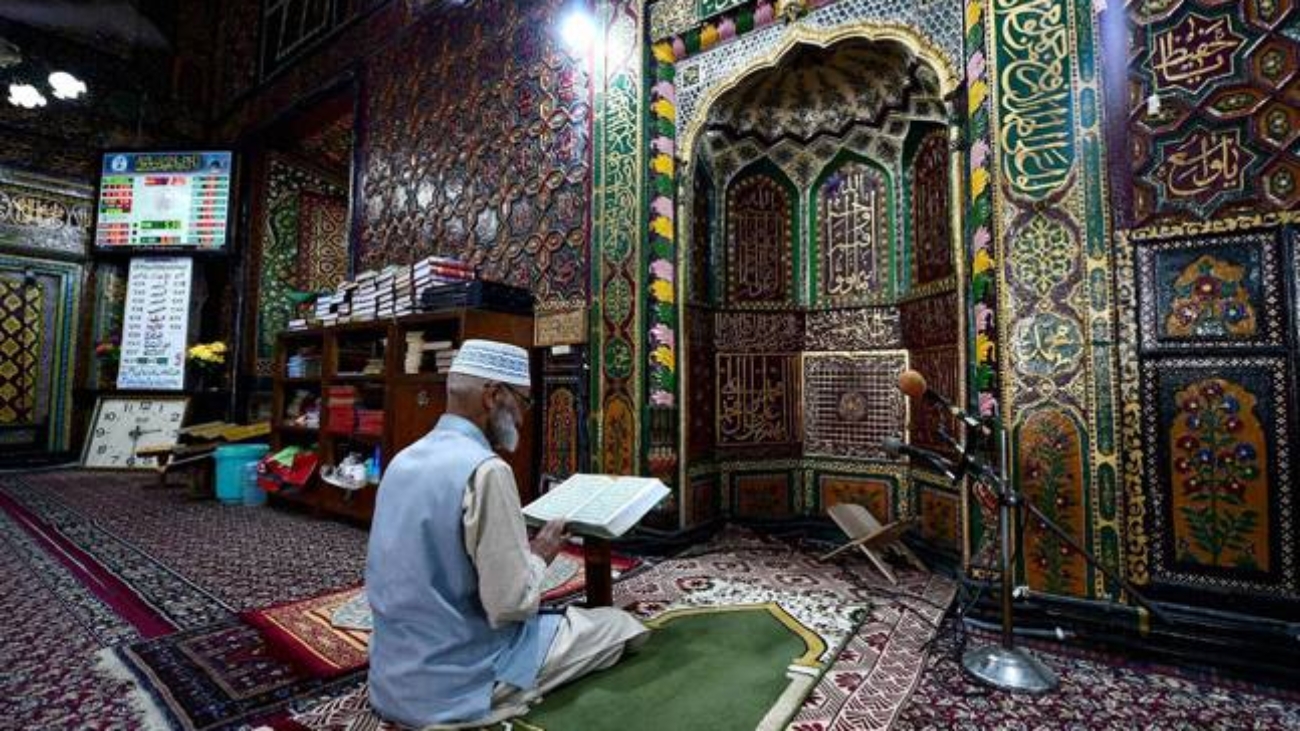
The Tamil-speaking Muslim community of southern Kerala occupies a distinct yet often overlooked position in the state’s social and economic fabric. Concentrated primarily in Thiruvananthapuram and parts of Kollam, this group is culturally, linguistically, and historically linked as much to Tamil Nadu as to Kerala. Their mosques, trade networks, marriage patterns, and social institutions reflect a hybrid identity shaped by borderland geography. Vision Kerala 2047 requires recognising this community not as a peripheral minority, but as a strategic bridge between regions, markets, and administrative cultures.
Historically, Tamil-speaking Muslims in southern Kerala were traders, small manufacturers, transport operators, and service providers. Their economic orientation was pragmatic rather than land-centric. Unlike agrarian communities, they built livelihoods around mobility, commerce, and urban proximity. Thiruvananthapuram’s role as a capital city and port-adjacent urban centre offered opportunities in trade, logistics, retail, and public-facing services. Over time, this produced a community skilled in navigating bureaucracy, markets, and linguistic diversity.
However, this very adaptability also led to structural invisibility. The community rarely mobilised around a singular political or religious identity. It did not dominate any one sector at scale. As a result, policy frameworks often treated southern Kerala Muslims as extensions of broader categories rather than as a group with specific strengths and needs. Vision Kerala 2047 must correct this by adopting a regionally differentiated approach to development.
The first strategic opportunity lies in cross-border economic integration. Kerala’s southern districts sit at the interface of two major state economies with different regulatory cultures, labour markets, and industrial profiles. Tamil-speaking Muslims are naturally bilingual and culturally fluent across this interface. Vision Kerala 2047 should leverage this fluency to build cross-state trade corridors, logistics hubs, and service clusters. Simplified inter-state commerce frameworks, border industrial parks, and transport infrastructure can transform southern Kerala into a gateway economy rather than a terminal one.
Second, urban enterprise must be prioritised. Thiruvananthapuram is evolving as a knowledge city with growing IT, research, and administrative functions. Yet its informal economy remains fragmented. Tamil-speaking Muslim entrepreneurs are deeply embedded in urban retail, food services, transport, construction, and small manufacturing. Policy interventions that support formalisation, access to credit, and skill upgrading can unlock productivity gains. Urban micro-enterprises, when scaled and networked, can generate significant employment without large land footprints.
Third, logistics and mobility offer underexplored potential. The community’s historical engagement with transport and trade positions it well to participate in modern logistics, warehousing, last-mile delivery, and supply-chain services. Vision Kerala 2047 should encourage participation in logistics modernisation through training, digital platforms, and infrastructure access. As Kerala’s economy becomes more service- and export-oriented, efficient logistics will be a decisive advantage.
Fourth, education and skill pathways require recalibration. Tamil-speaking Muslim families traditionally valued early entry into trade or services. While this ensured resilience, it also limited upward mobility in a credential-driven economy. Vision Kerala 2047 must balance this pragmatism with expanded access to technical education, management training, and digital skills. Community-linked training centres, language-inclusive curricula, and partnerships with industry can help younger generations move from survival entrepreneurship to growth-oriented enterprise.
Fifth, women’s economic participation deserves focused attention. Urban Muslim women in southern Kerala often possess education and entrepreneurial potential but face constraints related to safety, mobility, and social expectations. Policy frameworks that support women-led enterprises, safe transport, flexible workspaces, and digital commerce can unlock a significant productivity reserve. Importantly, such interventions must be designed with local cultural realities in mind rather than imposed uniformly.
Sixth, political engagement must evolve beyond representation toward urban governance participation. Tamil-speaking Muslims often engage politics transactionally, focusing on local services rather than policy influence. Vision Kerala 2047 requires greater involvement in municipal planning, urban design, transport policy, and service delivery reform. Encouraging participation in ward committees, urban planning consultations, and local regulatory bodies can translate everyday experience into better governance outcomes.
Seventh, cultural hybridity itself should be recognised as an asset. Kerala’s future will involve increased migration, linguistic diversity, and cultural negotiation. Communities that have long lived at such intersections possess valuable social skills. Tamil-speaking Muslims can contribute to models of coexistence, bilingual education, and inclusive public communication. This soft capability is often underestimated but crucial in plural urban environments.
The risks of neglect are real. Without targeted integration, southern Kerala risks becoming economically peripheral as growth concentrates elsewhere. Youth from these communities may migrate without building local capacity. Informal enterprises may stagnate under regulatory pressure. Cultural invisibility may translate into policy blindness.
Conversely, the opportunities are substantial. By 2047, Kerala’s competitiveness will depend on regional specialisation and connectivity. Southern Kerala can emerge as a node linking administrative capital, knowledge institutions, and inter-state commerce. Tamil-speaking Muslims are naturally positioned to anchor this role if policy recognises and supports it.
Vision Kerala 2047 must therefore move beyond monolithic views of Muslim communities. Regional context matters. Linguistic fluency matters. Urban experience matters. Treating the Tamil-speaking Muslim community as a strategic intermediary rather than a marginal subgroup aligns with Kerala’s broader need for integration over homogenisation.
The success of Kerala’s future will be measured not only by headline growth but by how effectively it mobilises diverse social capital. The Tamil-speaking Muslims of southern Kerala represent a quiet, resilient, and underutilised form of such capital. Engaging them thoughtfully is not an act of inclusion alone; it is an act of economic intelligence.
