
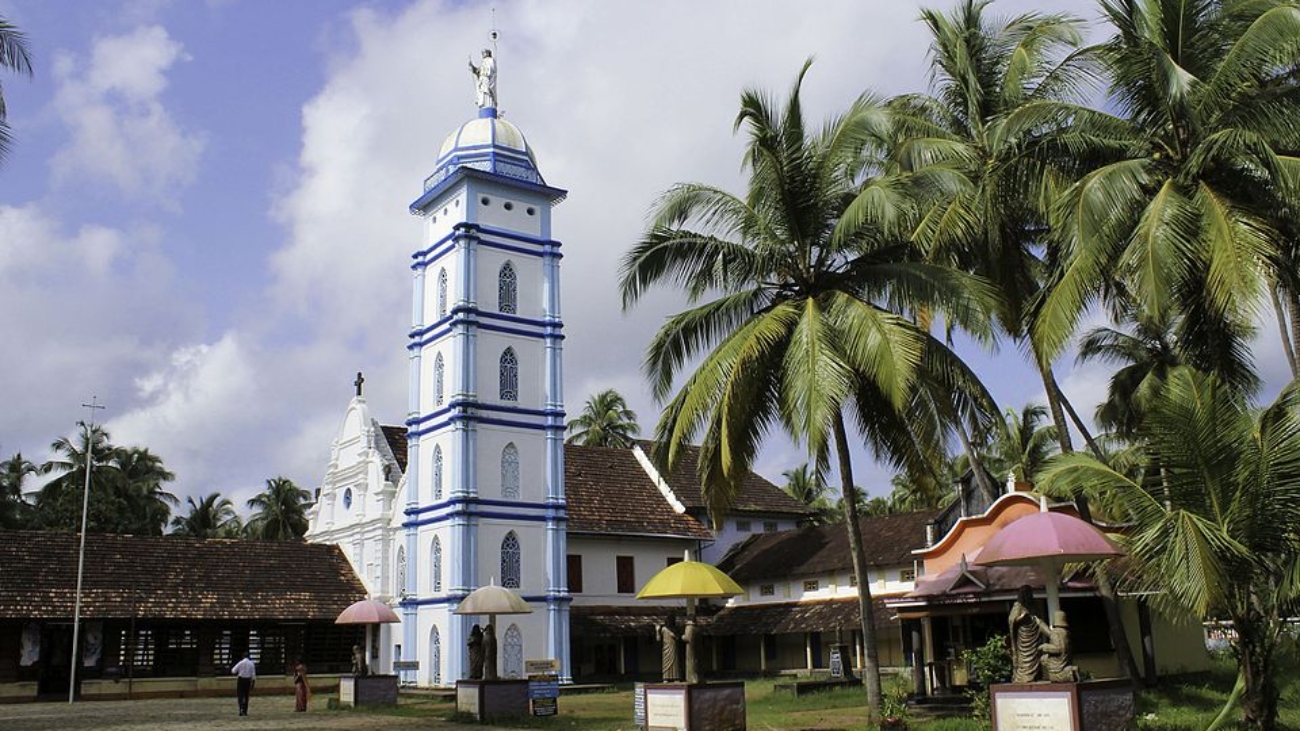
The economic evolution of the Syro-Malabar Church community in Kerala has historically followed a clear trajectory: agrarian accumulation, plantation-based wealth, migration-driven income, and finally real estate consolidation. Each phase was rational in its time. Agriculture provided stability, plantations generated surplus, migration unlocked global income, and real estate preserved capital in a volatile environment. Yet as Kerala approaches 2047, this pattern has reached diminishing returns. Vision Kerala 2047 requires an entrepreneurial revival that moves decisively beyond plantations and passive asset accumulation toward productive, export-oriented, and innovation-led enterprise.
The plantation economy that once sustained central Kerala is no longer a reliable growth engine. Rubber, spices, and cash crops face volatile global prices, rising labour costs, climate stress, and generational disinterest. Younger members of Syro-Malabar families rarely see plantations as aspirational livelihoods. Many holdings survive as legacy assets rather than dynamic businesses. While plantations still carry symbolic and cultural value, they no longer represent the future of wealth creation.
Migration income filled this gap for decades. Gulf remittances and later Western salaries funded consumption, education, and social mobility. Over time, however, a large share of this income flowed into real estate. Houses, apartments, and land became the default repositories of surplus. This behaviour was understandable in a state with limited industrial opportunity and regulatory uncertainty. Property felt safe, tangible, and socially validated.
By the 2020s, the limits of this model became clear. Real estate yields flattened. Oversupply emerged in many towns. Capital locked into land generated little employment or innovation. At the macro level, this contributed to Kerala’s paradox: high household wealth alongside weak productive capacity. Vision Kerala 2047 must address this imbalance directly.
An entrepreneurial revival does not mean abandoning caution or ethics. It means redefining what responsible risk looks like in a mature economy. For the Syro-Malabar community, this involves shifting from asset preservation to value creation. It requires moving capital from static stores of value into enterprises that generate employment, exports, and technological capability.
Kerala’s comparative advantage offers guidance. The state is not positioned for heavy industry at scale. Its strengths lie in skilled human capital, healthcare, education, agri-processing, niche manufacturing, climate-resilient technologies, and services that integrate with global markets. These are precisely the sectors where Syro-Malabar global exposure and institutional depth can be leveraged.
Manufacturing, often neglected in Kerala discourse, deserves reconsideration. Small and medium-scale manufacturing in medical devices, food processing, precision components, renewable energy equipment, and construction materials can thrive if designed for export and quality rather than volume. These industries align well with diaspora networks that can provide market access, technical know-how, and credibility abroad. Entrepreneurial revival here is less about replicating industrial belts elsewhere and more about building specialised clusters rooted in quality and reliability.
Healthcare-linked entrepreneurship offers another pathway. The community’s dominance in hospitals and medical education creates natural demand for equipment, consumables, digital health solutions, and specialised services. Instead of importing these inputs, Kerala can host local enterprises that serve domestic needs and export regionally. This closes value loops that currently leak capital outward.
Agri-tech and food processing also present opportunities to modernise legacy strengths. Rather than raw commodity dependence, value-added processing, branding, and export of high-quality food products can revitalise rural economies. This approach preserves the cultural link to land while upgrading its economic logic. Climate-smart agriculture, organic certification, and traceability systems align well with global market trends and ethical branding.
A critical barrier to this transition is cultural. For decades, entrepreneurship in Kerala carried social risk. Failure was stigmatised. Secure salaried employment or overseas migration were preferred. Vision Kerala 2047 requires changing this narrative, especially within affluent communities. Entrepreneurial failure must be reframed as learning rather than loss. This cultural shift cannot be imposed by policy alone; it must be modelled by successful actors.
Institutional support is equally important. Syro-Malabar-run educational and professional institutions can play a catalytic role by embedding entrepreneurship into curricula, offering incubation support, and connecting students with diaspora mentors. Entrepreneurship must be presented not as an alternative for those who cannot migrate, but as a prestigious, future-oriented path.
Capital structuring is another constraint. Individual entrepreneurs often struggle with risk because family wealth is concentrated in illiquid assets. Collective investment models can mitigate this. Community-linked venture funds, angel networks, and cooperative investment vehicles allow risk to be distributed while maintaining trust. These structures already exist informally in some diaspora contexts; Vision Kerala 2047 requires formalising them locally.
Policy alignment remains critical. Regulatory uncertainty, land acquisition complexity, and labour rigidities discourage entrepreneurship. The state must treat productive capital differently from speculative capital. Fast-track approvals, predictable taxation, and infrastructure support for export-oriented enterprises are essential. Without this, even willing entrepreneurs will default back to real estate.
There is also a moral dimension to entrepreneurial revival. Wealth that circulates productively strengthens social stability. It generates employment for non-migrant youth, reduces dependency on external labour markets, and broadens the tax base. For a community with significant moral authority, choosing productive investment over passive accumulation is itself a form of social leadership.
The alternative trajectory is concerning. If capital continues to concentrate in real estate and low-risk instruments, Kerala’s economy will stagnate further. Young people will migrate not by choice but by necessity. Wealth will exist without vibrancy. Social tensions may increase as opportunities shrink.
By 2047, the measure of success for affluent communities like the Syro-Malabar Christians will not be how much wealth they hold, but how effectively that wealth is deployed. Entrepreneurial revival is not a return to risk for its own sake; it is a strategic adaptation to a changed world.
The community has navigated multiple economic transitions over the last century. Each time, it adapted pragmatically. Vision Kerala 2047 calls for the next adaptation: from land and remittance security to innovation and enterprise leadership. The resources exist. The question is whether the imagination follows.
