
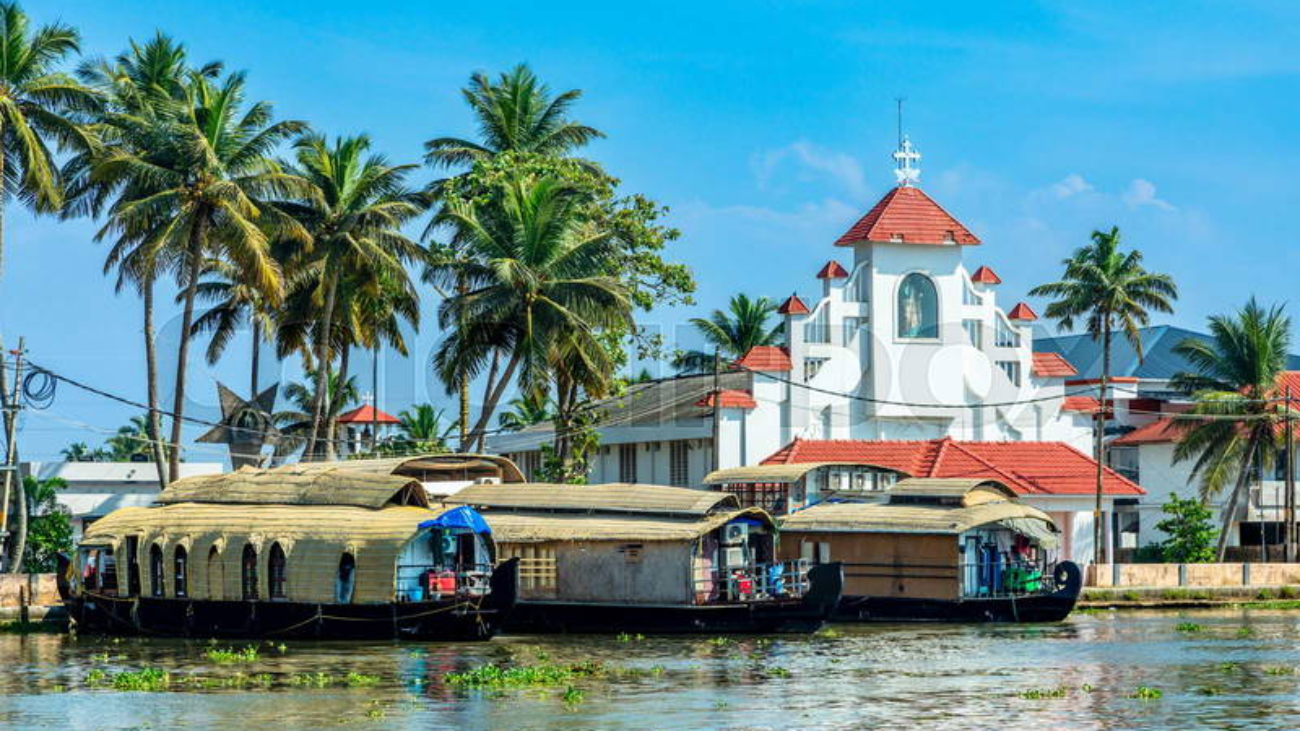
Kerala’s development story has often been narrated through literacy rates, public health indicators, and migration-led remittances. Yet beneath these headline achievements lies a quieter infrastructure that has shaped economic behaviour for over a century: community institutions. Among Kerala’s Christian communities, the Syro-Malabar Catholic Church stands out not merely as a religious body, but as a long-running civilizational actor with deep experience in education, finance, cooperative behaviour, and enterprise formation. If Kerala is to meaningfully reimagine its economy for 2047, small business empowerment anchored in such institutions offers a pragmatic, historically grounded pathway.
The Syro-Malabar Church traces its roots to the St Thomas Christian tradition, with historical continuity often dated to the first century CE. By the late nineteenth and early twentieth centuries, this community had already developed a distinct economic pattern. Mission records, land settlement data from Travancore and Cochin states, and early cooperative bank archives show Syro-Malabar families actively participating in agrarian expansion, cash crop cultivation, and later, small-scale industry. Between 1920 and 1970, Christian settlers from central Travancore moved into regions like Idukki, Wayanad, and parts of Malabar, converting forested land into agricultural economies. This movement was not state-led; it was family-led, parish-supported, and risk-driven.
Education became the first layer of empowerment. By 1951, Christians constituted roughly 21 percent of Kerala’s literate population while forming less than 20 percent of the total population. Church-managed schools and colleges were not merely sites of learning but incubators of managerial and entrepreneurial capacity. Commerce education, teacher training, and technical courses created a generation comfortable with accounting, contracts, and institutional systems. This matters because small business survival rates correlate strongly with basic managerial literacy. Even today, Kerala’s MSME failure rate within five years is estimated at over 50 percent, largely due to weak financial planning and market linkage rather than lack of effort or capital.
Healthcare added the second layer. Mission hospitals established by Christian congregations from the 1930s onwards created local employment ecosystems. Nurses, technicians, pharmacists, and administrative staff were trained in-house. By the 1980s, Christian-run hospitals formed the backbone of Kerala’s private healthcare sector. This experience is crucial when thinking of small business empowerment because healthcare institutions function as complex enterprises. They manage cash flows, procurement, compliance, and human resources at scale. The institutional memory of running such systems already exists within the Church network.
The third and most under-discussed layer is finance. Cooperative banking in Kerala owes much to Christian participation. Institutions like Catholic Syrian Bank, founded in 1920, and various diocesan credit societies normalized the idea of pooled savings and community-backed lending. Long before microfinance became a policy buzzword, parish-based lending circles were financing homes, shops, and farms. By the early 2000s, Kerala had one of the highest per capita cooperative bank penetrations in India, with over 1,600 cooperative societies serving local economies. This historical familiarity with credit discipline is a structural advantage for small business revival.
As Kerala approaches 2047, its small business sector faces new constraints. The state’s working-age population is shrinking. Youth migration remains high, with over 2.1 million Keralites working abroad as per the 2018 Kerala Migration Survey. Domestic consumption growth is slowing, and traditional retail is under pressure from platform-driven commerce. At the same time, Kerala has over 2.6 million MSMEs registered under Udyam as of 2023, many of them micro-enterprises operating below optimal scale. The challenge is not enterprise creation alone, but enterprise upgrading.
Here is where the Syro-Malabar Church can play a catalytic role. With over 30 dioceses, thousands of parishes, and a dense network of schools, colleges, hospitals, and social organizations, it already has the physical and social infrastructure needed for small business empowerment. What is required is a deliberate shift in orientation from charity-driven support to capability-driven enterprise development.
Historically, the Church responded to economic stress through relief. During the agrarian crises of the 1970s, parish funds were used to stabilize indebted farmers. During the Gulf returnee waves of the 1990s, informal networks helped families reintegrate. In the post-COVID period, many dioceses organized emergency assistance. These responses were necessary, but Vision Kerala 2047 demands a more structural approach.
Small business empowerment must focus on three measurable outcomes: productivity, survivability, and intergenerational continuity. Productivity can be addressed by embedding enterprise training within existing educational institutions. Commerce colleges and technical institutes run by the Church can integrate practical modules on GST compliance, digital accounting, export documentation, and platform onboarding. Survivability improves when businesses are networked. Parish-level business guilds can pool procurement, share logistics, and negotiate collectively with buyers, reducing cost volatility. Intergenerational continuity matters because nearly 60 percent of Kerala’s small businesses shut down when the founder retires or migrates, with no succession plan.
There is historical precedent for this. In the 1950s and 1960s, Christian family enterprises in rubber, spices, printing, and education transitioned across generations because they were embedded in community institutions. By contrast, many contemporary micro-enterprises operate in isolation. Recreating that institutional embedding is not ideological; it is practical.
By 2047, Kerala will be a much older society. The median age is projected to cross 40 by the early 2030s. This demographic reality makes small businesses not just economic units but social stabilizers. Locally rooted enterprises reduce elder dependency, retain skills, and create care-linked employment. Church-run healthcare and eldercare institutions can anchor clusters of ancillary small businesses, from medical equipment servicing to homecare logistics.
Critically, this vision does not require state takeover or political mobilization. It requires coordination. The Syro-Malabar Church has historically operated across political regimes, adapting to princely states, colonial administration, and democratic governance. That adaptability is an asset. By aligning diocesan planning with district-level economic data, the Church can act as a neutral economic platform, complementing government schemes without being subsumed by them.
Kerala’s future will not be decided only by startups or large industries. It will be shaped by whether its millions of small businesses can become stable, productive, and dignified livelihoods. Institutions that have survived centuries understand stability better than most. Harnessing that understanding for economic empowerment is not a return to the past; it is a way of making the future workable.
