
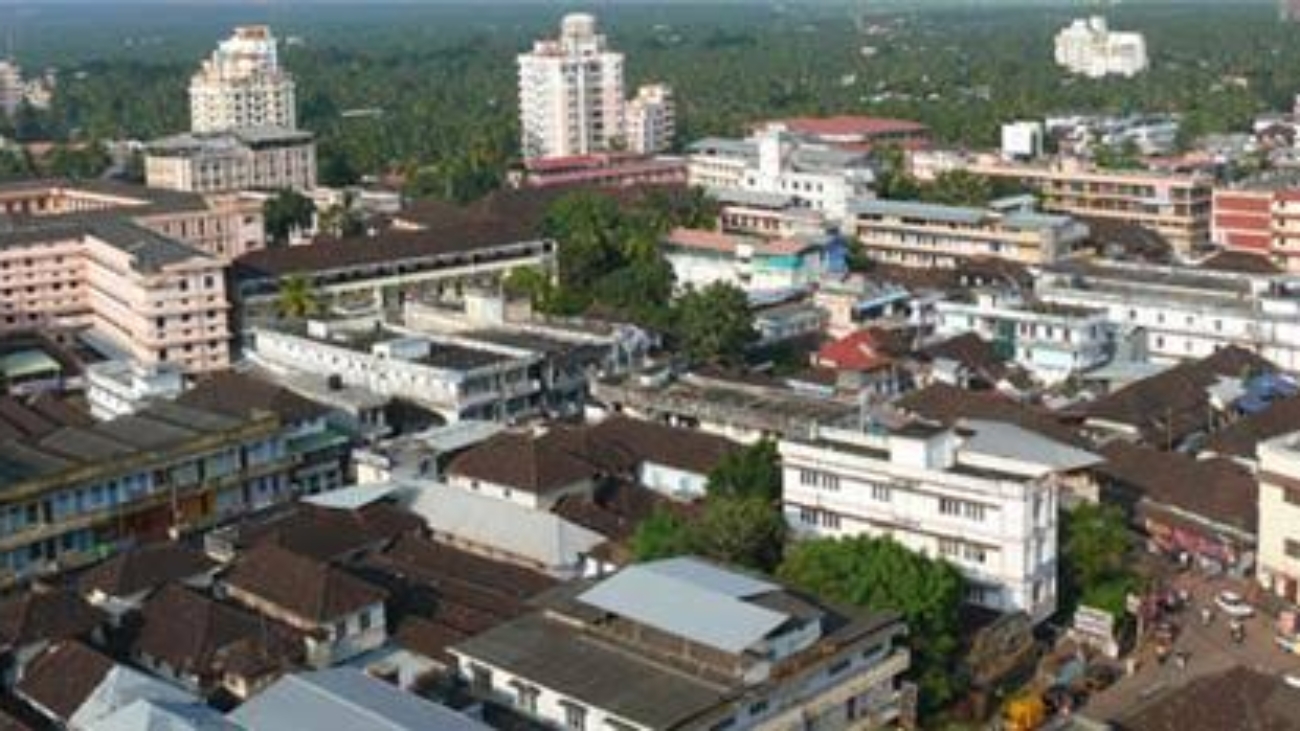
Kerala’s urban crisis is not dramatic enough to provoke panic and not functional enough to support growth. Its towns exist in a state of permanent limbo—no longer rural, never fully urban, and structurally incapable of becoming economic engines. By 2047, this ambiguity will turn into a hard constraint on Kerala’s survival unless confronted directly.
Kerala often prides itself on avoiding the chaos of megacities. This pride masks a deeper failure: the inability to build strong, medium-sized towns that generate jobs, innovation, and dense economic activity. What exists instead is a spread-out settlement pattern with weak cores, inefficient land use, and overstretched infrastructure. Towns expand outward without intensifying inward. Density is feared, not designed.
Decentralisation was once Kerala’s great governance experiment. Over time, it has devolved into administrative fragmentation. Panchayats and municipalities manage schemes, not systems. They distribute funds but do not shape economic outcomes. Local governments lack fiscal autonomy, professional capacity, and planning authority. Elections revolve around service delivery grievances rather than long-term urban strategy.
Urban planning remains a technical afterthought rather than a political priority. Master plans are outdated, ignored, or contested until they collapse under pressure. Land use regulations are reactive, riddled with exemptions, and shaped by local pressure rather than economic logic. As a result, housing sprawls, commercial activity scatters, and transport systems become inefficient. Time, energy, and productivity are lost daily in small, cumulative ways.
Housing reveals the contradiction clearly. Kerala has a high rate of home ownership, yet acute housing dysfunction. There is little rental housing, minimal affordable housing near job centres, and almost no institutional housing for migrants, students, or the elderly. Homes are treated as private assets, not as part of an urban system. Empty houses coexist with overcrowded labour settlements, and policy looks the other way.
Transport planning is equally fragmented. Roads are widened without rethinking mobility. Public transport exists but is not integrated across modes or regions. Towns are designed for neither pedestrians nor efficient vehicle movement. Congestion grows even in small municipalities. The absence of regional transport authorities means each local body acts in isolation, compounding inefficiency.
Economic activity suffers quietly. Enterprises require density to share infrastructure, talent, and services. Kerala’s dispersed urban form denies this advantage. Industrial parks sit disconnected from housing. Commercial hubs lack last-mile logistics. Informal markets occupy prime spaces without upgrading. The economy becomes consumption-driven rather than production-oriented, surviving on remittances and public spending rather than local value creation.
Urban governance is trapped in a moral framework rather than an economic one. Regulation is justified as protection, not optimisation. Environmental concerns are real but poorly integrated into planning, leading to blanket restrictions instead of smart zoning. Fear of political backlash prevents experimentation with vertical development, congestion pricing, or land pooling. The result is stagnation disguised as caution.
Municipal finance is the weakest link. Local governments depend heavily on state transfers and have limited capacity to raise or manage revenue. Property taxes are outdated. User charges are politically sensitive. Asset monetisation is taboo. Without money, planning becomes theoretical. Without planning, investment stays away. This cycle repeats quietly every year.
The human cost is visible but normalised. Youth migrate because towns offer no dynamic career ecosystems. Elderly residents struggle with inaccessible public spaces and services. Migrant workers live on the margins of legality and planning. Women’s mobility is constrained by poor lighting, transport gaps, and unsafe public spaces. These are not social issues alone; they are urban design failures.
Kerala’s political imagination remains rural at heart. Villages are romanticised, cities are distrusted, and towns are ignored. Yet the future will be urban whether planned or not. Population ageing, migration, service-sector growth, and climate adaptation all demand compact, well-governed urban systems. Avoiding urbanisation does not preserve Kerala’s character; it erodes its capacity.
Vision Kerala 2047 requires a radical shift in how towns are understood. Municipalities must be treated as economic units, not welfare distribution centres. Planning authority must be consolidated regionally. Fiscal powers must follow responsibility. Density must be embraced strategically, not feared emotionally. Housing, transport, and employment must be planned together, not in silos.
This does not require megacities. It requires functional towns with clear cores, mixed-use development, reliable public transport, and predictable regulation. It requires professional urban cadres, transparent land systems, and political willingness to withstand short-term discomfort.
Urban decay in Kerala is not visible as collapse. It appears as drift, inefficiency, and quiet loss of opportunity. That is precisely why it is dangerous. By 2047, Kerala will not fail loudly. It will simply find itself unable to move, produce, or adapt at the speed required.
