
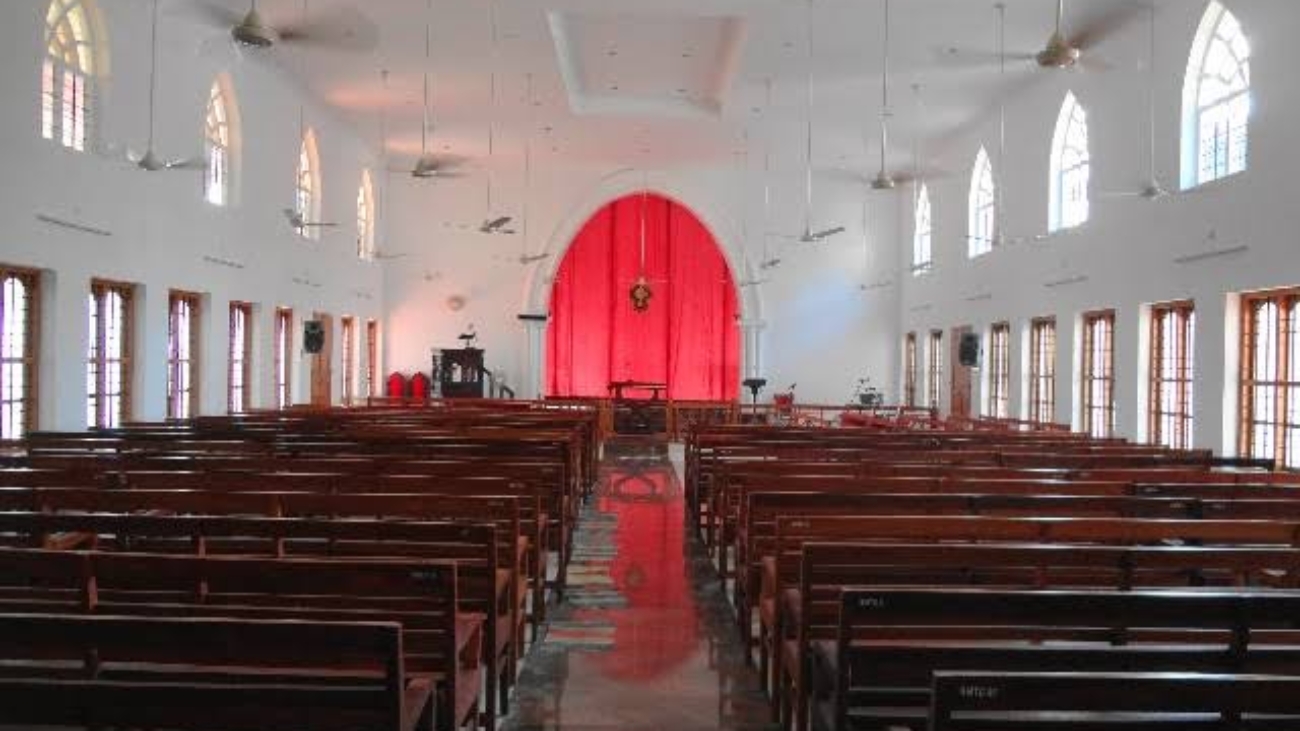
Kerala’s social indicators often place it ahead of the rest of India, yet beneath the averages lie persistent structural asymmetries, particularly in women’s economic agency. Literacy alone has not translated into proportional ownership of assets, leadership in enterprises, or long-term financial autonomy for women. To imagine a credible Vision Kerala 2047, women empowerment must move beyond slogans and welfare framing into institution-backed economic participation. One Christian group with a long reformist history and organizational discipline well suited for this task is the Malankara Mar Thoma Syrian Church.
The Mar Thoma Church emerged out of a reform movement within the Malankara Syrian tradition in the nineteenth century, influenced by Anglican ideas of scripture, social reform, and modern education. The Mavelikara Synod of 1836 marked a decisive moment when sections of the Syrian Christian community began questioning ritual excess, clerical monopoly, and social stagnation. This reformist impulse had an unintended but profound consequence: it opened intellectual and social space for women to participate more visibly in education, teaching, healthcare, and later, salaried professions.
By the early twentieth century, Mar Thoma-run schools and colleges had among the highest female enrolment rates among community institutions in Travancore and Cochin. Mission reports from the 1920s and 1930s show women trained as teachers and nurses at a time when female wage work was still socially restricted. This early normalization of women’s public participation is a historical asset that Vision Kerala 2047 can consciously build upon.
Women empowerment in Kerala today faces a paradox. According to the Periodic Labour Force Survey 2022–23, female labour force participation in Kerala hovers around 36 percent, higher than the national average but still far below male participation. More importantly, a large share of women’s work remains informal, part-time, or unpaid. Asset ownership remains skewed, with land and business titles predominantly held by men despite matrilineal cultural narratives. The challenge is not access to education alone, but conversion of capability into durable economic power.
The Mar Thoma Church’s organizational culture is uniquely positioned to address this conversion problem. Its governance structure emphasizes councils, synods, and participatory decision-making rather than centralized clerical authority. Historically, women’s organizations within the Church, such as parish-level women’s fellowships formed in the mid-twentieth century, were not limited to devotional activity. They engaged in literacy drives, social work, and fundraising, managing budgets and coordinating across parishes. These were, in effect, early training grounds for collective leadership.
Vision Kerala 2047 requires scaling this latent capacity into formal economic empowerment. Women empowerment here should be understood not merely as employment, but as ownership, decision-making power, and intergenerational influence. One critical area is self-managed enterprise. Kerala has over 4.5 million women engaged in Kudumbashree-linked activities, yet studies show that only a fraction of these units graduate beyond subsistence-level operations. Many dissolve within five years due to lack of market access, branding, and financial planning.
The Mar Thoma Church’s education ecosystem offers a bridge. Colleges and professional institutions under its management can function as applied incubation spaces for women-led enterprises. Business analytics students can work with women’s groups to optimize pricing and supply chains. Design students can support branding and packaging. Nursing and social work departments can help professionalize care-related enterprises, a sector projected to grow rapidly as Kerala ages. By 2047, nearly one in four Keralites will be over 60, creating massive demand for homecare, assisted living, and wellness services, sectors where women already dominate informally.
Historical precedent supports this approach. During the economic transitions of the 1960s and 1970s, when Gulf migration began reshaping Kerala’s household economy, women in Mar Thoma families often became de facto financial managers. Remittance handling, property decisions, and children’s education planning increasingly rested with women. While this power was informal, it created a generation comfortable with financial responsibility. Formalizing such roles into enterprise leadership is a logical next step.
Healthcare provides another vector. Mar Thoma institutions have long been active in nursing education and allied health training. Globally, women-led healthcare enterprises show higher trust and continuity, especially in community-based care. By creating cooperative models where trained women own stakes in clinics, diagnostic centers, and homecare networks, economic empowerment becomes structurally embedded rather than individually fragile. Cooperative healthcare enterprises in Kerala during the 1980s demonstrated survival rates far higher than isolated private clinics, largely due to shared risk and pooled capital.
Education itself must be reimagined as an empowerment loop. By 2047, rote degrees will have diminishing returns. What will matter is adaptability, digital fluency, and ethical credibility. The Mar Thoma Church’s reformist theology, which historically emphasized rational faith and social responsibility, aligns well with contemporary demands for ethical enterprise. Women-led ventures grounded in trust, transparency, and community accountability will have competitive advantages in sectors like education services, eldercare, nutrition, and wellness.
Critically, this vision does not frame women as beneficiaries but as architects. Church platforms can host women-led policy discussions, enterprise showcases, and mentorship networks that cut across caste, denomination, and class. This outward-facing posture matters because Kerala’s future economy cannot be siloed within communities. The Mar Thoma Church’s historical openness to ecumenical and interfaith dialogue makes it a credible convenor rather than a closed network.
By 2047, Kerala’s success will be measured not only by GDP or literacy, but by who holds power within households, enterprises, and institutions. Women empowerment is not an abstract moral goal; it is a structural necessity in an aging, migration-prone society. Institutions with deep historical roots and reformist DNA have a role that neither markets nor the state can fully replace.
The Mar Thoma Church, shaped by centuries of adaptation, education, and social reform, can anchor a model of women empowerment that is economically rigorous, socially credible, and historically grounded. If Kerala chooses to activate such institutional strengths, Vision 2047 can be more than a projection. It can be a lived transition.
